
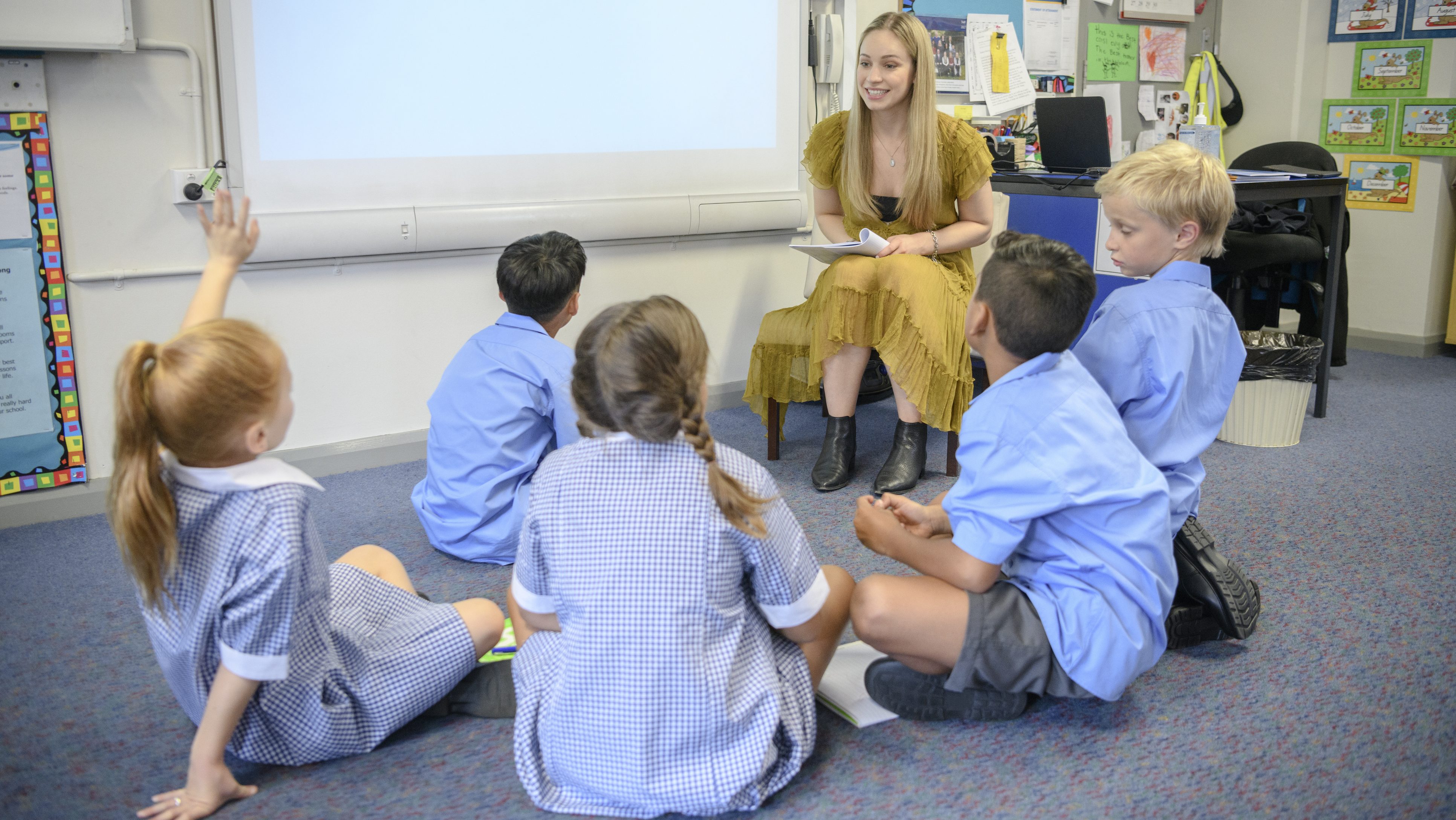
“Digital technology has become one of the most powerful forces shaping modern classrooms. From personalised learning tools to new ways of connecting with families, the latest innovations in ed-tech are giving teachers and students opportunities that simply didn’t exist a decade ago. We know generative AI is on the rise and, according to figures from the latest Australian Curriculum, Assessment and Reporting Authority (ACARA) NAP ICT Literacy report, the number of students using it is significant. Around one in four Year 10 students say they use AI frequently to help with schoolwork, with more than 60 percent using it to produce written content at least once a month. Thirty per cent of Year 6 students report using it for the same purpose. Many schools are finding that the right digital tools can deepen engagement, expand creative opportunities, and make learning feel more responsive to students’ needs. For educators, the potential of tech-enhanced learning environments is undeniable. However, as digital adoption accelerates, so too does the responsibility to use these tools safely, productively and ethically. The real impact of GenAI in schools In recent research from Learning First, three-quarters of NSW teachers and school leaders said they have used AI for work, with 75 per cent of the teachers utilising it to develop curriculum resources. Teachers also reported that they don’t know how to prevent students from using it to cheat or plagiarise in their work. Whether to use it, how to use it, and who can use it are just some of the issues educators and leaders are grappling with in the AI era. The University of Newcastle’s Professor Kylie Shaw believes schools are standing at the edge of a transformation as significant as the arrival of the printing press or Google. In her view, generative AI (GenAI) is not simply another tool to slot into existing practice; it is a force that will reshape the very structure and purpose of schooling. “Schools have a window of approximately three to five years to fundamentally rethink their approach to pedagogy, curriculum, assessment, and school design before the pace of genAI development outstrips their capacity to adapt,” Professor Shaw told Education Review. “That window is narrowing with each passing term.” She argued that the most immediate change AI will bring is a shift in the role teachers play in the classroom. Rather than acting primarily as content deliverers, she said teachers will increasingly become guides who help students think more deeply, make connections, and build understanding. “When every student has access to what amounts to a personalised reference librarian and tutor available around the clock, the rationale for teacher‑as‑content‑deliverer changes,” she said. “Learning becomes relational and iterative rather than transactional and episodic.” More meaningful learning In her view, genAI’s ability to provide instant explanations, examples, and feedback means students will spend less time waiting for help and more time engaging in meaningful learning. Teachers, in turn, will be freed up to focus on the human elements of teaching; questioning, coaching and supporting students as they work through complex ideas. Professor Shaw also anticipated a fundamental rethink of how students' progress through school. Teachers will be freed up to focus on the human elements of teaching; questioning, coaching and supporting students as they work through complex ideas. Picture: iStock/Johnny Greig. She argued that age‑based year levels – a structure inherited from industrial‑era schooling – are increasingly out of step with what AI makes possible. “Age‑based cohort progression is designed for administrative efficiency, not learning efficacy,” she said. “GenAI makes personalised progression genuinely possible at scale.” In her view, this shift will be most visible in the senior years of schooling. As AI becomes more capable of retrieving information and synthesising routine content, she believes the value of schooling will be around the skills genAI cannot replicate. “The critical thinking, collaboration, and creative problem‑solving that have been aspirationally included in curriculum frameworks for decades, but routinely crowded out by standardised testing, should now occupy the centre, not the margins,” Professor Shaw said. “This is necessary if schooling is to remain relevant to the workforce students will enter.” What is also clear is that the opportunities of AI will not be realised without deliberate action from policy makers, teachers, and school leaders. AI brings the problems of the culture with it Professor Shaw also warned that AI is not inherently equitable and may deepen existing divides if access to devices, connectivity and teacher capability remains uneven. “If access to tools, devices, and quality connectivity remains unevenly distributed, then GenAI risks reproducing and accelerating the same inequalities characterised by current schooling systems,” she said. She also highlights the cultural and linguistic biases embedded in many AI models, particularly those trained predominantly on Western, English‑language data. Without explicit teaching, she said students may accept AI outputs uncritically, even when they are inaccurate or culturally inappropriate. “School leaders should seek to name this limitation explicitly, teach students to interrogate genAI outputs critically, and advocate to developers and systems leaders for more culturally responsive models,” she said. Reducing teacher workload Despite the risks, Professor Shaw is optimistic about the potential for AI to improve teachers’ working lives. She said the most significant positive transformation will be in reducing administrative load and freeing teachers up to focus on the more human elements of their work. “The opportunity genAI presents is not a threat to their roles,” she said. “It releases them from the aspects of their work that are most time‑consuming and least pedagogically meaningful.” And, she was unequivocal about the irreplaceable role of teachers. “The human dimensions of teaching such as building relationships, demonstrating empathy, engaging with a classroom, understanding the cultural and emotional context of each child, inspiring curiosity – are the capacities that genAI cannot replicate,” she said. The speed of change For Professor Shaw, the challenge is not whether genAI will change schooling, but whether schools can change fast enough – and thoughtfully enough – to ensure the technology strengthens, rather than undermines, the core purpose of education. “The most visible risk is irrelevance: schools that continue delivering transactional, content-focused instruction in a world where genAI can perform that function more efficiently and accessibly may increasingly struggle to justify their social licence,” she warned. Professor Shaw said that there are three actions school leaders can take now. Form an AI working group : Form a dedicated team that meets at least once a term – a working group with genuine mandates and resources to research, develop, and implement genAI policy and practice. Our data showed that the schools making the most meaningful progress have done this or similar. Create a usage policy : Work with stakeholders within their school context, and wider educational system, to make explicit decisions about acceptable use: what genAI tools are permitted, in what contexts, for what purposes, and with what safeguards. Ambiguity here has potential to create inequity, anxiety among staff, and inconsistency of experience for students Invest in professional learning : Make sure that any training available is not only for early adopters, but for the full staff cohort. The scope of this change is too vast and rapid to leave to those staff willing to engage with genAI. When genAI use and capabilities are concentrated among a small group of tech-enthusiastic staff, the benefits of those tools tend to accrue unevenly. AI policy and legislation As with any fast-changing developments within education, departments and schools are often playing catch up, particularly with policy. When it comes to genAI, this is particularly starkly illustrated. To make sure you’re up to date on policy, here is the latest from around the country. Federal government At the end of last year, the federal government released its National AI Plan outlining its position on AI and identifying policy priorities. national-ai-plan Download Within the report, AI is clearly positioned as a positive tech innovation that Australia should get behind. The government is itself funding the development of local models, through its AI Accelerator funding program, and has its own version created by the Department of Finance, known as GovAI. The message from Canberra is clear: AI is a national infrastructure priority, and schools are central to preparing young Australians for the world it's creating. Part of its plan is to ensure school leavers are ‘AI ready’ for the workforce and, in tandem with the Australian Framework for Generative Artificial Intelligence in Schools , have learned how to use and navigate the technology ethically and effectively. The framework outlines specific principles about how AI should be used in schools. First and foremost, AI must enhance student learning and support teachers, it says. GenAI should also be the subject of lessons, not just used to create them. Australian Framework for Generative AI in Schools Download In other words, students should be taught how to use AI critically, making sure to learn its limitations and identify any inherent biases. Gen AI use in schools, it said, also needs to support well-being in the community, and ensure privacy is protected and data is secure. The Department of Education has also expanded the remit of its Chief Information Officer to include the role of Chief AI Officer. It has also committed to setting up a new Australian Artificial Intelligence Safety Institute, which is due to become operational this year. What’s happening in your state Alongside the national framework, each state and territory has developed its own guidance. Here's a snapshot: New South Wales has gone furthest with formal governance, establishing a Chief AI Office with two dedicated Co-Chief AI Officers. The Office is responsible for ensuring compliance with relevant legislation and policies, and for supporting schools to do this effectively. This includes providing access to training for teachers and other stakeholders in academic integrity, data privacy, and ethics. The office also tests education-specific AI solutions including the department’s own tool, NSWEduChat. The department’s philosophy is "human-plus-AI" – technology as a support, not a replacement. Victoria has a generative AI policy covering consent, privacy, and curriculum alignment for any AI tool used in schools. It’s based on the principles outlined in the Framework. Queensland is in the process of creating guidance and resources to operationalise the Framework. Meanwhile, on the Queensland Curriculum & Assessment Authority website you can find AI guidance documents. It has also mandated that from this year all Queensland Certificate of Education students are required to complete an academic integrity course that directly addresses generative AI before they graduate. South Australia has custom built its own chatbot, EdChat, in partnership with Microsoft, while the South Australian Certificate of Education authority (SACE) has a section relating to AI with FAQs in relation to assessment tasks on its website. It has also embraced the tech for teachers with an AI-enabled app that assess a student’s LEAP (Learning English: Achievement and Proficiency). Previously, the assessment would take teachers 30 minutes; the app can do the same work in less than a minute. Western Australia has adopted the Framework and also relies on the WA Government Artificial Intelligence Policy and Assurance Framework. Tasmania has developed an AI policy through its Department for Education, Children and Young People. The policy is currently under review. Northern Territory teachers can look to the NT Department of Education policy , which outlines do and don’ts and has links to related legislation and other relevant documents. The same platforms that help schools celebrate learning and build community can also expose students to risks. Picture: iStock/StockPlanets. Privacy and children’s rights in the digital age Schools are collecting more data and posting more than ever – new national guidance says it’s time to rethink what we share with students in mind. The same platforms that help schools celebrate learning and build community can also expose students to risks that aren’t always visible, from data scraping and algorithmic profiling to the long-term consequences of normalising constant online sharing. Just last month, educational platform Canvas experienced a data breach that saw theft of about 3.65 terabytes of data from 8809 educational institutions, including at least 122 across Australia. The incident is believed to be the largest education-sector data breach on record and has renewed concerns about the reliance on overseas technology providers storing sensitive information belonging to millions of students. In schools across Australia, social media has become as routine as newsletters once were. A quick photo from the Year 2 assembly, a video of the robotics team, a carousel of Book Week costumes – these posts help families feel connected and celebrate school life. But as platforms like Facebook and Instagram become embedded in school communication, researchers say the risks to children’s privacy and digital rights are growing faster than most policies can keep up. New national guidance from the University of Wollongong’s (UOW) School of Education is urging schools to pause and rethink what they share, why they share it and how children are involved in those decisions. Developed by Dr Karley Beckman and Associate Professor Tiffani Apps through the ARC Centre of Excellence for the Digital Child, the Research ‑ Informed Principles to Guide Social Media Use in Education outlines five evidence‑based guiding principles to help schools use social media more safely, intentionally and ethically. Principles-Social-Media-2026 (1) Download Parents want connection The principles were developed out of a national research project involving school leaders, teachers, parents, early childhood educators, advocacy groups, and government departments. Across all the schools and their communities – whether metropolitan, regional or rural – the team found a consistent misalignment: schools often assume parents want regular updates on public social media, while many families and children feel differently. “One of the biggest misconceptions around school social media practice comes from schools, school leaders, and teachers themselves, who always begin with the assumption that parents want to see this kind of communication,” Professor Apps told Education Review . “We found that while they wanted to feel connected, many parents feel like public social media isn't the right place for those connections to happen.” Associate Professor Tiffani Apps and Dr Karley Beckman have developed the Research Informed Principles to Guide Social Media Use in Education. Picture: Supplied. The research also found that children often feel uneasy about their images being shared online, especially without being asked. Children’s rights: what schools often overlook A central pillar of the new guidance is a commitment to children’s rights, grounded in the United Nations Convention on the Rights of the Child . While this may sound abstract, the implications for schools are much more concrete. Children have rights to privacy, participation and protection in digital environments. Professor Apps explained that privacy isn’t about keeping information secret, it’s about having the power to decide what is shared. “We often think about privacy as being able to keep information to ourselves, but it's actually about having the power to keep information to ourselves,” she said. “The practice of sharing children's data on social media on their behalf takes away that power.” This has long-term consequences. Children aged eight to 12 in the research expressed strong views about wanting to be asked for permission, yet many struggled to understand how consent works in digital spaces because they rarely see it modelled. This is part of the thinking behind the first principle developed. The risks are growing Teachers are already aware of the obvious risks: online predators, unwanted contact, or images being misused. But, the researchers said less visible risks, including data scraping of public school pages, algorithmic profiling, or the use of children’s images in AI‑generated content, are now just as serious. “One of the other concerns is that there's a lot of identifying information being shared,” Professor Apps said. “Combinations of data points provide more personal information that is being widely shared, and we teach children not to do this themselves, but schools are practicing the opposite.” The rise of generative AI has amplified these concerns. Once an image is public, it can be copied, altered or repurposed in ways schools cannot control. A central pillar of the principles is a commitment to children’s rights, grounded in the United Nations Convention on the Rights of the Child. What consent looks like at school One of the most practical shifts schools can make is also one of the simplest: asking children directly. “Asking children at the moment of image capture ‘I’m going to take a photo today for the school Facebook page, are you comfortable with that?’ really shifts the dialogue.” Professor Apps said. This approach not only models respectful digital behaviour but acknowledges children’s fluctuating comfort levels, reinforcing that consent is specific, informed and voluntary, and, critically, helps to build data literacy in children over time. “Children are our future, and this is the world that they're moving into, so we really want to have critically digitally literate children,” she said. “At the moment, some of the practices that we engage in have some unintended consequences.” Small actions, big cultural shifts The researchers emphasised that schools don’t need to overhaul everything at once. The most successful schools in the project began with small, deliberate changes, and were surprised by how positively families responded. “Understanding what your community actually wants is incredibly valuable,” Professor Apps said, adding that connections with families can still flourish, just in safer, more intentional ways. She encouraged schools to: review the new principles with staff discuss alternative communication channels minimise personal information in posts rethink what truly needs to be public involve children meaningfully in decisions Professional learning, coming soon To support schools, the UOW research team will release a free professional learning series in the coming months. Teachers can complete it individually, or school leaders can run it as a three-part staff program. “It's fully flexible, so you can dip in and look at little actions, or you can commit as a school to engaging in the whole professional learning,” Professor Apps said.
Original story
Continue reading at Education Review AU
www.educationreview.com.au
Summary generated from the RSS feed of Education Review AU. All article rights belong to the original publisher. Click through to read the full piece on www.educationreview.com.au.
