
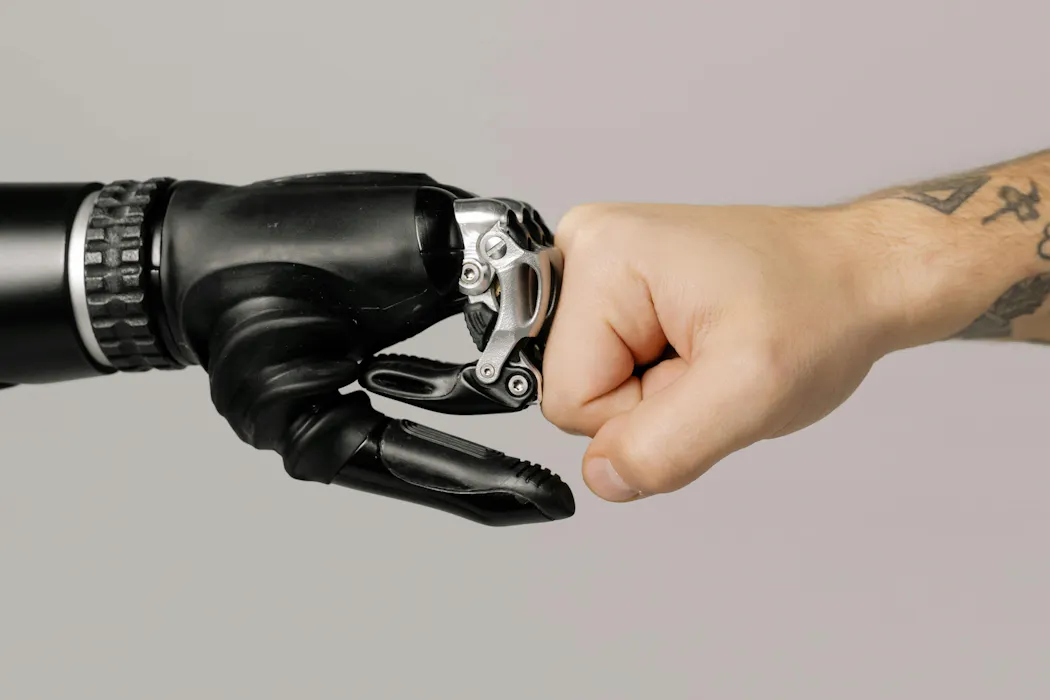
“Cottonbro Studio/Pexels , CC BY Generative AI (GenAI) is a type of artificial intelligence that creates new content – like text, images, or ideas – by learning patterns from existing data. GenAI, particularly through large language models (LLMs) such as ChatGPT and DeepSeek, is rapidly becoming part of everyday urban design research and practice. The models can summarise literature in seconds, generate policy scenarios, and help draft complex narratives. For urban designers and researchers working under pressure, this feels like a breakthrough. But beneath this efficiency lies a deeper question: are we enhancing urban design knowledge, or quietly reshaping it in ways we do not fully understand? Urban design is an academic and professional field concerned with shaping the physical form and experience of cities. It looks at the relationships between buildings, spaces, people and activities within broader urban systems. Read more: AI could make cities autonomous, but that doesn’t mean we should let it happen The field has evolved differently across regions, reflecting diverse historical, political and spatial contexts. For example, in Europe, urban design has often been shaped by post-war reconstruction and rehabilitation of the destroyed urban forms, while in the United States it has been influenced by urban renewal policies and large-scale redevelopment. Urban design is not a fixed set of principles, but a context-dependent theory and practice that responds to specific local challenges and conditions. GenAI is now widely used in urban design to help with analysis and decision-making. For instance, researchers use machine learning to study pedestrian movement and traffic patterns from video data, which helps planners create safer and more efficient streets. Some studies use GenAI to create and test different urban design options, such as changing land use, building density, or access to green spaces, so designers can quickly compare choices. In environmental planning, GenAI models can simulate urban heat or air quality, helping with climate-sensitive decisions. These examples show that GenAI provides ways to test ideas and handle complex challenges, rather than replacing designers. Our work as urban designers and researchers has always depended on interpretation, context and ethical judgment. Cities are not just datasets; they are lived environments shaped by history, culture and power. When LLMs enter this space, they influence how problems are framed and how solutions are imagined. Their use therefore should not be just technical, but should be managed critically. Each theory developed for a particular city or place evolved to address the needs of specific groups of people within a distinct context and for a particular purpose. LLMs need to be developed faster to have this sensitivity about people and place history. Our recent research was motivated by the rapid and often uncritical integration of LLMs into planning research and practice. The work asks a central question: how do these tools reshape the way urban knowledge is produced, interpreted and validated in a discipline that depends heavily on context, judgment and field-based understanding? Read more: Debate: How to stop our cities from being turned into AI jungles Our key finding is that LLMs can be very helpful; they can speed up writing, support analysis and help explore ideas. However, they also carry important risks, especially when their outputs are treated as fully correct or used without considering context. We propose some cornerstones for responsible use. These are not strict rules, but practical guides to keep human judgment central, ensure ideas stay grounded in context, and maintain responsibility in planning research and practice. 10 cornerstones Research sovereignty should remain with the human. The direction of inquiry must always come from the researcher. If planners begin by asking the model what to study or how to frame a problem, they risk producing inconsistency and generic outputs. Engagement with GenAI is critical, not passive. LLMs generate plausible text based on patterns, not verified truth. This means every output should be tested and refined. Accepting it at face value risks embedding hidden biases and weak assumptions. Knowledge should be grounded in context. Cities are deeply specific. A recommendation that works in one place may fail in another due to social, political, or cultural differences. LLMs tend to produce generalised solutions without understanding local realities. Planners must anchor these suggestions in field knowledge and community insight. Everyone should be careful. They should not trust GenAI too quickly. In planning debates such as zoning or rent control, LLMs can sound very confident, even when they are wrong. Sometimes they may even give references that do not exist. This can spread incorrect information and weaken trust in research. While any of the LLMs can assist in identifying and organising sources, they cannot replace the critical judgment required to assess accuracy, context and fit. The responsibility for validating references remains with the researcher. Planners must recognise that LLMs do not “remember” in the way humans do. They lack continuity across conversations and can lose track of earlier assumptions. AI forgets things. Maintaining coherence in long-term research, therefore, depends on the researcher, not the tool. A subtler issue is rigidity. LLMs often repeat dominant ideas or default solutions, even when the context differs. For example, when asked how to improve a congested street, an LLM may suggest widening roads or adding car lanes, even where such interventions could harm walkability and heritage value. Breaking out of these patterns requires active intervention. We can understand GenAI as a partner in thinking, but not an equal one. The planner must decide what matters, whose voices are included, and what ethical priorities guide the work. Effective use of GenAI requires strategic manoeuvring. This means combining AI-generated insights with collected data, community engagement and professional judgment. The value of LLMs lies not in replacing urban design processes, but in enriching them, if used carefully. Academic integrity is non-negotiable. Urban design research is not just about producing text; it is about engaging intellectually with people, places and consequences. Why this matters GenAI in urban design is like fire – powerful, but dangerous without human control. Used well, GenAI can help urban designers think more broadly and act more effectively. Used poorly, it risks reducing urban design to automated generalisation, detached from the lived experience of cities. Read more: AI-powered assistive technologies are changing how we experience and imagine public space The future of urban design is not about choosing between humans and machines, but about designing thoughtful collaboration between them. The challenge is not whether machines can think, but how we think with them. Abeer Elshater, Professor of Urban Morphology, Ain Shams University Hisham Abusaada, Professor of Architecture and Urban Design, Housing and Building National Research Center
Original story
Continue reading at The Conversation Africa
theconversation.com/africa
Summary generated from the RSS feed of The Conversation Africa. All article rights belong to the original publisher. Click through to read the full piece on theconversation.com/africa.

