
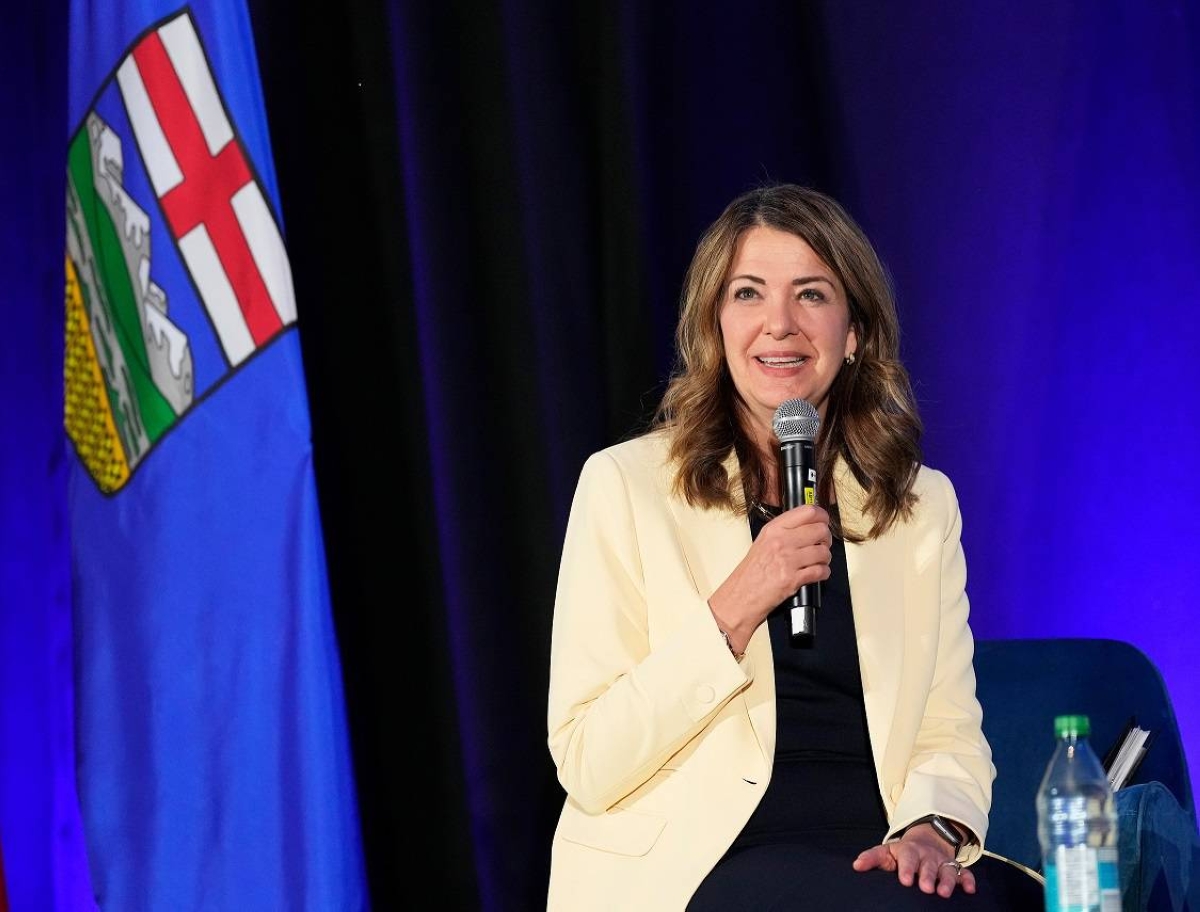
“Alberta expects to reach an agreement with oil companies on the deployment of carbon capture technology in the oil sands in the summer, the province’s premier said on Friday. “I would hope it would be a matter of a month or two that we’d be able to get to an agreement,” Danielle Smith said at a press conference. “When we start talking with the oil sands group, they’ll see that there’s a number of things that the federal government has done to meet us in the middle and to make sure that we have found the right balance between reducing emissions in a way that allows for technology to develop, but also keeping the market competitive.” A deal with the Oil Sands Alliance to move forward with the Pathways carbon capture project would set the stage for a new oil pipeline to the British Columbia coast. The group represents companies operating in northern Alberta, including Canadian Natural Resources Ltd, Suncor Energy Inc, Cenovus Energy Inc, Imperial Oil Ltd and ConocoPhillips. Smith and Canadian Prime Minister Mark Carney signed a memorandum of understanding last November in which Carney pledged to back a new million barrel a day oil pipeline to the west coast in exchange for deals on a higher industrial carbon tax, the shoring up of Alberta’s carbon trading system, agreement on methane emissions and the deployment of the Pathways carbon capture project in the oil sands. Last week, the two sides signed a final agreement on the industrial carbon price, leaving an agreement with the Oil Sands Alliance on Pathways being the last major issue to be resolved. Smith is seeking a new oil pipeline to Asia as a means to significantly grow Alberta’s nearly 5mn barrels a day of oil production. Last year’s MoU, called a “grand bargain” at the time, marked a thawing between the oil-producing province and Ottawa. Relations had deteriorated under previous Prime Minister Justin Trudeau, whose government imposed a range of environmental regulations that Smith and the province’s oil industry say hindered development. Carney has staked his economic agenda on speeding up major infrastructure projects and lessening Canada’s reliance on exports to the US. He is also seeking to diffuse anti-federalist sentiment in Alberta, where a referendum on whether to stay in Canada or begin the process to separate is scheduled for the fall. Details of the new pipeline, including the planned route to the BC coast, are scheduled to be announced by July 1 and the province wants to receive conditional approval for the project by October 1, Smith said. Canadian heavy crude, produced in the oil sands, sells at a discount to the US benchmark West Texas Intermediate of about $13 a barrel since the expanded Trans Mountain oil pipeline started operation in 2024. Before the line started, the discount sometimes widened to $30 or more a barrel. “We suspect it could reduce another $2 to $3 per barrel even further by having more markets, which benefits every single barrel that we sell,” she said on Friday.
Original story
Continue reading at Gulf Times Education
www.gulf-times.com/community/education
Summary generated from the RSS feed of Gulf Times Education. All article rights belong to the original publisher. Click through to read the full piece on www.gulf-times.com/community/education.

