
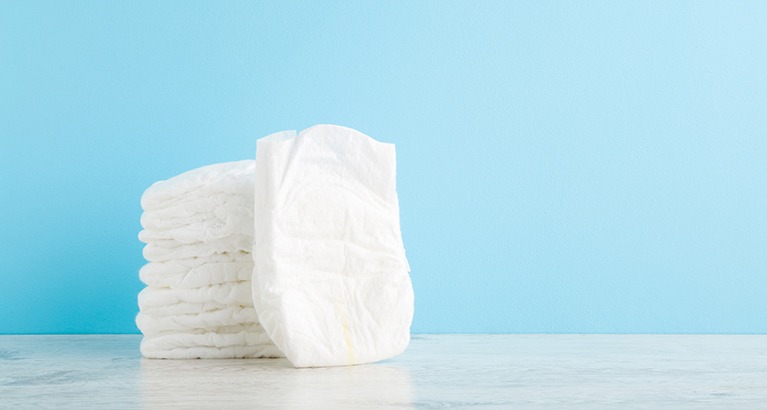
“Amaury van Trappen de Buggenoms, an alumnus of the MPhil in Management programme at Cambridge Judge Business School, is a great believer in pivoting to find the right business opportunity at the right time. Amaury (MPhil Management 2021) teamed up with a scientist colleague to co-found A&B Smart Materials, a company developing biodegradable superabsorbent materials from biobased polymers. Its technology offers an alternative to the fossil-fuel-based superabsorbent polymers currently used in disposable nappies, menstrual pads and other hygiene products, as well as in some agricultural applications. Recognising the firm’s potential and environmental aims, Forbes magazine has named Amaury to its Forbes 30 Under 30 Europe 2026 list in the Manufacturing and Industry category. But hygiene and agriculture weren’t the firm’s initial focus – demonstrating the importance in entrepreneurship of flexibility and pivoting to meet market opportunities. The company’s origins lie in the founders’ shared ambition to use advanced materials science to address major sustainability challenges. Their early work focused on functional coatings for solar panels, with the aim of improving panel efficiency and performance. That work helped the team build deep expertise in chemistry, materials formulation and applied product development, capabilities that became the foundation for a shift to A&B Smart Materials’ current centres of interest in hygiene and agriculture. Turning chemistry into industrial products “The solar coating work was an important starting point because it allowed us to build the core skills of the team: understanding materials, formulating polymers and thinking about how chemistry can be translated into real industrial products,” says Amaury, age 26. “As we engaged more deeply with industry, we saw that biodegradable superabsorbent materials represented a very large and urgent opportunity, where our capabilities could be applied directly.” He says the move into superabsorbent materials was driven by a combination of scientific feasibility, market need and regulatory momentum. “The mission did not change,” he says. “We have always wanted to use materials science to solve sustainability problems at scale. What changed was the application. In superabsorbent materials, we saw a global market with a clear environmental problem, strong customer and regulatory drivers and a real need for innovation. It was a way to apply the same core chemistry expertise to a problem where the potential impact could be even greater.” In superabsorbent materials, we saw a global market with a clear environmental problem, strong customer and regulatory drivers and a real need for innovation. Amaury van Trappen de Buggenoms Biodegradable polymers in soil: regulatory shift creates market opportunity The first clear opening for A&B Smart Materials came from soil applications. In these markets, superabsorbent polymers are used as water-retaining materials that can be added to soils or growing media to absorb and slowly release water around plant roots. They are used across farming, horticulture, tree nurseries, recreational fields and gardens, where their function is to improve water efficiency, reduce irrigation needs and help plants withstand periods of drought or irregular rainfall. Amaury estimates the soil applications market for these materials at around $300 million a year, but says the opportunity is particularly compelling because of a clear regulatory shift. A new European Union rule stipulates that water-retaining polymers used in soils will no longer be allowed after October 2028 unless they meet biodegradability requirements. This creates a defined need for materials that can deliver the same water-retention function while breaking down safely in the environment. “Soil applications were the first market where the need became very concrete,” says Amaury. “These materials are valuable because they help retain water in soil and release it gradually to plants, which is increasingly important as growers, nurseries, landscapers and land managers face drought, water scarcity and pressure to use resources more efficiently. Because the material remains in the soil, biodegradability is essential. The regulation creates a clear deadline and a clear reason for the market to change.” Superabsorbent core is main functional element in key market the critical component in hygiene products While soil applications provide an important regulatory opening and a route to demonstrate the technology in real-world conditions, A&B Smart Materials’ primary focus is the much larger hygiene market. Superabsorbent polymers are a critical component in diapers, nappies, menstrual pads and other absorbent hygiene products, where the superabsorbent core is the main functional element that prevents these products from becoming truly biodegradable. “Soil applications give us a strong entry point because the regulatory requirement is explicit,” Amaury says. “They allow us to prove the technology, demonstrate performance and build commercial traction. But hygiene remains our core focus and the largest opportunity. That is where the scale of the problem is greatest, and where replacing the superabsorbent core can unlock genuinely biodegradable products at global scale.” That potential was also recognised by Forbes when Amaury was named to its Under 30 Europe list. “A&B Smart Materials is developing biodegradable alternatives to fossil-based plastics … which are typically made from petrochemicals and can persist in the environment for decades,” said the Forbes article. The Forbes list is compiled from thousands of online submissions and finalised by its journalists and staff alongside independent expert judges. Forbes said its editors look for “scale, impact and potential for success”, adding that the list is designed to recognise young people who are shaping industries and economies. Hygiene remains our core focus and the largest opportunity. That is where the scale of the problem is greatest, and where replacing the superabsorbent core can unlock genuinely biodegradable products at global scale. Amaury van Trappen de Buggenoms Pre-seed funding, awards and a key grant signal strong early traction for biodegradable materials startup Oxford-based A&B Smart Materials recently closed an oversubscribed $2m (£1.5m) pre-seed funding round. Investors include Sake Bosch, Caesar, Living Hope VC, Archipelago Ventures and Triple Impact Ventures. A native of Belgium, Amaury co-founded the firm along with Dr Benjamin White, and the company now employs 7 people full time. “We met at Entrepreneurs First, an incubator that brings people together in a room in London to find a co-founder and an idea: if there’s a good match and a good idea, they provide the first investment in the company and that’s what happened,” he says. “I’ve always been passionate about science and making an impact through technology, but my interest is on the commercial side of technology. My co-founder is the tech expert who loves the science and the lab, so our skills are very complementary.” The company has been selected for leading accelerator programmes including the Creative Destruction Lab at HEC Paris, EarthScale at Imperial College London, and Chemstars in Germany. In addition, it has received innovation awards including the Planet Positive Award at MRE 2026, a place on the Startups.co.uk 100 2026 list of the best UK start-ups, and winner of the TBAT Innovation Challenge 2025. The Henry Royce Institute, the UK’s national institute for advanced materials research and innovation, awarded the firm a £91,250 equity-free grant in 2025 – which Amaury describes as a critical vote of confidence before the firm’s pre-seed funding round. How the MPhil in Management programme spurred an entrepreneurial journey Amaury says the MPhil in Management programme at Cambridge Judge was instrumental in the company’s development. “The MPhil in Management was genuinely formative in the path that led here,” he says. “It gave me a strong commercial grounding, from strategy and operations to the foundations of deep-tech commercialisation, which I draw on every day as we navigate investor conversations, industrial partnerships and the realities of bringing novel materials to market. The breadth of thinking at Cambridge Judge, and the peer network it fosters, have stayed with me long after graduation.” He adds that the wider Cambridge environment was equally important in shaping his ambition. “The key to Cambridge is being surrounded by brilliant people at the top of their respective fields,” he says. “It raises your level of ambition and changes what you see as normal. You also leave with friendships and professional contacts for life, people you can learn from, collaborate with and count on.” The key to Cambridge is being surrounded by brilliant people at the top of their respective fields…It raises your level of ambition and changes what you see as normal. You also leave with friendships and professional contacts for life, people you can learn from, collaborate with and count on. Amaury van Trappen de Buggenoms Cambridge Judge faculty played a key role in shaping the startup journey Among many Cambridge Judge faculty members who provided key insight to his entrepreneurial journey, Amaury says several stand out including Management Practice Associate Professor Juliana Kozak Rogo (then Director of the MPhil in Management Programme, and now Director of the Cambridge MBA programme at Cambridge Judge), Professor of Organisational Sociology and Leadership Thomas Roulet and Associate Professor in Strategy Allègre Hadida. “Juliana stood out from a programme perspective, ensuring academic rigour but also making sure that people enjoyed the programme. Allègre provided really interesting strategy concepts that have helped me in steering the business in the right directions. Thomas combined lots of interesting theory with fun examples, and he stressed the importance of culture and vision – which is really important in growing a team for a startup.” Says Juliana: “I have followed Amaury’s journey from his time as a Cambridge Judge student and find it remarkable how much Amaury and his company have accomplished in such a short period of time. All of us at Cambridge Judge are extremely proud of his accomplishments in finding sustainable alternative materials for use in consumer and agricultural products used all over the world.” I have followed Amaury’s journey from his time as a Cambridge Judge student and find it remarkable how much Amaury and his company have accomplished in such a short period of time. All of us at Cambridge Judge are extremely proud of his accomplishments in finding sustainable alternative materials for use in consumer and agricultural products used all over the world. Professor Juliana Kozak Rogo Finding a balance between price and environmentally oriented consumers Amaury says the company is now focused on advancing its core technology to enhance performance and lower projected costs at scale, helping make sustainability the standard rather than a premium option. Its initial focus will naturally be on the premium segment, where demand for sustainable alternatives is strongest and early adoption can provide a stepping stone to wider markets. To achieve scale, the company plans to use existing manufacturing assets with as few changes as possible, while replacing conventional inputs with fully biodegradable materials. “Today, truly biodegradable diapers and menstrual pads are not really possible, because the main functional component, the superabsorbent core, is still synthetic and non-biodegradable,” he says. “That is the part we are changing. The drivers are clear: consumers want to move away from synthetic, non-biodegradable materials, corporates need credible ways to demonstrate their sustainability commitments without greenwashing, and once a viable solution exists, regulation is likely to accelerate the transition.” “The problem we are tackling is the scale and persistence of superabsorbent polymers,” he says. “Around 4.1 million tonnes of SAPs are produced every year, mostly for hygiene products such as nappies and menstrual pads. These materials are highly functional, but they are synthetic and non-biodegradable, meaning they can persist in the environment and contribute to microplastic contamination in soil and water. When you consider that roughly a quarter of a billion disposable nappies are thrown away every day, about 300,000 every minute, it becomes clear why replacing the superabsorbent core is so important.” The company now has what Amaury describes as a foundation technology with promising performance and cost projections compared with synthetic materials, although it has not yet reached full price parity. “Our aim is to continue improving performance towards synthetic standards while bringing costs down as far as possible,” he says. “But this has to happen in stages. If replacing synthetic SAPs with fully biodegradable alternatives were easy, it would already have been done.” When you consider that roughly a quarter of a billion disposable nappies are thrown away every day, about 300,000 every minute, it becomes clear why replacing the superabsorbent core is so important. Amaury van Trappen de Buggenoms Featured alumnus Amaury van Trappen de Buggenoms MPhil Management 2021 Related content A&B Smart Materials develops biodegradable superabsorbent materials using renewable, biobased polymers to create sustainable alternatives to traditional absorbents. Visit the A&B Smart Materials website MPhil in Management Our MPhil in Management equips ambitious individuals with a non-business background for leadership roles. Explore the MPhil Related articles AI and technology Why AI’s role in the circular economy is deeply contested Circularity may be popular with citizens, but when it comes to artificial intelligence, it becomes deeply divisive. Research co-authored by Shahzad Ansari of Cambridge Judge develops a framework to help find common ground based on purpose, strategy and governance regarding AI and circularity outcomes. The framework shows that debate about AI and circularity revolves around 3 questions: what AI is for, how circularity should be pursued and who gets to decide. Read more ESG and sustainability Eco-friendly dining: food app layout cuts meal carbon footprint Positioning of dishes and restaurants on food-delivery apps like Just Eat and DoorDash significantly reduces the average meal carbon footprint, says study led by Cambridge behavioural economists. Read more News Three strategies to make waste management greener Study co-authored at Cambridge Judge calls for reducing export-burden asymmetry for different qualities of waste to reduce environmental harm. Read more The post An entrepreneurial journey to ecological hygiene products appeared first on Cambridge Judge Business School .
Original story
Continue reading at Cambridge Judge Business School Insight
www.jbs.cam.ac.uk
Summary generated from the RSS feed of Cambridge Judge Business School Insight. All article rights belong to the original publisher. Click through to read the full piece on www.jbs.cam.ac.uk.
