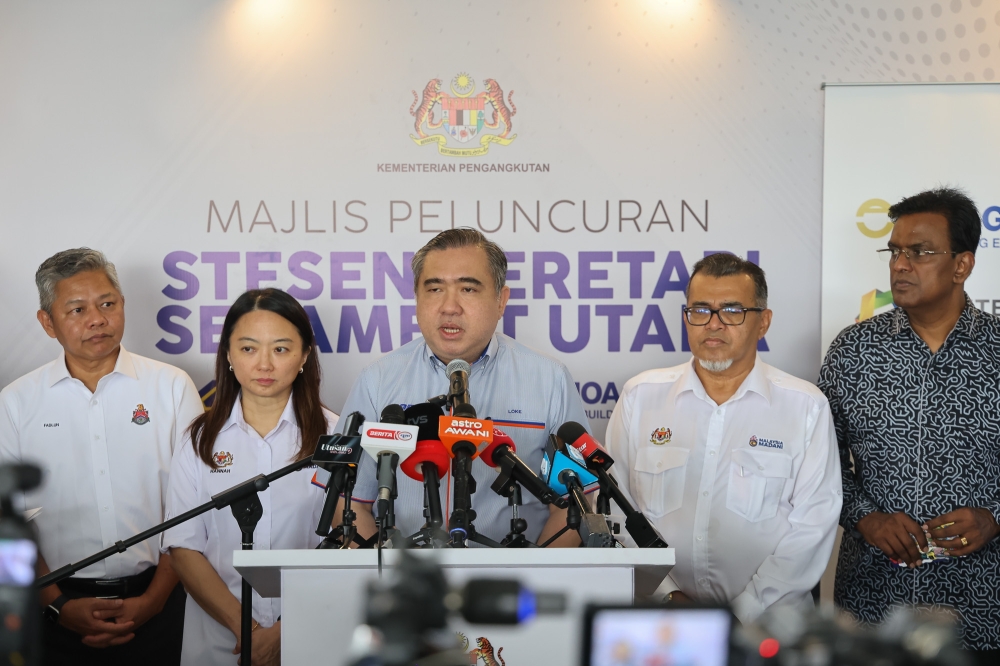
“KUALA LUMPUR, May 15 — DAP secretary-general Anthony Loke today slammed criticism over the move to open public universities to graduates of Chinese Independent High Schools (SMPC) and Unified Examination Certificate (UEC) holders, describing it as an attempt to politicise education. Yesterday, the Higher Education Ministry (KPT) announced that students from outside the national education system, including UEC holders, would be allowed to enrol in public universities, marking a watershed decision as the UEC system has long been a flashpoint in race relations. Some groups alleged that the move promotes Chinese chauvinism, an accusation UEC advocates have described as baseless. “I find it strange that some parties are protesting this government commitment. They are opposing people’s access to education,” Loke said at a press conference here. “In fact, we want to increase educational access so that we can educate these children to receive a better education. If they oppose this, it shows that they are denying our children’s right to study at a higher level,” he added. “This is a government commitment, just as announced by Prime Minister Datuk Seri Anwar Ibrahim last January.” Shortly after the announcement, PAS information chief Ahmad Fadhli Shaari reportedly claimed that opening opportunities for UEC students to pursue studies at public universities (IPTA) was a “magic trick” tactic by the government to expand educational access for students from that stream. He claimed that combining tahfiz graduates and UEC holders under the same announcement was a subtle attempt to legitimise the admission of UEC students into public universities. Under the new framework, students from these streams who possess a full Sijil Pelajaran Malaysia (SPM) certificate may apply for any study programme offered through the standard UPUOnline system. Their applications will be considered based on merit alongside other candidates, subject to meeting the general and specific programme requirements. The second pathway involves applicants without a full SPM certificate but who have passed the Bahasa Melayu and History papers. The ministry said a new pathway has been created for them to apply for a specific list of relevant degree and diploma programmes. For religious and tahfiz school graduates under this second pathway, the identified programmes include studies in Dakwah (Islamic Outreach), Al-Quran and As-Sunnah, and Tahfiz Education.
Original story
Continue reading at Malay Mail Education
www.malaymail.com/news/malaysia
Summary generated from the RSS feed of Malay Mail Education. All article rights belong to the original publisher. Click through to read the full piece on www.malaymail.com/news/malaysia.

