
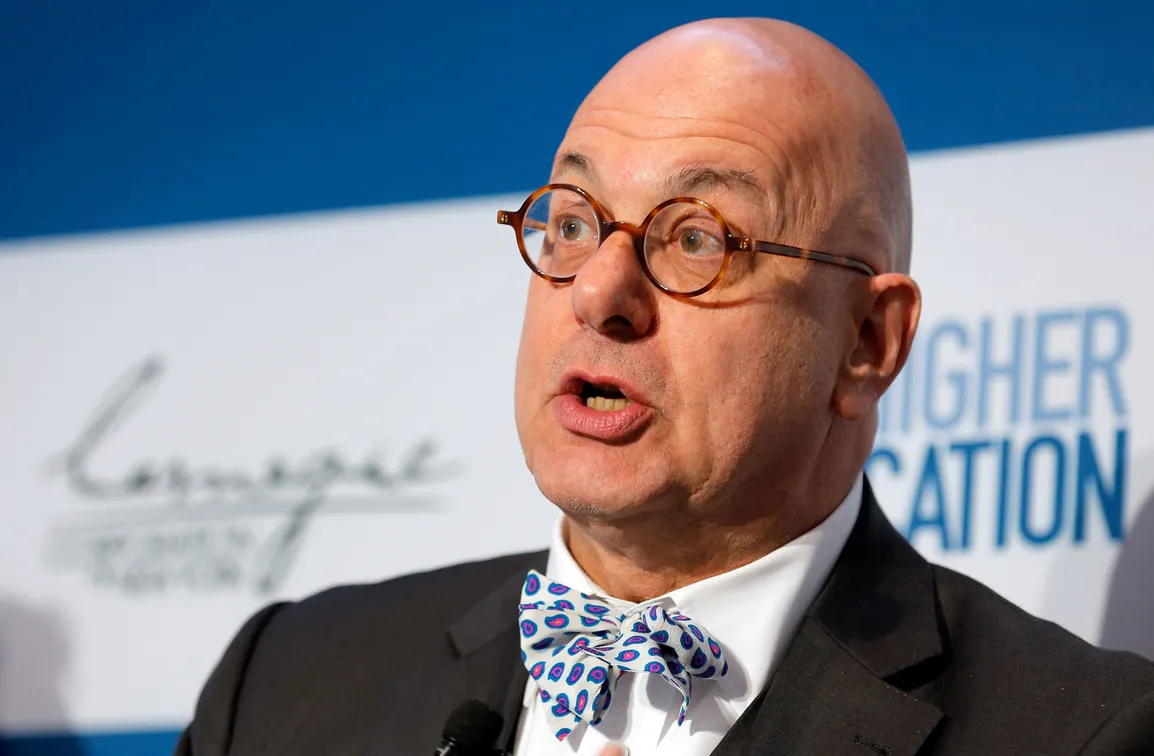
“Dive Brief: Bard College’s longtime president, Leon Botstein, will step down at the end of the academic year after an independent investigation concluded he downplayed his relationship with Jeffrey Epstein to the campus community. Botstein frequently contacted and visited the convicted sex offender between 2012 and 2019, including making roughly 25 visits to Epstein’s townhome and a two-day visit to his private island, an investigation from law firm WilmerHale concluded. Epstein, meanwhile, visited Bard twice, made donations to the college and paid Botstein under a consulting agreement. According to the law firm’s April 30 report summary, though Botstein did nothing illegal, he said he “ did not see a risk to Bard’s reputation in pursuing Epstein or the potential risk to Bard students of exposure to Epstein, nor did he consider that his actions could validate and legitimize Epstein to potential victims or their parents .” Dive Insight: Botstein took the helm of Bard in 1975 when he was only 28 years old. He transformed Bard from a New York liberal arts college on shaky financial footing to one with a strong fundraising arm and a national reputation for its writing and performing arts programs . “ Bard has defied the fate of many smaller institutions of higher education, and has overcome its long history of financial instability and poverty to become a college of national and global prominence, known especially for its devotion to liberal education and to public service ,” Botstein said in a message Friday announcing his retirement. He touted that he helped bring in nearly $3 billion in donations during his five-decade tenure. As part of those efforts, Bard recently wrapped up a $1 billion fundraising campaign for its endowment that was kickstarted by a $500 million donation in 2021 from Open Society Foundations, founded by investor and philanthropist George Soros. The leaders of Bard’s governing board said in a public message Friday that Botstein submitted his intent to retire after the WilmerHale review concluded. They expressed gratitude to Botstein on behalf of the board “for his five decades of service to Bard College, his countless accomplishments and the lasting impact of his leadership .” Bard plans to announce an interim leader soon and to launch a national search for its next permanent president that incorporates "a wide range of stakeholder input." In Botstein’s own announcement to the campus community, he cited the completion of the endowment campaign, his half-century of service and his upcoming eightieth birthday factors as prompting his retirement. He said he believed it was “in the best interest of Bard” to wait until the WilmerHale report was finished to announce his retirement. According to the WilmerHale report, Epstein made donations to Bard through an entity called Enhanced Education in 2011 and 2012, several years after the financier had pleaded guilty to one count of soliciting prostitution of a minor and another count of soliciting prostitution. Botstein was aware of the crimes in 2012 but did not inform Bard that the donations came from Epstein, the report said. “ President Botstein relied on his view that a person convicted of crimes involving sex with a Minor — ‘an ordinary sex offender’, in his words — could be presumed to be rehabilitated in the same way that any other convicted person should, in his view, be given that presumption ,” the WilmerHale report stated. Botstein has maintained that Bard needed the funding, regardless of the source , according to the report. “His view was, ‘I would take money from Satan if it permitted me to do God’s work,’” it stated. In 2014, Botstein had learned another donor made a gift to Bard at Epstein’s behest, but he did not disclose that to the board, the WilmerHale report said. And two years later, Epstein hired Botstein for consulting work that Botstein did not disclose to Bard's board. Botstein has since said he donated the money Epstein paid him to Bard under his and his wife's name — an arrangement that was not discussed with the board at the time and that ultimately prevented WilmerHale from being able to confirm that's where the money had gone. Reporting from the Times Union found that Epstein paid Botstein a total of $150,000 in consulting fees. The WilmerHale report also noted that Epstein was invited to Bard several times, including to stay at a college guest cottage, to attend a performance by conservatory students and to visit Bard High School Early College. If the convicted sex offender had accepted those invitations, they could have “further exposed Bard students to Epstein,” the report said. In 2023, The Wall Street Journal revealed that Botstein had scheduled dozens of meetings with Epstein over four years. At the time, Botstein told the publication that the relationship was focused on soliciting donations from Epstei n, an effort he described as unsuccessful. He also said he found Epstein “odd and arrogant” and ended contact when he began to believe Epstein was “simply stringing us along.” Yet the U.S. Department of Justice’s release of a trove of documents related to the Epstein investigation reveal that Botstein retained a friendly relationship with the financier even after the broader allegations against Epstein became widely known. In 2018, the Miami Herald released a blockbuster series detailing the extensive sex trafficking allegations against Epstein and the extraordinarily lenient plea deal he received that led to him serving just over a year in jail. Only a few weeks afterward, Botstein wrote to Epstein, “ I want you to know that I hope you are holding up as well as can be [expected] ,” the Times Union reported. Epstein was arrested on sex trafficking charges seven months after the Miami Herald series and a month later found dead in his jail cell. A medical examiner ruled his death a suicide. The Epstein files have revealed that he had several other connections with prominent leaders and researchers throughout the higher education sector. Lawrence Summers — president of Harvard University between 2001 and 2006 and U.S. treasury secretary during the Clinton administration — resigned from his teaching position at the Ivy League institution earlier this year after the Epstein files revealed he maintained close ties with the financier.
Original story
Continue reading at Higher Ed Dive Leadership
www.highereddive.com
Summary generated from the RSS feed of Higher Ed Dive Leadership. All article rights belong to the original publisher. Click through to read the full piece on www.highereddive.com.
