
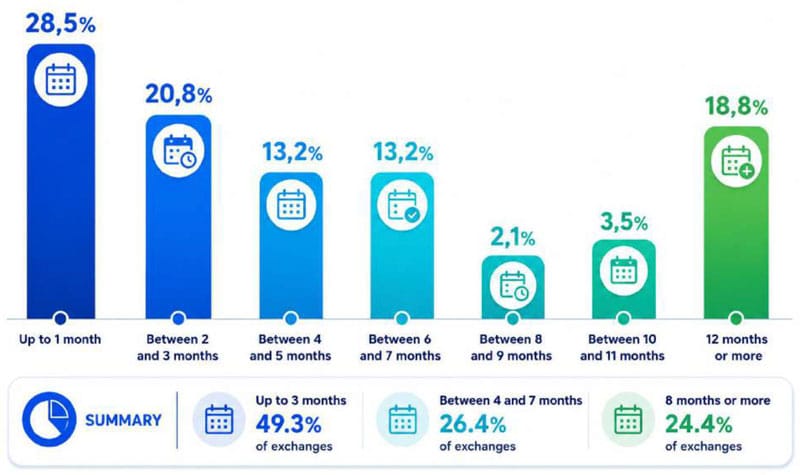
“New survey results show strong interest in study abroad among Brazilian students and an optimistic outlook on the part of education agents. However, affordability issues – particularly exchange rate fluctuations – exert a major influence on whether Brazilian students will follow through on their study abroad plans. The Brazilian Educational & Language Travel Association (BELTA) administered two online surveys from February to April of 2026. Respondents to the first survey included over 2,200 students from all over Brazil who had already studied abroad or who were interested in doing so. The second survey included representatives in various positions at 74 education agencies. More than half of agents were owners of their business. Study abroad is common, especially for short programmes Most surveyed Brazilian students had already had at least one international education-related experience (85%). Top languages for study are English (68%), with Spanish, Portuguese, French, and German rounding out the top five. Nearly half of respondents studied abroad for less than three months (49%), while 26% were in exchanges of four–seven months and 24% were abroad for more than eight months. Duration of exchange programme, in months. About half of Brazilian student respondents choose to study abroad for three months or less. Source: BELTA Demand is strong, especially for language learning About 70% of students are interested in going abroad to study in the future. About 4 in 10 are planning to go in the first or second semester of 2027, while another 3 in 10 are aiming for 2028 or later. The preferred programme type for Brazilian students is language learning (46%), especially when a language course allows for temporary work (26%). About a quarter are interested in degree studies, with equal interest for postgraduate and undergraduate levels. How students research and organise study abroad The main channel on which students research study abroad options is Instagram (24%), with smaller percentages choosing YouTube, Facebook, or TikTok. In terms of in-person resources, students turn first to agents (15%) followed by education fairs (9%). When selecting an agency, students are first and foremost looking for someone who can help them find trustworthy study abroad experiences (22%). Students also value agents being easy to contact (16%), offering personalised service (13%), and being compatible with their budget (11%). Brazilian students’ reasons for choosing an education agency. Students are looking for confidence in their decision-making when they choose an agent. Source: BELTA Most agents place language students and high school students The top five programme types that surveyed agents place students into are language courses, summer/winter holiday courses for teens, high school exchanges, language courses with a work component, and shorter sub-degree programmes. Undergraduate and graduate programmes followed in sixth and seventh place, respectively. Agents said that most students aren’t just interested in studying: they want to travel, work, learn a new language, and experience a different culture. A primary goal of obtaining an international qualification or career is less common. Traditional destinations are still the most popular Agents put Canada, the US, the UK, Ireland, and Malta as the top five destinations for students, which makes sense given that English remains the preferred language to study. Spain is also popular among the significant segment of students looking to study in Spanish. The mood is optimistic Most surveyed agents had a good year in 2025. More than half of agents (53%) said they sent more students abroad than in 2024. Another 17% sent about the same number, while 30% sent fewer. The average growth in placements from 2024 to 2025 was 9.5%. Close to three-quarters (73%) of agents expect to send more students in 2026, a far greater proportion than those who expect the same or lower volume (17% and 10%, respectively). Agent expectations for 2026. More than 7 in 10 Brazilian agencies expect a better year in 2026 than in 2025. Source: BELTA But much will depend on certain factors Agents said that currency fluctuations can either deal a deal … or break it. A favourable final currency exchange rate was the most cited reason for a sale, and a currency devaluation was the most cited reason for a sale being made difficult or impossible. Affordability is overall a major issue for students. Alongside currency devaluation, a reduction in a student’s purchasing power, an exchange rate increase, an increase in the cost of living in a destination country, and an increase in flight costs are all among the top 10 factors that can persuade a student not to follow through on a placement. The main factors that hindered sales for Brazilian agents. Finance-related barriers represent five of the top ten reasons that students choose not to follow through with an agency placement. Source: BELTA The economic impact of the Middle East conflict on Brazil’s economy The Brazilian real has recently weakened against the US dollar amidst ongoing fighting between the US-Isreal against Iran-Hezbollah in the Middle East. If this trend persists, it will naturally be an issue for students considering study abroad in 2027. Other economic impacts of the widespread conflict on Brazil are both positive and negative. Brazil’s crude oil exports are increasing, especially to China and India, as the Strait of Hormuz remains a dangerous crossing for Gulf-based producers. Additional oil revenue is helping the Brazilian government to minimise the conflict’s impact on domestic food and fuel prices. However, Brazil also imports 25% of its diesel, and it is the world’s biggest importer of fertilizers. Most imports come from Gulf countries through the Strait of Hormuz. With diesel imports restricted, transportation and airfare costs are rising. With fertilizer imports limited, two of Brazil’s top exports – soybeans and meat – are in jeopardy. In Brazil – as in most other countries – the Strait’s reopening cannot come soon enough. For additional background, please see: “ Market snapshot: A guide to international student recruitment in Brazil ” “ Brazilian agents reporting strong growth this year with many exceeding pre-pandemic volumes ” The post Brazil: New surveys show strong, but price-sensitive, demand for study abroad appeared first on ICEF Monitor - Market intelligence for international student recruitment .
Original story
Continue reading at ICEF Monitor
monitor.icef.com
Summary generated from the RSS feed of ICEF Monitor. All article rights belong to the original publisher. Click through to read the full piece on monitor.icef.com.

