
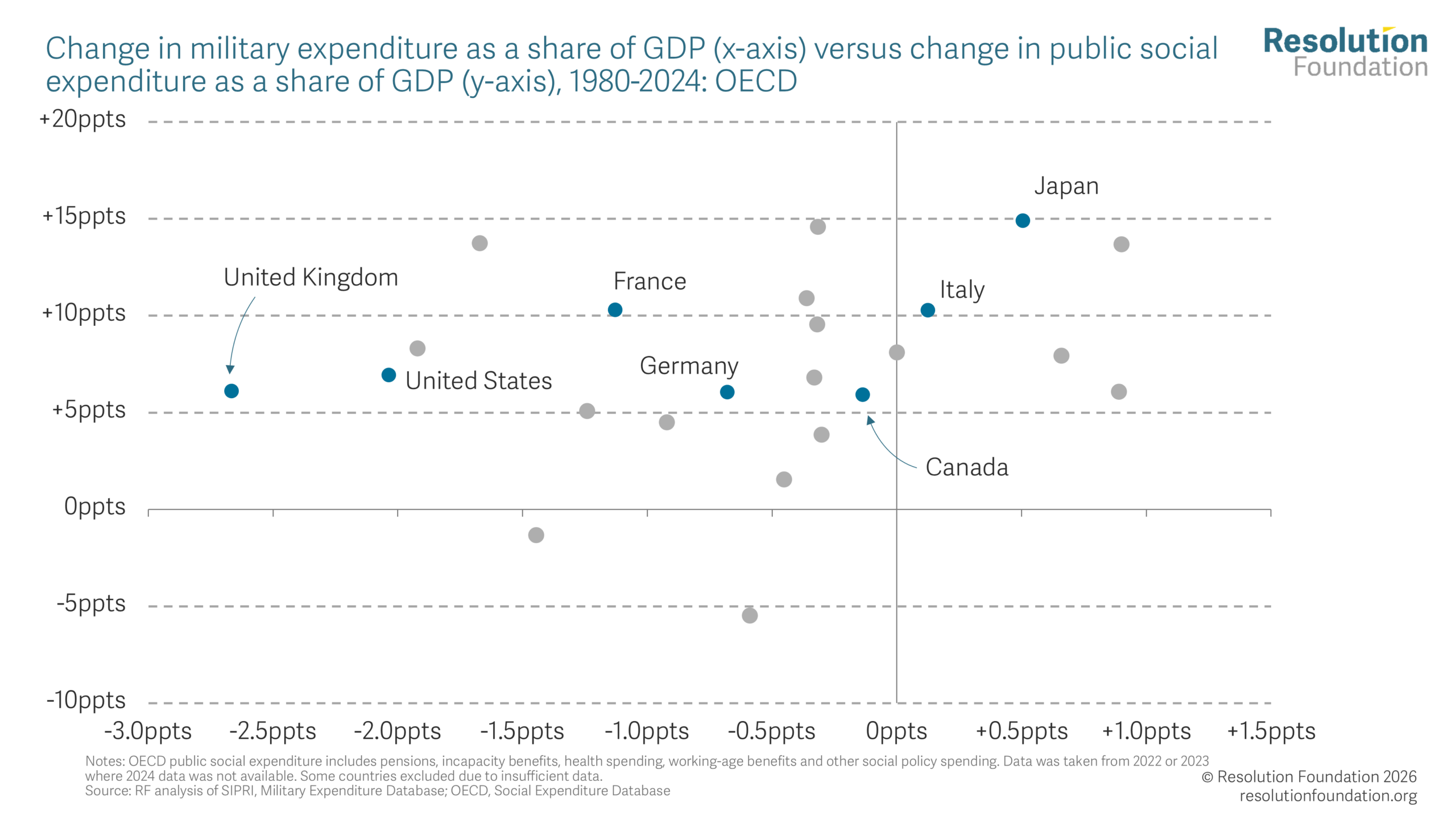
“Afternoon all, Whether it’s football or politics, the real battle now kicks off. Andy Burnham’s decisive victory at Makerfield all but guarantees a few febrile weeks, or maybe months, of political manoeuvring. Meanwhile, some of us will be staying up late tonight to see whether Scotland can secure a historic move beyond the group stages. Next week also marks Brexit’s long-awaited tenth birthday. We’ll be talking through the consequences and – more importantly – the possible paths ahead on Monday. Please do join us if you can . We’ll also be releasing a special High Resolution podcast episode to wish Brexit a happy birthday – subscribe now to get that straight to your feed. If that’s all sounds too traumatic, we’ve got some good news for Gen Z coming on Thursday . Have a great weekend, Ruth Chief Executive Resolution Foundation AT&T phone home? A paper has attracted attention for its bold claim that the iPhone explains 33-52 per cent of American fertility decline between 2007-2011, using Apple’s exclusive AT&T partnership as a natural experiment. They attribute the decline to less in-person socialising, better contraceptive information, and pornography. However, it does seem odd at first glance that one factor – especially not a one-off macro event – could explain up to half of the US’ fertility reduction. This Substack highlights some reasonable objections. AT&T coverage closely tracked urban wealth, the Great Recession was felt differently in richer, urban areas, and early iPhone users barely touched social media. Although the scale of the effect looks overdone, it remains a widely held consensus that growing up online has had a detrimental effect on millions of young people. We will have to wait and see whether the Government’s very popular under-16s social media ban leads to more babies. Trust no one. As Burnham blames Westminster for the woes of Makerfield, this research suggests he is tapping into some deep-rooted psychology. The analysis investigates how trust is felt up-North and down-South. Participants play a trust and dictator game, with a separate group of spectators incentivised to guess the trustworthiness of each pair… but only based on where they’re from. The author finds that Southerners seem no more suspicious of Northerners than they are of their own – but Northerners trust Southerners far less. This cultural trust gap is attributed to the belief that Southerners are more selfish. The author reflects on the policy implications of this mistrust, noting that trust divides can damage prosperity. But no prizes for guessing the answers Burnham and Starmer would put in the trust and dictator game this weekend… Squamish skyscrapers. A fascinating natural experiment in what happens when land escapes the planning gauntlet. The Sen̓áḵw development sits on 10.5 acres of Vancouver that, after a long legal battle, returned to the Squamish Nation as reserve land, and therefore lies outside the city’s zoning rules. Free to build as they liked, the Nation chose to go big: 11 towers up to 58 storeys, totalling around 6,000 rental apartments, more than the entire city of Vancouver builds in an average year. The decision was slow and consultative (years of deliberation, then a democratic vote) but, crucially, final, as neighbours sued and grumbled but had no veto. The pay-off is enormous, with all that deadweight loss from delay and objection instead accruing as profit to fund Squamish healthcare and homelessness programmes. It’s coming home to Curaçao. Against all odds, this Caribbean island of just 160,000 is the smallest nation ever to qualify for the World Cup. This summer, they’re gearing up to take on Ecuador and the Ivory Coast, after a tough match against Germany. Fans that this author (who is also a photojournalist, so there’s some cracking images) spoke to are proud, but conflicted. While thrilled to see Curaçao on the world stage, they long for the same opportunity for the most disadvantaged still residing on the island. At home, 30 per cent of Curaçaoans live below the poverty line – although average gross household income essentially doubled between 2011 and 2023 (what we’d do for numbers like that). Most of the ‘blue wave’ squad competing in the World Cup grew up in the Netherlands, Curaçao’s former colonial power, where many hopeful families moved for better access to jobs. In fact, almost half of all Curaçaoans live in the Netherlands. FIFA’s rules dictate that these expats can represent the land of their heritage – and they have, spectacularly. But not all the islanders were able to pursue their footballing ambitions in the Netherlands. As one fan observed: “Many of the island’s great players never had the chance to be part of this success”. Now we know our ABCs. Since we’re not here to avoid controversy, let’s dive in to whether parenting is fun, who does more of it, and (kids don’t look) whether they enjoy it. This new research is based on survey data of 1,500 mothers in Chicago and finds that better-educated mothers invest more time in their children’s learning (51.7 vs 46.3 minutes a week) – but enjoy it less: they’re 28 percentage points less likely to rate those activities at peak enjoyment. The enjoyment gap is biggest for rich, highly-educated women who are not in employment. They report the lowest enjoyment and invest less time than their employed counterparts. Lower-income, less-educated mothers, by contrast, enjoy it more, and the unemployed among them invest even more time. The authors suggest this is because unemployed highly-educated mothers feel the biggest social pressure to intensively parent and, essentially, that pressure takes all the fun away. Chart of the week Last week I made my feelings known about dodgy comparisons between warfare and welfare – both because it’s fairly arbitrary to consider these two segments of government spending in isolation, and because the comparison has often been factually incorrect. But then we thought it would be fun to make our own – crucially focused on a wide range of social spending (health, pensions, etc), not just working-age benefits. So, for Chart of the week, we’ve plotted where we sit alongside similar countries when it comes to how our defence and social spending has changed since 1980 as a share of GDP. We’ve cut our defence by more than anyone else but we haven’t increased social spending by more than our G7 peers (the blue dots). It’s almost like this whole welfare versus warfare is a spurious comparison. Of course, the main reason we cut defence more than others is because we started higher. In 2024 (the latest we have for this OECD data but before recent rises) the UK still spent the second highest in the G7 on defence (way behind the US) but was fifth in the rankings for social expenditure. The world is undoubtedly getting more frightening, but we went in with more warfare and less welfare than many others. The post Burnham turns up and Brexit turns ten appeared first on Resolution Foundation .
Original story
Continue reading at Resolution Foundation
www.resolutionfoundation.org
Summary generated from the RSS feed of Resolution Foundation. All article rights belong to the original publisher. Click through to read the full piece on www.resolutionfoundation.org.