
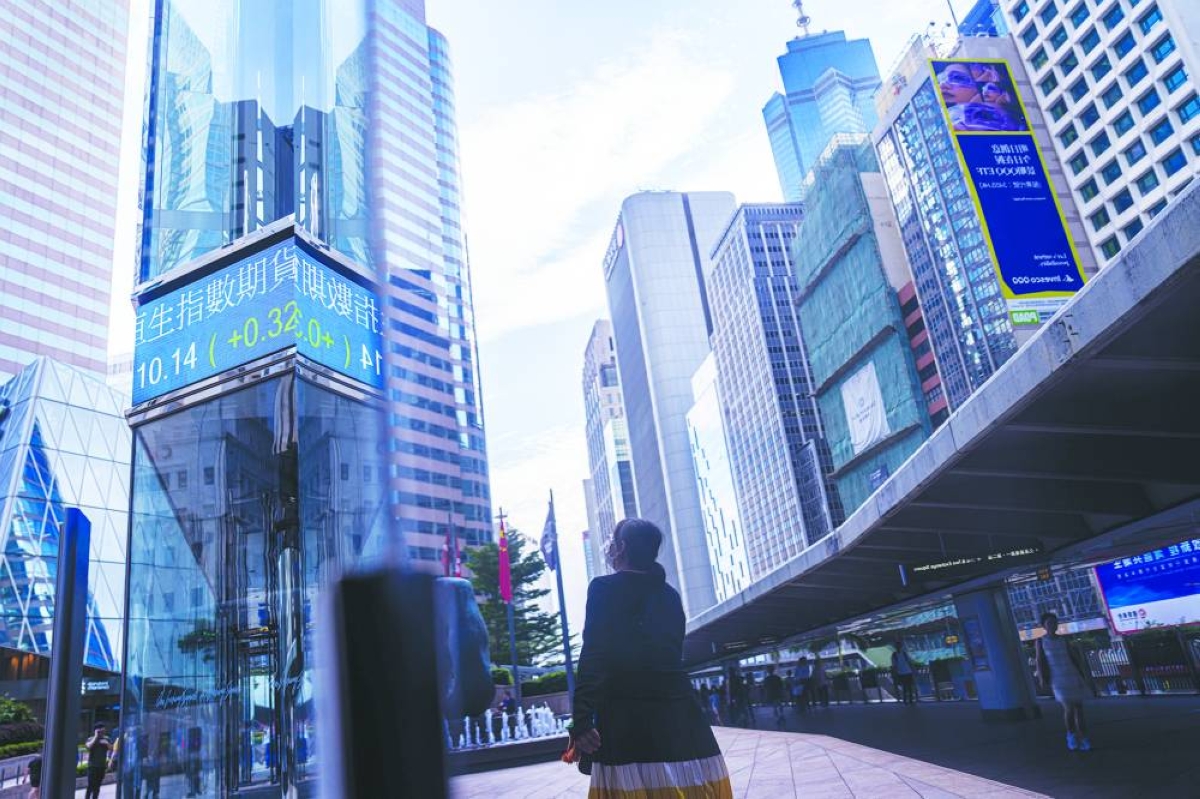
“China’s latest crackdown on cross-border stock trading aimed at tightening control over capital outflows may affect as much as HK$250bn ($32bn) of assets in Hong Kong, according to Citic Securities. Citic estimates that Futu Holdings Ltd accounts for around HK$150bn to HK$180bn of the affected assets, while Tiger Brokers represents another HK$45bn to HK$50bn. Including other brokerages caught up in the clampdown, the total impact across the market could reach HK$200bn to HK$250bn, analysts led by Tian Liang wrote in a note. Chinese regulators on Friday announced the surprise campaign against illegal cross-border trading, saying they planned to penalise brokerages including Futu, Tiger Brokers and Long Bridge Securities Ltd for operating on the mainland without licenses and confiscate what they described as “illegal gains” from their domestic and offshore entities. The move marks Beijing’s most aggressive attempt yet to curb citizens from accessing overseas markets outside approved channels, a practice that remains officially off-limits under the nation’s strict capital controls. It comes as more mainland investors chase higher returns in US and other overseas markets, with Chinese equities largely lagging in performance while returns on fixed-income products have trended lower. Under the plan’s two-year transition period, existing investors may continue to access their accounts but will only be allowed to sell assets and withdraw funds. Purchases and fund deposits are prohibited. Morgan Stanley said the measures remove a major regulatory overhang while leaving the financial impact manageable. The bank said it does not expect all mainland customer accounts in Hong Kong to be shut down within two years, but rather that trading, deposit and withdrawal activities cannot occur onshore. Citic said the HK$250bn figure does not completely translate into potential selling for Hong Kong stocks and that the market fallout is likely to be manageable. The affected assets are spread across different products, and any equity selling would probably happen gradually during the two-year period, the analysts wrote. The brokerage expects demand for overseas asset allocation to shift toward compliant onshore wealth-management platforms. Brokerages and wealth managers with strong client bases and robust cross-border offerings could stand to benefit. China’s benchmark CSI 300 Index rose as much as 1.2% on Monday on expectations the tighter capital controls would redirect flows into domestic equities. Still, the gauge is up less than 6% this year, underperforming the regional benchmark’s nearly 20% gain and S&P 500’s 9% advance. Hong Kong markets were closed for a holiday. The gains contrasted with a 2.2% drop in the Nasdaq Golden Dragon China Index on Friday. The gauge was expected to be one of the hardest hit by the fallout. Futu shares plunged 28% after the company said regulators proposed about $271mn in fines. “I don’t think there’s a huge impact to the market at this moment given the time horizon is about two years,” said William Ma, chief investment officer at Grow Investment Group. While the hit to brokers is likely to be bigger as penalties weigh on earnings, “to the market, I don’t expect big correction in the next few days,” he added.
Original story
Continue reading at Gulf Times Qatar
www.gulf-times.com/qatar
Summary generated from the RSS feed of Gulf Times Qatar. All article rights belong to the original publisher. Click through to read the full piece on www.gulf-times.com/qatar.