
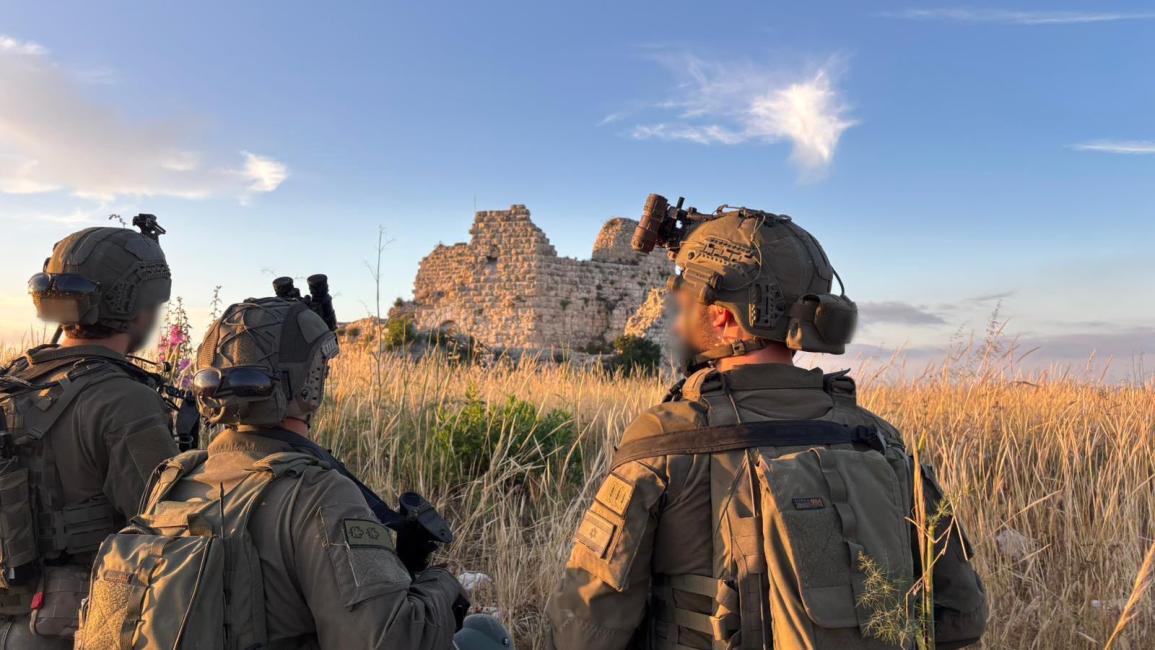
“Egypt on Sunday strongly condemned Israel’s expansion of ground operations in southern Lebanon, describing the Israeli army’s crossing of the Litani River and advance into areas north of the river as a “complete violation of Lebanese sovereignty” and an attempt to impose a new military reality on the ground. In a statement, Egypt’s Ministry of Foreign Affairs said the escalation constituted a “blatant act of aggression” and a serious breach of international law and the United Nations Charter. Cairo reiterated its rejection of any infringement on Lebanese territory, called for Israel’s immediate and full withdrawal from all Lebanese lands, and urged the comprehensive implementation of UN Security Council Resolution 1701. The Egyptian statement came hours after the Israeli military announced an expansion of its ground operations north of the Litani River, marking one of its deepest advances since the latest conflict began. The military said its forces had crossed the river and intensified attacks against Hezbollah positions, adding that operations were continuing in additional areas. In a significant battlefield development, Israel also announced that its forces had taken control of the strategic Beaufort Castle (Qalaat al-Shaqif) in southern Lebanon. Israeli Prime Minister Benjamin Netanyahu described the move as a “decisive turning point” in the war, saying in a video statement that Israel had returned to the site “stronger and more determined than ever” and was operating simultaneously in Lebanon, Gaza, and Syria. The developments triggered swift international reactions. French Foreign Minister Jean-Noël Barrot said France had requested an emergency meeting of the UN Security Council, describing the expansion of Israeli operations as a “serious mistake” that violated international law and ran contrary to Israel’s own interests. He also argued that the move breached commitments under the ceasefire agreement reached in April. Meanwhile, Lebanon’s Health Ministry said the cumulative death toll from Israeli attacks since 2 March had risen to 3,412, with 10,269 people wounded. The Lebanese army continued efforts to address unexploded ordnance, announcing the dismantling of two unexploded bombs in the Tyre district and renewing warnings for residents to report suspicious objects in conflict-affected areas. As tensions mounted on the Lebanese front, uncertainty also deepened in the Gulf and the Strait of Hormuz. US media reports indicated that US President Donald Trump had sent Tehran a revised and tougher proposal aimed at ending the ongoing confrontation between the two countries. The proposal reportedly introduces stricter conditions to a draft agreement that had appeared close to completion in recent days. According to The New York Times, the revised proposal includes more stringent provisions concerning Iran’s nuclear materials. Axios reported that Trump insisted on strengthening several elements of the agreement that he viewed as critical. The changes could prolong negotiations for several more days before a final decision is reached. In Tehran, Iranian President Masoud Pezeshkian said the country faced multiple challenges that required broader participation in decision-making, stressing that national problems could not be solved from the sidelines. Iran’s navy announced that 28 vessels, including oil tankers, container ships, and commercial ships, had passed through the Strait of Hormuz during the previous 24 hours after receiving the necessary permits and coordinating with the Islamic Revolutionary Guard Corps navy. Iranian authorities said “smart monitoring” of the strategic waterway remains in operation around the clock. Iran’s Revolutionary Guard also unveiled a new fast attack craft named Rajab 27 during a nighttime military display in Tehran. According to Iranian media, the vessel is capable of carrying two naval cruise missiles with a range of up to 700 kilometres and is designed for high manoeuvrability in rough sea conditions. Regional concerns intensified further following reports of an unofficial draft understanding that would grant Iran broad authority over shipping through the Strait of Hormuz, including the ability to determine which vessels could transit the waterway and impose navigation fees. Iranian media, however, stressed that the document remains under review and has not been formally adopted. In Oman, Sultan Haitham bin Tariq and French President Emmanuel Macron discussed the latest regional developments during a telephone call, focusing on diplomatic efforts to reduce tensions, safeguard maritime security, and ensure the uninterrupted flow of international trade. The discussions reflect growing international concern over the risk of simultaneous escalations across multiple regional fronts, amid ongoing efforts to prevent a wider conflict and preserve stability in one of the world’s most strategically important regions. The post Egypt condemns Israeli incursion into Southern Lebanon as regional tensions escalate first appeared on Dailynewsegypt .
Original story
Continue reading at Daily News Egypt
www.dailynewsegypt.com
Summary generated from the RSS feed of Daily News Egypt. All article rights belong to the original publisher. Click through to read the full piece on www.dailynewsegypt.com.
