
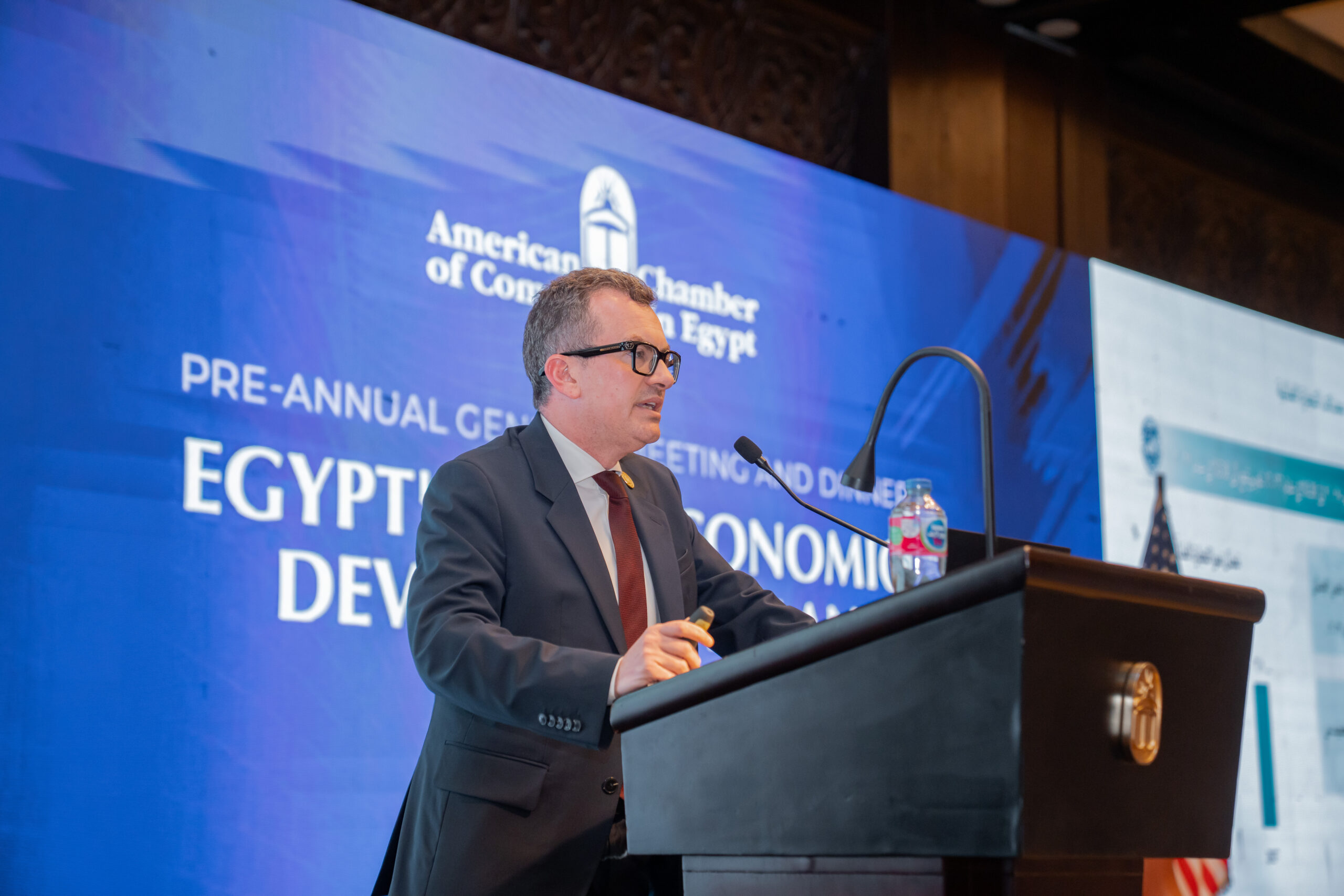
“Egypt’s Minister of Planning and Economic Development, Ahmed Rostom, said the national economy has withstood five major external shocks over the past six years, each of which could have triggered a severe downturn, yet continued to deliver positive performance indicators. Speaking during a presentation of Egypt’s economic development plan at an American Chamber of Commerce conference, Rostom noted that implementation of several key initiatives will begin immediately following approval of the national investment plan, with further details to be announced in due course. He emphasised that the government is intensifying its focus on entrepreneurship by supporting start-ups and fostering a more enabling business environment. These efforts are being coordinated at the highest levels, under the supervision of the Deputy Prime Minister and in collaboration with relevant stakeholders. Rostom said these initiatives form part of a broader strategy to position Egypt among the leading economies in the Middle East and across emerging markets, driven by continued structural reforms and an expansion of the country’s productive base. In cooperation with international financial institutions, including the World Bank and the International Monetary Fund, the government has developed multiple economic scenarios for growth and inflation, allowing policymakers to adapt swiftly to evolving global conditions. He cautioned that sudden geopolitical developments, including regional conflicts and tensions, can trigger immediate disruptions in financial and commodity markets, with rapid spillover effects on the global economy. Ahmed Rostom, Egypt’s Minister of Planning and Economic Development Addressing the ongoing crisis in the Gulf, Rostom said it is likely to push energy and commodity prices higher both globally and domestically. He described the current global economic environment as more complex than the 2008 financial crisis, given its direct link to energy markets, unlike the earlier crisis which was largely concentrated in the United States and Europe and contained relatively quickly. Under the baseline scenario, global growth is expected to ease to 3.1%, down from 3.4% in 2025, before recovering slightly to 3.2% by 2027. Inflation is projected to reach around 4.4%, moderating to 3.7% over the same period. Rostom also highlighted sharp increases in global energy prices, noting that natural gas prices have surged by 160%, while food prices have risen by 2.5%. Under a more adverse scenario, oil prices could rise to between $110 and $150 per barrel, while natural gas prices may increase by as much as 200%. Food prices are also projected to climb by 5% in 2026 and 10% in 2027. He further noted that revenues from the Suez Canal have been significantly affected, alongside broader disruptions to regional supply chains, including the suspension of fertiliser and energy shipments. These pressures are contributing to rising production costs and inflationary trends. Despite these headwinds, international institutions continue to project sustained positive growth for Egypt, albeit at a more moderate pace. Credit rating agencies have also maintained Egypt’s outlook between stable and positive, reflecting continued confidence in the country’s economic reform trajectory. The post Egypt’s economy demonstrates resilience amid successive global shocks first appeared on Dailynewsegypt .
Original story
Continue reading at Daily News Egypt
www.dailynewsegypt.com
Summary generated from the RSS feed of Daily News Egypt. All article rights belong to the original publisher. Click through to read the full piece on www.dailynewsegypt.com.