
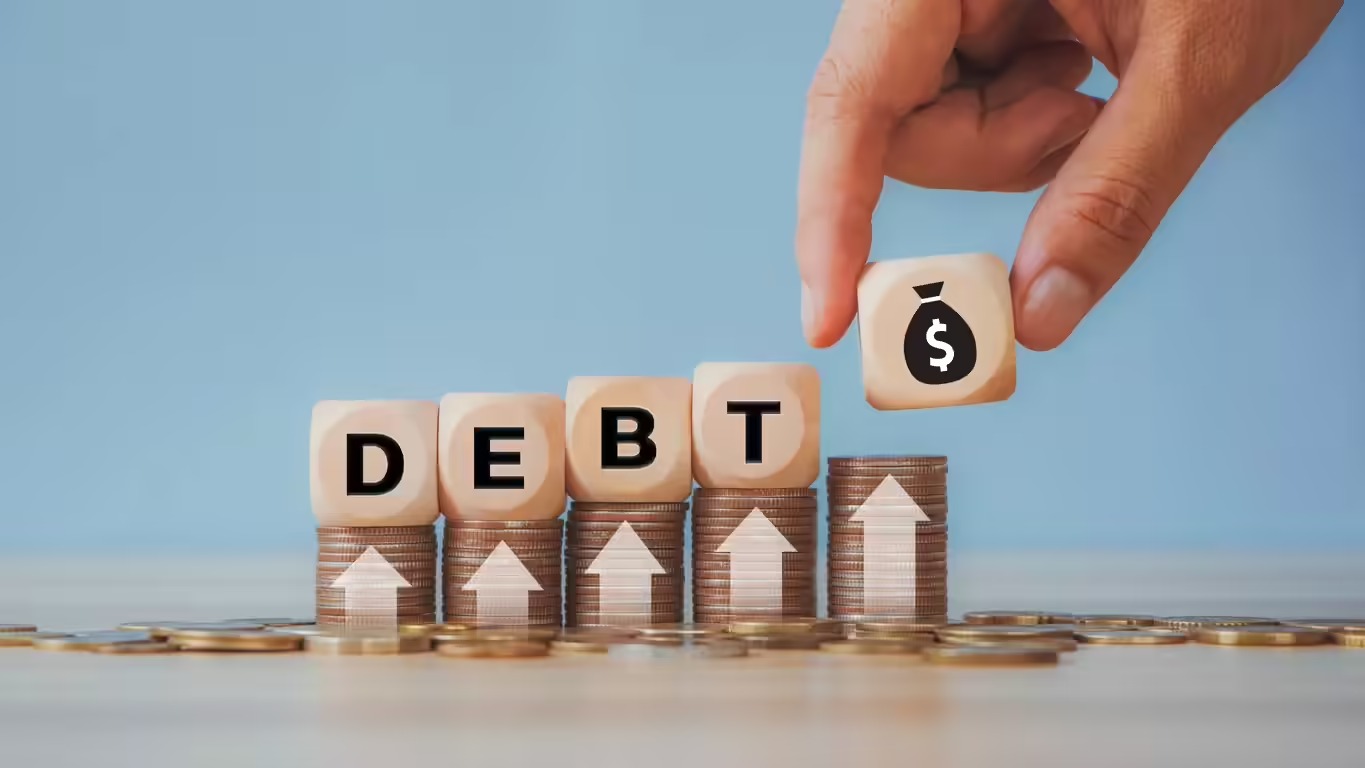
“Egypt’s external debt rose to $163.7bn in September 2025, an increase of $2.5bn, or 1.5%, compared with June 2025, according to the Central Bank of Egypt (CBE). The increase was mainly driven by fresh loan disbursements and exchange-rate movements, although valuation effects reduced the debt stock by approximately $48m. Long-term debt remains dominant By original maturity, long-term external debt continued to account for the largest share of Egypt’s obligations, reaching $128.9bn in September 2025, while short-term debt stood at $34.8bn. Measured by residual maturity, short-term debt totalled approximately $59.4bn during the same period. Long-term external debt declined by around $1.4bn compared with June 2025. Debt owed to multilateral institutions fell by $0.9bn to $43.9bn. Meanwhile, Egypt’s outstanding stock of international bonds, notes, and sukuk held by non-residents reached $28.4bn, down by $0.3bn from June. The portfolio included approximately $20.1bn in US dollar-denominated Eurobonds, €3.5bn-equivalent in euro-denominated Eurobonds, $2.4bn in US dollar sukuk, $911.8m in Samurai bonds denominated in Japanese yen, $676m in green bonds, $491.5m-equivalent in Panda bonds denominated in Chinese yuan, and $345.5m in sovereign notes. Rescheduled bilateral debt declined by $149.5m to $307m, while non-guaranteed private sector debt fell by $113.2m to $2.3bn, including $100m in green bonds and $499m in sustainability bonds. Buyers’ and suppliers’ credit eased by $53.1m to approximately $19.2bn. Long-term deposits held by Arab countries at the CBE remained unchanged at $9.3bn, including $5.3bn from Saudi Arabia and $4bn from Kuwait. Repurchase agreements (repo) stood at approximately $6.7bn, while other bilateral debt rose by $128.6m to $18.8bn. Short-term external debt increased by $3.9bn to $34.8bn in September 2025, with Arab countries’ deposits at the CBE accounting for around 31.9% of the total, equivalent to $11.1bn. US dollar remains Egypt’s main borrowing currency The US dollar continued to dominate Egypt’s external debt composition, accounting for $112.9bn, or 68.9% of total debt, in September 2025. The euro ranked second at $20.1bn, while other major currencies totalled $30.7bn. These included Special Drawing Rights (SDRs) at $14bn, the Chinese yuan at $5.9bn, and both the Kuwaiti dinar and Japanese yen at $3.7bn each, alongside $3.4bn in other currencies. IMF remains largest multilateral creditor Debt owed to multilateral institutions totalled $46.6bn in September 2025. The International Monetary Fund (IMF) alone accounted for 28.6% of these loans, equivalent to $13.3bn. This included $5.3bn under the Extended Fund Facility (EFF), $3.9bn linked to Egypt’s SDR allocation, $3.3bn under the new EFF arrangement, and $0.8bn under the Stand-By Arrangement (SBA). Other major multilateral creditors included the International Bank for Reconstruction and Development (IBRD) with $12.4bn, the European Investment Bank (EIB) with $3.6bn, the African Development Bank (AfDB) with $2.5bn, and the Arab Fund for Economic and Social Development (AFESD) with $2.2bn. Debt owed to Arab countries amounted to $40.3bn, led by Saudi Arabia with $15.4bn, followed by the UAE with $12bn and Kuwait with $6.3bn. Meanwhile, Egypt owed $19.1bn to six Paris Club members, including the United States ($5.4bn), Russia ($5.3bn), Japan ($2.8bn), France ($2.6bn), Germany ($2bn), and the United Kingdom ($1bn). Debt owed to China stood at $9.7bn. Government debt declines while banks’ debt rises By debtor sector, external debt owed by “other sectors” increased by $2.4bn to $22.1bn, representing 13.5% of total external debt, largely reflecting higher short-term trade credits. Banks’ external debt rose by $1.3bn to $23.5bn, accounting for 14.4% of total debt, driven by increased short-term borrowing. The Central Bank’s external debt edged down by $40.3m to $37.3bn, representing 22.7% of the total. Government external debt declined by $1.2bn to $80.8bn, equivalent to 49.4% of total external debt. Debt servicing pressures ease External debt service payments declined by $1.5bn year-on-year to $6.4bn during July-September 2025/26. The decrease reflected a $1.2bn reduction in principal repayments to $4.3bn, alongside a $0.3bn decline in interest payments to $2.1bn. Debt indicators improve despite rise in short-term obligations The ratio of external debt to GDP improved to 42.4% in September 2025, compared with 44.2% in June 2025. Short-term external debt by original maturity rose to 21.2% of total external debt, up from 19.2% in June, reflecting the faster pace of growth in short-term liabilities relative to overall debt. Its ratio to net international reserves increased to 70.2%, from 63.5%, indicating mounting pressure from near-term obligations despite the improvement in reserve levels. Short-term debt measured by residual maturity climbed to 36.3% of total external debt, compared with 33.8% previously, while its ratio to reserves rose to 119.9% from 112%. Meanwhile, external debt relative to exports of goods and services declined to 217.5%, from 223%, suggesting a gradual improvement in Egypt’s foreign-currency earning capacity relative to debt obligations. The annual debt-service ratio fell to 49.4% in September 2025, compared with 53.6% in June, while the debt-service-to-current-receipts ratio declined to 31.7% from 34.5%, reflecting easing repayment burdens. Reserves continue to strengthen Net international reserves (NIR) increased by $0.8bn during July–September 2025/26, compared with a $0.4bn rise during the corresponding period a year earlier, reaching $49.5bn by the end of September 2025. The reserves level covered 5.8 months of merchandise imports. The increase was driven by a $2.3bn rise in gold holdings, despite a $1.5bn decline in foreign currency holdings. According to the CBE, NIR climbed further to $52.6bn in January 2026, covering 6.1 months of merchandise imports. Banks’ foreign assets improve Banks’ net foreign assets increased by $4.9bn during July–September 2025/26, compared with a decline of $2.9bn in the same period a year earlier. Foreign currency deposits at banks rose by 2.1% to $63.6bn in September 2025, while local currency deposits increased by 6.5%. As a result, foreign currency deposits accounted for 25% of total deposits. The improvement in banks’ foreign asset position reflects stronger foreign currency liquidity conditions within the banking sector, supported by higher inflows and improved balance-sheet positions. Net external liabilities widen Egypt’s net international investment position (IIP) recorded net external liabilities of $298.8bn in September 2025, compared with $293.6bn in June. Claims on non-residents increased by $6.4bn, or 6.4%, to $106.5bn. This was mainly driven by a $4.3bn increase in other investments to $44.8bn, representing 42.1% of total external assets. Portfolio investment abroad rose by $1.3bn, or 45.3%, to $4.1bn, representing 3.8% of total assets. Reserve assets also increased by $0.6bn, or 1.3%, to $47bn, maintaining the largest share of total assets at 44.2%. Similarly, direct investment abroad rose by $176.6m, or 1.7%, to $10.6bn, accounting for 9.9% of total assets. On the liabilities side, obligations to non-residents increased by $11.7bn, or 3%, to $405.3bn. The increase was primarily driven by a $6.5bn rise in portfolio investment in Egypt to $56.8bn, representing 14% of total liabilities. Other investments expanded by $2.8bn, or 2.1%, to $134.7bn, accounting for 33.2% of liabilities. Foreign direct investment in Egypt also rose by $2.4bn, or 1.1%, to $213.8bn, representing 52.8% of total liabilities. Despite the increase in net external liabilities, Egypt’s negative net IIP-to-GDP ratio improved to 77.5% in September 2025, from 80.5% in June, reflecting stronger asset growth relative to GDP. At the same time, the liabilities-to-GDP ratio declined to 105.1% from 107.9%, while the assets-to-GDP ratio increased to 27.6% from 27.4%. The assets-to-liabilities ratio also improved to 26.3% in September 2025, compared with 25.4% three months earlier. The post Egypt’s external debt rises to $163.7bn in September 2025 despite improved indicators: CBE first appeared on Dailynewsegypt .
Original story
Continue reading at Daily News Egypt
www.dailynewsegypt.com
Summary generated from the RSS feed of Daily News Egypt. All article rights belong to the original publisher. Click through to read the full piece on www.dailynewsegypt.com.
