
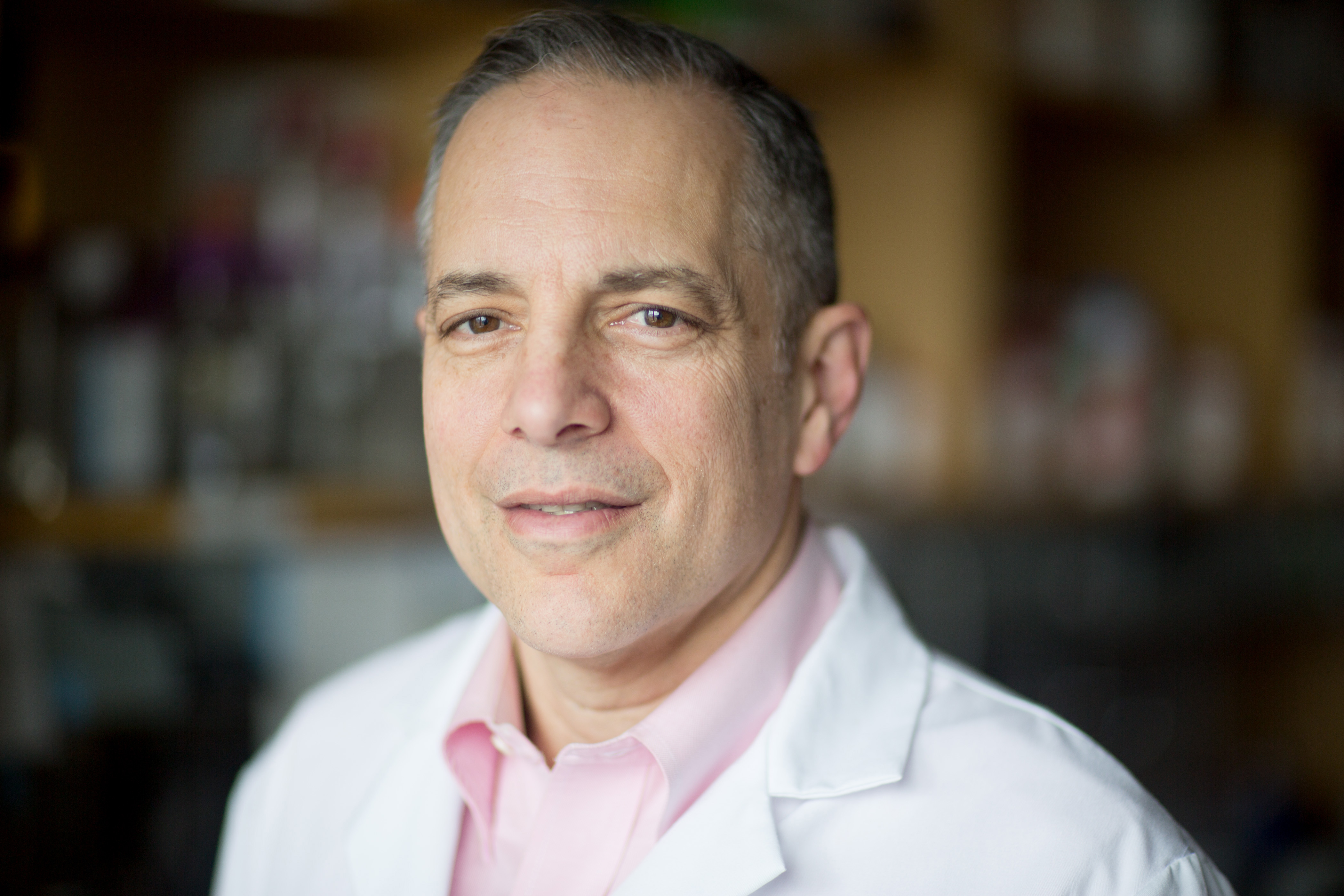
“Elazer R. Edelman ’78, SM ’79, PhD ’84, an engineer and cardiologist who helped develop cardiovascular stents that have been used by more than 100 million people, has been named the recipient of the 2026-2027 James R. Killian Jr. Faculty Achievement Award. The award committee recognized Edelman, the Edward J. Poitras Professor in Medical Engineering at MIT’s Institute for Medical Engineering and Science, for his work at the interface of engineering, science, and medicine. In addition to his work on stents, he has made significant contributions to tissue engineering and to deciphering the fundamental biological processes underling cardiovascular disease. A member of the MIT faculty for more than 30 years, Edelman is renowned as a teacher and mentor. He is also a professor of medicine at Harvard Medical School and a critical care cardiologist at Brigham and Women’s Hospital, and he served as director of MIT’s Institute for Medical Engineering and Science from 2018 to 2024. “He is a clinician of the highest order who has touched the lives of many, a teacher of greatest passion who has mentored hundreds and taught thousands, and an engineer whose work has reached around the globe,” states the award citation, which was presented at today’s faculty meeting by Xuanhe Zhao, chair of the Killian Award Selection Committee and a professor of mechanical engineering at MIT. The Killian Award was established in 1971 to recognize outstanding professional contributions by MIT faculty members. It is the highest honor that the faculty can give to one of its members. “It’s deeply meaningful that your colleagues think enough of you to want to recognize your life’s work. This is an incredibly awe-inspiring group, and for them to feel that way is a truly special honor,” Edelman told MIT News after learning that he had been selected for the award. Edelman, who grew up in Brookline, Massachusetts, got his first MIT experience as a high school student, taking classes as part of the Institute’s High School Studies Program. That experience led him to apply to MIT, where he earned two bachelor’s degrees, in applied biology and electrical engineering and computer science, followed by a master’s in bioelectrical engineering and a PhD in medical engineering and medical physics. He also earned an MD from Harvard Medical School through the Harvard-MIT Program in Health Sciences and Technology. As a graduate student, Edelman was one of the first students to join the lab of Robert Langer, the David H. Koch Institute Professor at MIT. Working with Langer, he developed mathematical approaches to guide the design of controlled drug-delivery systems. “Bob opened my eyes to what it really means to use MIT science to make the world a better place,” Edelman says. Early in his career, Edelman brought a scientist’s eye to one of medicine’s most urgent clinical challenges: how to address diseased blood vessels without provoking further injury. His studies of the cellular and molecular mechanisms of atherosclerosis and vascular healing — work that continues to this day — coupled with fundamental insights from engineering and physics, helped enable the optimization of bare-metal stents and the development of drug-eluting stents. Roughly 90 percent of the more than 100 million stents implanted worldwide now release drugs through principles his work helped define and advance, saving countless lives and improving quality of life for patients around the globe. Edelman’s work reflects a continuing cycle of discovery: Basic insights in biology shaped transformative medical technologies, and the challenges posed by those technologies, in turn, continue to push biology, science, technology, and engineering together toward new discoveries and clinical advances. “His landmark work on the cellular mechanisms underlying atherosclerosis and on the biology of cell-material interfaces established the scientific foundations that transformed bare-metal cardiovascular stents from a promising mechanical concept into a biologically informed and clinically transformative therapy with enduring legacy — paving the way for a cascade of innovations that changed the landscape of medicine,” the award committee wrote. More recently, Edelman’s lab has designed novel heart valves and other innovative approaches to mechanical organ support. During his tenure as the director of IMES, he led an MIT-wide effort to provide personal protective equipment to health care workers and emergency responders in the early stages of the Covid-19 pandemic. “One of the things I’m most proud of is working with many people at MIT in the Covid response. At the height of Covid, we were supplying 23 percent of all PPE throughout New England,” he says. “Every single person who could possibly contribute contributed.” As director of MIT’s Center for Clinical Translational Research and faculty lead for the Hood Pediatric Innovation Hub, he is now working to help clinical research thrive at MIT and to address the inequities in technology access for society’s most vulnerable population — children. Throughout his career, Edelman has devoted himself to mentoring students and trainees. “I’m really proud of what our students have accomplished, not only scientifically, but on a personal level, and not only with me, but everything they’ve done afterwards. The greatness of a place like MIT is that you enable people to grow beyond their potential. That’s really the extraordinary thing about our community,” he says. In recognition of his scientific achievements, Edelman has been elected a fellow of the American College of Cardiology, the American Heart Association, the Association of University Cardiologists, the American Society of Clinical Investigation, American Institute of Medical and Biological Engineering, the American Academy of Arts and Sciences, National Academy of Inventors, the Institute of Medicine/National Academy of Medicine, and the National Academy of Engineering. “The Selection Committee is delighted to have this opportunity to honor Professor Elazer Edelman for his exceptional contributions to medical engineering and science, to MIT, and to the world,” the award citation concludes.
Original story
Continue reading at MIT News
news.mit.edu
Summary generated from the RSS feed of MIT News. All article rights belong to the original publisher. Click through to read the full piece on news.mit.edu.
