
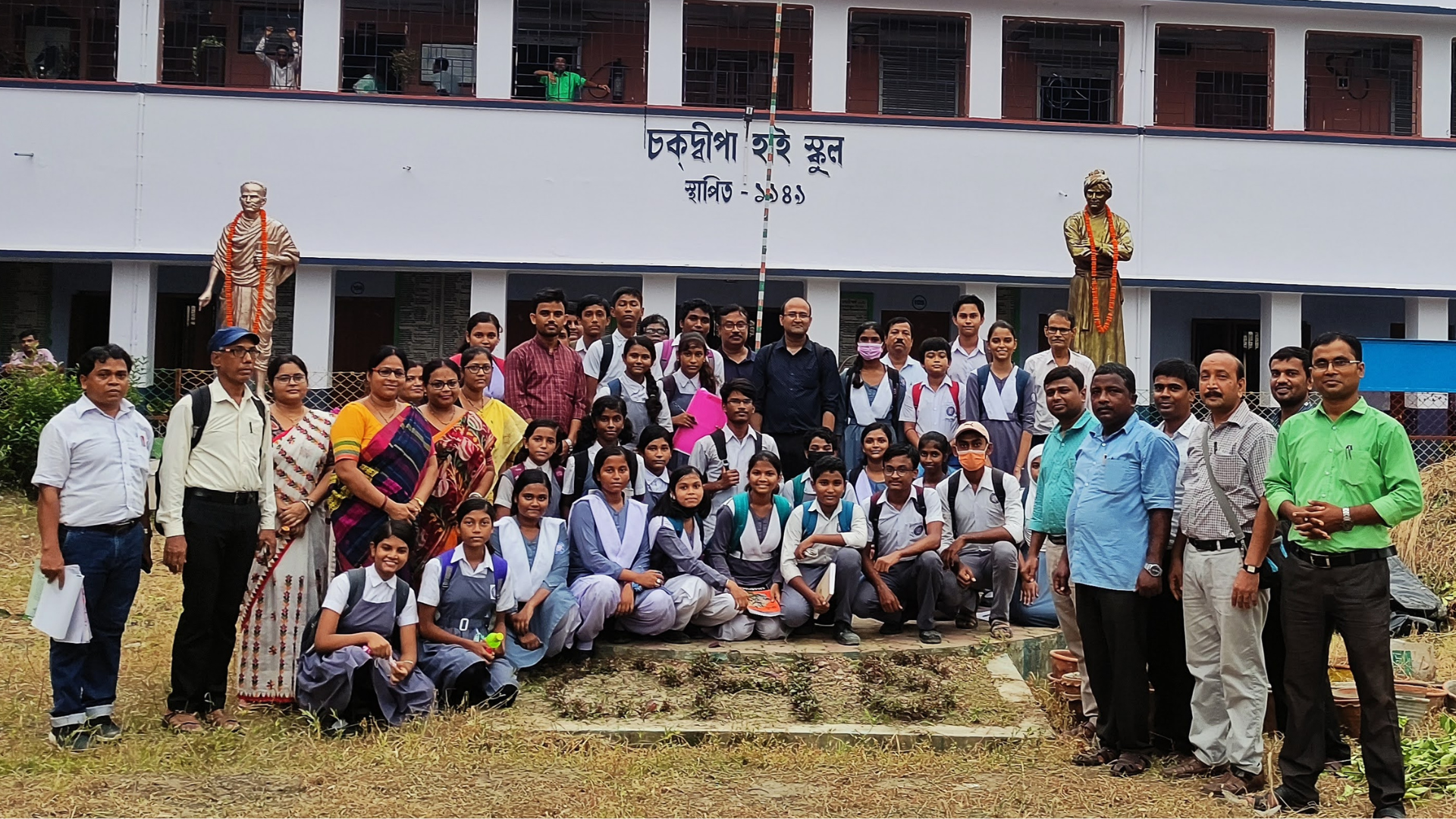
“Share A University of Waterloo professor is bringing science home with a Bengali outreach program that makes scientific learning more accessible Scientific literacy is more important than ever. In an age where social and news media are always at our fingertips, the ability to think critically is essential for distinguishing fact from misinformation and making informed decisions. Equally important is ensuring that scientific knowledge is accessible and understandable to everyone. Promoting science literacy is a passion for Dr. Rajibul Islam, a professor in the Department of Physics and Astronomy at the University of Waterloo. In 2014, Islam, along with friends from the science community, launched Bigyan , a not-for-profit initiative dedicated to making science accessible in Bengali, their mother language. Bengali is the seventh most spoken language in the world, with more than 200 million native speakers, primarily in the Indian state of West Bengal and in Bangladesh. Being from West Bengal, Islam recognized a significant gap in the availability of high-quality science resources in Bengali and wanted to address it. “Research shows that individuals learn complex concepts more effectively in their first language,” Islam says. “I hope that providing credible scientific resources in Bengali will enhance confidence, comprehension and participation in scientific learning.” As part of his role with Bigyan, Islam coordinates volunteers and freelancers, manages donations, and provides content for the platform that aligns with his research in physics and quantum computing. Additional contributors to the platform are active researchers who volunteer their time, ensuring content is accurate and accessible. Since its launch, Bigyan’s articles have been viewed more than 1.5 million times, with readership split almost evenly between India and Bangladesh. The initiative has become a popular science outreach platform for Bengali speakers thanks to more than 300 peer-reviewed articles on its web platform, including content on cutting-edge scientific developments and pedagogical topics, as well as interviews and articles from leading scientists, including Drs. Donna Strickland and Roger Melko from the Universty of Waterloo. Grassroots educators now use Bigyan articles and posters as classroom resources, particularly in under-resourced rural schools. Volunteers of the initiative also bring seminars and workshops to high schools in West Bengal, where students learn from researchers in the field and engage with professional scientists. Professor Rajibul Islam with students outside of an elementary school in West Bengal, India. Islam has taken an active role in visiting schools in India, with one of his most impactful experiences reaching more than 200 high school students. Seventeen schools came together in an auditorium to attend a day of sessions hosted by Bigyan. Islam provided an hour-long session, where he taught foundational physics and shared his work in quantum computing. By sharing his passion for science in his mother language, Islam’s efforts embody the University of Waterloo’s efforts to advance learning and knowledge through teaching, research, and scholarship. His work translates knowledge across culture, expanding access to education. The name of the organization itself being a testament to this collective effort. “Bigyan means science in Bengali,” Islam says. “The inspiration is that science belongs to everyone, and language barriers should never be the reason people feel excluded.” Bigyan is a registered non-profit organization dedicated to promoting science education and literacy in Bengali. To learn more, visit their website , and to express your interest in volunteering, email info@bigyan.org . Science Community Societal Futures Share
Original story
Continue reading at University of Waterloo News
uwaterloo.ca/news
Summary generated from the RSS feed of University of Waterloo News. All article rights belong to the original publisher. Click through to read the full piece on uwaterloo.ca/news.

