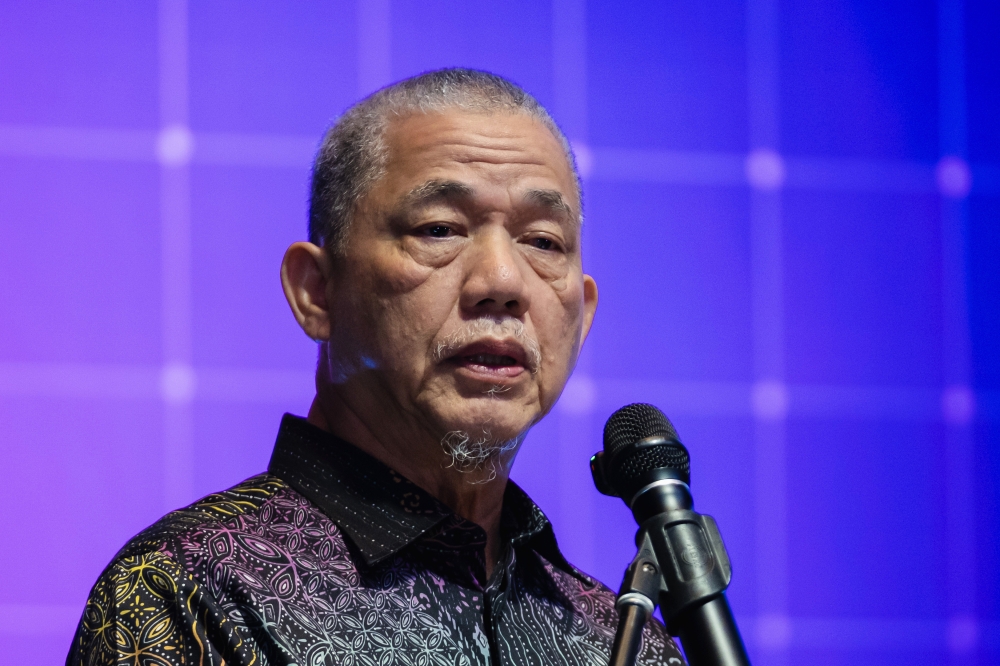
“KUALA LUMPUR, May 25 — Malaysia will continue to ensure that the country's energy policy and regulatory framework evolve in line with changing global economic and industrial trends, said Deputy Prime Minister Datuk Seri Fadillah Yusof. Fadillah, who is also the Minister of Energy Transition and Water Transformation, said the effort was important to meet the increasing demand for green electricity supply, especially from multinational companies, data centres, the electrical and electronics (E&E) industry, the high-tech manufacturing sector and export-oriented businesses. He also said the government realised that the energy transition agenda was no longer just about the environment, but also involved aspects of economic competitiveness, high-quality investments, industrial development, energy security and national resilience. “The national energy policy is guided by the principle of the ‘energy trilemma’ which includes energy security, affordability and environmental sustainability. “The government needs to ensure that the implementation of the energy transition is carried out in a balanced manner without affecting the stability of the grid and without unnecessarily burdening consumers,” he said in a Facebook post today. At the same time, Fadillah said that a more innovative, flexible and investment-friendly market approach needs to be introduced to achieve the aspirations of the National Energy Transition Roadmap (NETR) which is to achieve 70 per cent renewable energy capacity by 2050 in addition to the policy of not developing new coal-fired power plants in the future. In this context, he said that the Corporate Renewable Energy Supply Scheme (CRESS) which was introduced on July 26, 2024 under the Greens Madani initiative is among the government’s strategic initiatives to expand access to green electricity through an open access approach by using the existing national grid infrastructure. “Through this framework, consumers corporates can obtain renewable energy electricity directly from renewable energy developers without the need for dedicated private transmission infrastructure. "The government also sees CRESS not just as a renewable energy programme, but as an important economic catalyst that supports green investments, environmental, social and governance (ESG) commitments, corporate decarbonisation efforts, digital economic growth and Malaysia's regional competitiveness for the long term," he said. Earlier, Fadillah attended a CRESS engagement session involving about 200 participants at the Baiduri Hall, Ministry of Energy Transition and Water Transformation (PETRA), in Putrajaya. He said the very encouraging attendance and participation in the session reflected the commitment of all parties in supporting the country's energy transition agenda and the development of a more progressive and sustainable green energy ecosystem. "Today's engagement session also discussed various important matters including grid readiness, Battery Energy Storage Systems (BESS), project financing, cost structure, regulatory considerations and the long-term direction of the Malaysian corporate green energy market," he said. — Bernama
Original story
Continue reading at Malay Mail Education
www.malaymail.com/news/malaysia
Summary generated from the RSS feed of Malay Mail Education. All article rights belong to the original publisher. Click through to read the full piece on www.malaymail.com/news/malaysia.

