
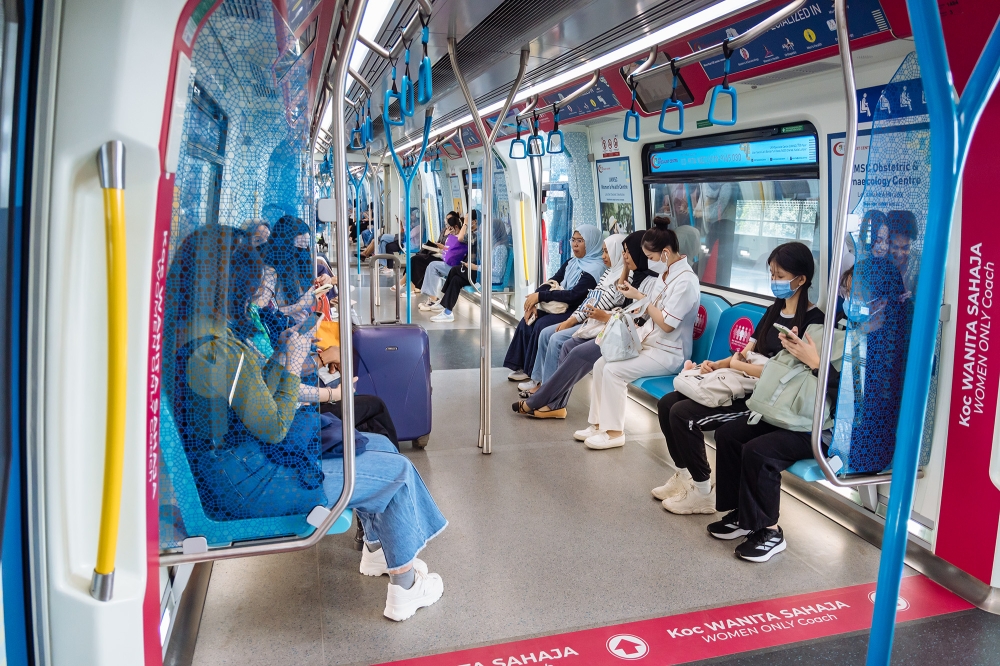
“KUALA LUMPUR, May 22 — Are you a tourist visiting Kuala Lumpur for the first time, and want to try riding the trains and buses in the city? Here’s a simple guide with some tips: If you want to take Rapid KL's trains in Kuala Lumpur (LRT, MRT, monorail) and also the BRT There are now only two ways you can tap in at the fare gate: Token: This small, round piece of plastic is only for a single journey, and you have to put it into the slot at the fare gates to exit. So you will have to buy a new one for every journey. Touch ‘n Go card: This is a stored-value card that you can tap in and out at fare gates, and can keep reusing by topping up the value in the card. (Other examples around the world include London’s Oyster card, Hong Kong’s Octopus card, Taiwan’s EasyCard, and Singapore’s EZ-Link card.) There is also the Bus Rapid Transit (BRT) Sunway line, which actually uses electric buses on a dedicated bus lane, but also uses the same fare system of tokens or Touch ‘n Go cards. What this means: Currently, you cannot use a credit card, debit card, QR code payments, or your mobile wallet (such as Apple Pay, Google Pay, Samsung Pay) to directly tap in and out of the fare gate. These alternative methods will be available in the future under an “open payment system”, which public transport operator Prasarana Malaysia Berhad told Malay Mail is a project “currently in the final stages of the award process”. Conclusion: For now, you can only board the train or BRT if you use a token or Touch ‘n Go card. Will you be using a token or a Touch 'n Go card to ride the trains in Kuala Lumpur? — Picture by Choo Choy May . How can you buy a token? You can buy it at the self-service ticket machines at the train stations or BRT stations: Pay using cash, credit card, or debit card. You can also buy it at the station counters: Pay using cash, credit card, debit card, QR code payments. “QR code payment is available at all LRT, MRT, Monorail, and BRT station counters, offering passengers a convenient alternative,” Prasarana told Malay Mail when confirming that this payment option is available. What if you don't have cash or credit card in your hands now? You can use QR code payment when buying a token or reloading your Touch 'n Go card at Rapid KL train stations' counters. — Picture by Raymond Manuel How can you reload a Touch ‘n Go card? To reload a Touch ‘n Go card at the train stations, you can do it at the ticket machines or at the counters (with the same payment methods as buying a token at these two places). Make sure you have at least RM5 balance in the Touch ‘n Go card for your train rides. If you want to buy a Touch ‘n Go NFC card (which can be reloaded through your smartphones), you can try buying it at Rapid KL customer service counters at train stations. For tourists, there is also the Rapid Kembara all-in-one travel pass for unlimited rides on Rapid KL’s trains, BRT, and buses for one day (RM25) or three days (RM55), but you will need to have a Touch ‘n Go card for this. Check out the Rapid Kembara’s Frequently Asked Questions and Terms and Conditions here: https://myrapid.com.my/our-products/rapidkembarapass/ Tourists are seen here buying tokens at a ticket machine at an LRT station in Kuala Lumpur. — Picture by Choo Choy May Did you know that you actually pay slightly more if you use a token, instead of a Touch ‘n Go card? Prasarana explained that it is because of extra costs and to encourage passengers to choose the cashless option instead. “Token fares are typically up to 10 per cent higher due to additional operational costs, including token production, maintenance, and cash handling. “It’s important to note that overall fare structures are regulated and based on distance travelled, in accordance with guidelines set by the relevant authorities. The pricing difference is therefore not arbitrary but reflects the higher cost of servicing cash-based transactions,” it told Malay Mail in a written response. “At the same time, the pricing structure is designed to encourage a shift towards cashless travel, which is more efficient and sustainable for the system,” it added. While there are future plans to enable alternative tap-in and tap-out methods such as credit cards and mobile wallets, using a Touch 'n Go card is the more convenient option now. — Picture by Choo Choy May So is a Touch ‘n Go card the best option now for tourists using Rapid KL’s train services? “Yes, using a Touch ‘n Go card is currently the most convenient and cost-effective option for tourists,” Prasarana told Malay Mail. It listed three reasons: > “It eliminates the need to queue for single-journey tokens.” > “It offers slightly lower fares.” > “It enables seamless transfers across multiple services.” “For frequent or even moderate usage, it is effectively a ‘no-brainer’ compared to buying tokens for each trip,” it said. Can you get refunds on your Touch ‘n Go cards at the end of your visit to Kuala Lumpur? When asked if there is an option for tourists to return their Touch ‘n Go cards at Rapid KL train stations to get a refund on the unused balance and the card, Prasarana explained that “Touch ‘n Go cards and their refund processes are managed by Touch ‘n Go, not Rapid KL”. “Tourists seeking refunds on card balance or deposits would need to refer to Touch ‘n Go’s official channels and policies for the latest procedures,” it said. Touch 'n Go's website has a section called "eRefund" with information on how you can get refunds on inactive or expired Touch 'n Go cards. Prasarana is working to make public transport in Kuala Lumpur more user-friendly for tourists Prasarana confirmed that “improving accessibility and convenience for tourists is a key priority for Rapid KL”. Prasarana said its planned and ongoing initiatives include: > “Implementation of open payment systems — this is a major milestone that will enable international visitors to use their own credit and debit cards, as well as EMV-enabled mobile wallets, directly at fare gates, thereby eliminating the need to purchase or reload a separate transit card.” > “While the transition is underway, we continue to promote the Touch ‘n Go Enhanced (NFC) card. This is currently the only Touch ‘n Go card that allows users to reload and activate stored value directly via their smartphones, enabling both tourists and locals to bypass physical reload counters and avoid queuing.” > “Expanding the availability and integration of QR-based payments to enable more flexible ticketing, in line with the shift toward cashless and digital payment options.” > “Continuous improvements to wayfinding, multilingual passenger information, and digital platforms to ensure the network is more seamless, intuitive and globally-aligned.” “These initiatives are strategically aimed at aligning Rapid KL with global transit standards, ensuring a seamless and ‘frictionless’ travel experience for both daily commuters and international visitors,” it said. Rapid KL bus fares can range from RM1 to RM5, depending on the ride zones you are travelling to. — Picture by Shafwan Zaidon Bonus: What about Rapid KL’s buses? Based on information available on Prasarana’s MyRapid website, all Rapid KL bus services no longer accept cash payment for bus fares since May 27, 2019. This includes feeder buses to MRT and LRT rail stations. The only way you can pay the bus fares now is by using a Touch ‘n Go card. (Make sure you have at least RM3 balance in the card before you hop on the bus.) In the future, Prasarana will also introduce an open payment system (such as QR code payment and credit cards) for its buses in Kuala Lumpur, and this is also at the stage of finalisation for the awarding of the project.
Original story
Continue reading at Malay Mail Education
www.malaymail.com/news/malaysia
Summary generated from the RSS feed of Malay Mail Education. All article rights belong to the original publisher. Click through to read the full piece on www.malaymail.com/news/malaysia.