
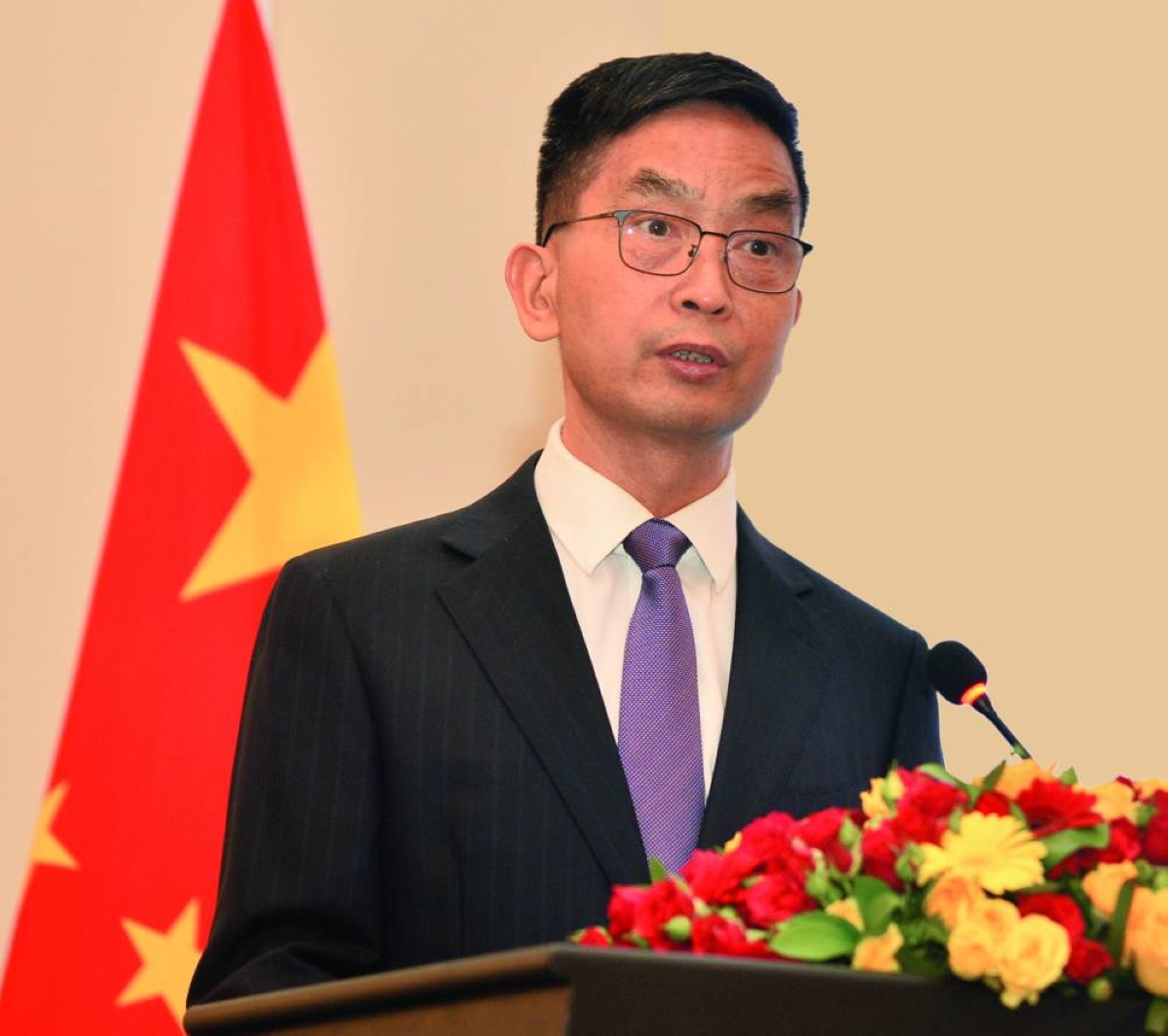
“The Middle East now stands at a critical juncture between war and peace. Recently, Chinese President Xi Jinping put forward Four Propositions on safeguarding and promoting peace and stability in the Middle East, offering the Chinese approach for the region to move toward lasting stability and injecting much-needed certainty into a Middle East — and indeed a world —shaken by turmoil. First, stay committed to the principle of peaceful co-existence. The Gulf states in the Middle East are close neighbours that cannot move away. It’s important to support the Gulf states in improving their ties, work to build a common, comprehensive, cooperative and sustainable security architecture of the Middle East and the Gulf region, and consolidate the foundation for peaceful co-existence. Second, stay committed to the principle of national sovereignty. Sovereignty serves as a foundation for all countries, especially developing countries, to survive and thrive, and it must not be violated. The sovereignty, security and territorial integrity of the Gulf states should be earnestly respected, and the safety of their personnel, facilities and institutions vigorously safeguarded. Third, stay committed to the principle of international rule of law. We should safeguard the authority of international rule of law, reject selective application, and prevent the world from returning to the law of the jungle. It is important to firmly uphold the international system with the United Nations at its core, the international order based on international law, and the basic norms governing international relations underpinned by purposes and principles of the United Nations Charter. Fourth, stay committed to a balanced approach to development and security. Security is a prerequisite for development, and development serves as a safeguard of security. All sides should work to create a sound environment for and bring positive energy to the development of the Gulf states. China stands ready to share with the Gulf countries the opportunities through Chinese modernization, and work with them to nurture a fertile ground for regional development and security. As a permanent member of the United Nations Security Council and a responsible major country, China has consistently acted to promote peace talks through concrete efforts. China’s Foreign Minister Wang Yi has met and made phone calls with his counterparts from relevant countries nearly 30 times. The Special Envoy of the Chinese Government on the Middle East Issue, Zhai Jun, conducted shuttle diplomacy across several countries to ease tensions in the region. China has also maintained close coordination with all parties through the United Nations and other platforms, with the objective of advancing a ceasefire, ending hostilities, and promoting dialogue and negotiation. China’s efforts, commitment, and sense of responsibility in pursuing peace have won broad recognition from regional parties and the wider international community. A ceasefire does not equal peace. The spillover risks of the war remain, the regional security architecture is badly fractured, with a serious loss of trust between all parties. Any accidental escalation could once again push the situation toward the abyss. As the Chinese saying goes, “When strength is pooled, nothing is unconquerable; when wisdom is combined, nothing is unattainable.” Peace in the Middle East must ultimately be safeguarded by the people in the Middle East. China stands ready to work with all peace-loving nations, guided by Chinese President Xi’s Four Propositions, to jointly advance a common, comprehensive, cooperative, and sustainable security architecture for the Middle East, and to strive tirelessly for enduring peace and stability in the region.
Original story
Continue reading at Gulf Times Education
www.gulf-times.com/community/education
Summary generated from the RSS feed of Gulf Times Education. All article rights belong to the original publisher. Click through to read the full piece on www.gulf-times.com/community/education.

