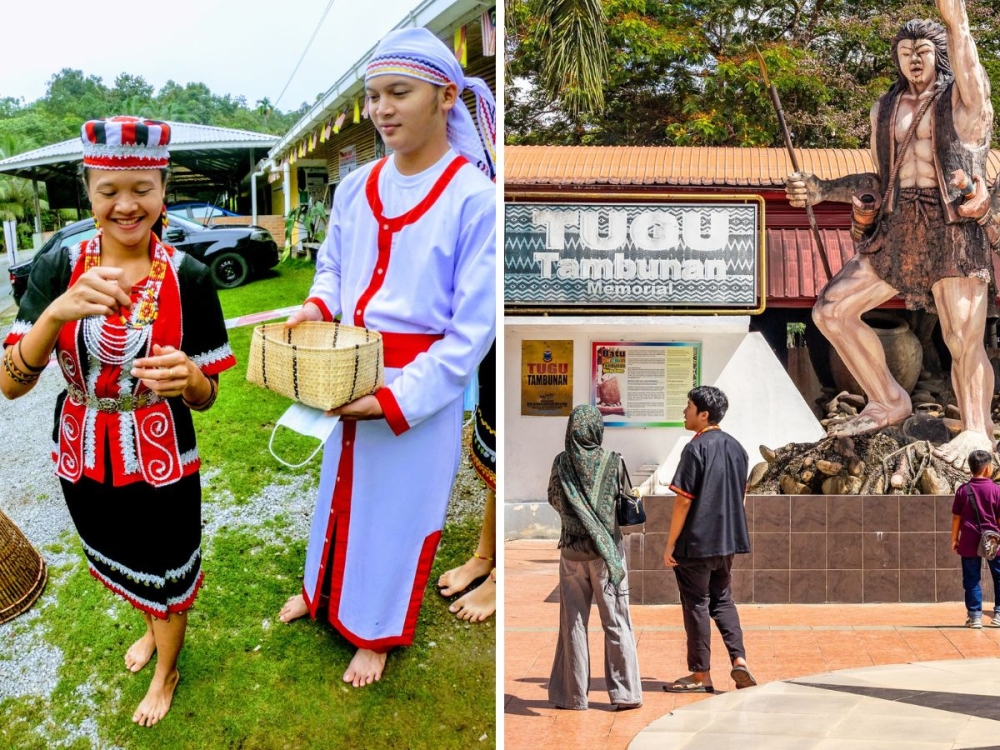
“KOTA KINABALU, May 29 — As Kaamatan and Gawai Dayak approach, Malaysians will once again turn their attention to the cultural celebrations of their Bornean counterparts. But for many in peninsular Malaysia, Sabah and Sarawak are still casually bundled together as “East Malaysia” — or worse, reduced to the catch-all category of “others” on forms and official documents. In reality, the two states are vastly different, shaped by distinct indigenous communities, languages, cuisines, histories and landscapes despite sharing the same island. “Malayans often see Sabah and Sarawak as one cultural block called ‘East Malaysia’, but to Sabahans and Sarawakians, the differences are obvious,” said Universiti Malaysia Sabah linguistics professor Jane Wong. “They share Borneo, but they do not share one single culture, one single language, or one single identity,” she said. From assuming Kaamatan and Gawai are the same festival, to believing all indigenous people in Borneo are “Dayak”, many peninsular Malaysians continue to flatten two highly diverse states into a single identity. But to Sabahans and Sarawakians, the differences are immediate and obvious — heard in the way people speak, seen in the food they eat, reflected in their art, geography and even the way they introduce themselves. Kaamatan vs Gawai The confusion is perhaps most visible during the harvest season itself. Kaamatan, celebrated in Sabah, is closely tied to the traditions of communities such as the Kadazan-Dusun, Murut and other native groups. Gawai in Sarawak is celebrated by the Iban, Bidayuh and Orang Ulu, who are among the Dayak communities. Both are harvest festivals, but they are not interchangeable. In Sabah, “ Kotobian Tadau Tagazo do Kaamatan ” or simply “ Kotobian Kaamatan ” marks the celebration. In Sarawak, “ Gayu Guru Gerai Nyamai ” — wishing long life, good health and prosperity — or “ Selamat Hari Gawai ” is more commonly heard. “Even at the level of greetings, you can hear the difference. Both celebrate the harvest, but they come from different languages, communities and cultural histories,” said Wong. In Sabah, the Kaamatan heavily centres around honoring Huminodun, the daughter of the God Kinoingan who sacrificed herself during a devastating famine. Many communities with spiritual leaders will have its own traditional ceremonies to honor Huminodun and pay tribute for a bountiful harvest in the Magavau ceremony. They also have the Unduk Ngadau cultural pageant to pay tribute to the legend of Huminodun. Sarawak’s Gawai s a harvest thanksgiving, a time to honour ancestors, and a reunion for family members, often returning to their traditional longhouses, and features rituals like Muai Antu Rua (casting away the spirit of greed) and Miring (offerings), often ending with Ngajat dances. Both are rooted in thanksgiving, offering and renewal and manifest in community celebrations and gatherings through open houses featuring local costumes, music, dance, food, rice wine ( tapai or lihing in Sabah and tuak in Sarawak) and other libations. Kaamatan is celebrated during the month of May but culminates in a two-day public holiday on May 30 and 31 while Gawai is celebrated on 1-2 June. The many native groups Another common misconception is that each state has a single dominant indigenous identity. In reality, both Sabah and Sarawak are made up of dozens of distinct communities. Sabah’s native groups include the Kadazan, Dusun, Murut, Rungus, Bajau, Lundayeh, Iranun, Orang Sungai, Bajau Laut and many others. Sarawak, meanwhile, is home to the Iban, Bidayuh, Melanau, Kayan, Kenyah, Kelabit, Penan and Lun Bawang, among others. “There is no such thing as one Sabahan culture or one Sarawakian culture. Each state is a mosaic of many indigenous communities, each with its own language, history and worldview,” Wong said. Even identity labels differ. In Sarawak, the term “Dayak” is widely used as an umbrella for several indigenous groups although identities like Iban or Bidayuh are more dominant. In Sabah, however, people tend to identify more specifically by their ethnic group, such as Kadazan, Dusun, Murut (KDM) or Bajau and each one carries its own language, culture, costumes and traditions. You might not see the difference — but you’ll hear it For those trying to tell Sabahans and Sarawakians apart, appearance offers little help. With centuries of migration and intermarriage across the region, physical features often overlap. The difference, instead, is far more audible than visible. Even when both groups speak Malay, they do not sound the same. Sabahans commonly use Sabah Malay, a fast, open and often clipped variety shaped by everyday interethnic communication. The most common tell-tale is their use of “ bah ”, while other words like “ sia ” (me), “ ko ” (you), “ pigi ” (go), and “ mo ” (want) are part of their slang. Sarawakians, on the other hand, speak Sarawak Malay, which tends to be more flowing and melodic, with distinctive words such as “ kamek ” (I or me), “ kitak ” (you), “ sik ” (no or not) and “ gik” (more or again). “Even when Sabahans and Sarawakians speak standard Malay, you can often still hear where they are from. The rhythm, intonation and interaction style remain underneath. “It’s not simply a different ‘accent’. It reflects different histories of migration, trade, multilingual contact, interethnic communication and community formation in the two states,” said Wong. Sabah Malay functions strongly as a lingua franca, used across ethnic groups and often in mixed families. Sarawak Malay, while also widely understood, is more closely rooted as the mother tongue of the Sarawak Malay community. Among locals, the distinction is almost instantaneous. “A Sabahan and a Sarawakian can often recognise each other within seconds — not just because of words, but because of rhythm and speech melody,” Wong added. For many in the peninsula, however, the distinction is less clear. “Most Malayans can tell someone is from Borneo, but may not immediately distinguish whether they are Sabahan or Sarawakian without exposure to both speech patterns,” she said. Different tastes of Borneo The divide extends to food, another area often flattened into a single “Borneo cuisine” although landscape, culture and agriculture means different native ingredients and starkly different cuisines between them. Sabah is known for their Kadazandusun dishes such as hinava , pinasakan and bosou and they use the native ingredients like bambangan and tuhau – all of which are cured or fermented food to last their long hunting trips way back when. The west coast Bruneians have ambuyat and the east coast of Sabah’s Bajau Laut have more seafood-based dishes like latok (sea grapes) and sagol. A Malaysian fusion appetiser dish comprising otak-otak siakap (centre round item) topped with briny ‘latok’ (sea grapes), accompanied with ‘bambangan’ relish (in yellow), and petite cress topped with ‘keropok’. — Picture by Raymond Manuel Sarawak’s most famous native dishes are umai, manok pansoh , and midin . The iconic kek lapis or intricate layer cake is also from Sarawak. There are also a number of similarities – hinava and umai are both lime-cured raw fish but with slightly different native ingredients – Sarawak uses terung assam while Sabah uses grated bambangan (a type of mango) seed. Both states have sayur manis – a hard-stemmed vegetable known as manicai in Sarawak – and midin (wild ferns) is also popular in parts of Sabah but known as lemiding or simply as pakis . In the interiors, sago starch is a staple in some communities in both states. The two states also use the traditional method of smoking wild boar or pork for hours known as sinalau bakas in Sabah, or simply babi salai in Sarawak. In the urban areas, the dishes have Chinese influences brought on by mass migration in the 19th century. In Sabah the dominant Chinese group is Hakka with some minor Cantonese roots, while in Sarawak they have more Foochow, Teochew and Hokkien roots, with also some Hakka. The Chinese not only helped shape the culture and economies but also brought along now-iconic dishes such as Tuaran mee and beef broth noodles in Sabah and laksa and kolo mee in Sarawak. Art, textiles and cultural symbols The differences between Sabah and Sarawak also become obvious in their traditional arts, textiles, music and cultural symbols. In Sabah, its main icon is Mount Kinabalu while its cultural imagery is often closely associated with the traditions of the Kadazan-Dusun, Rungus and Murut communities. Their iconic traditional attire frequently features black velvet costumes with gold trimmings, beadwork and brass accessories, particularly during Kaamatan celebrations and the Unduk Ngadau pageant. Sabah is also known for their gong ensembles, sompoton or bamboo saxophone and intricate beadwork produced by various communities, but especially the Rungus which has vast motifs and patterns. The western Bajau communities have colourful horse culture with carvings on machetes while their eastern counterparts have traditional lepa boats and a maritime culture. Meanwhile, Sarawak’s state icon is the majestic rhinoceros hornbill while its cultural symbol is strongly associated with longhouse culture and indigenous textile traditions, particularly the ceremonial woven cloth with motifs known as Pua Kumbu among the Iban. Traditional arts in Sarawak often carry stronger motifs linked to river life and its communal longhouse identity. Sarawak is also known for the sape, a traditional lute associated with Orang Ulu communities that has gained international recognition, as well as wood carving traditions among groups such as the Kenyah and Kayan. Geography shapes identity Even the land itself tells different stories. “Sabah’s coastal and island life produces different cultural patterns compared to Sarawak’s strong river and longhouse traditions. Geography is not just landscape, it shapes identity,” Wong said Sabah, which sits at the northern part of Borneo island is almost always associated with its highest point – Mount Kinabalu – along with its hillside rice and agriculture. Its long coastlines and many stunning picturesque islands also means many coastal communities, including the Bajau Laut and many fishing and marine opportunities including scuba living and resort tourism. Another key difference is its proximity to the southern Philippines which significantly impacts its socio-economy. Sarawak, Malaysia’s largest state by far, is shaped by vast river systems, interior highlands, cave systems and longhouse settlements. Both use their land mass for oil palm plantations, although Sarawak has a globally known pepper industry while Sabah focuses on seafood exports. More than just “others” — the differences are the point Ultimately, the issue is not about memorising cultural trivia, but understanding how Sabahans and Sarawakians see themselves, even among Malaysians. “Understanding the difference between Sabah and Sarawak is not just about facts, it’s about respecting identity,” Wong said. As Kaamatan and Gawai draw near, the festivals may share a harvest theme, but they remain expressions of very different cultural worlds. Sabah and Sarawak share Borneo, but they do not share a single culture, language or identity. Their richness lies precisely in those differences, something many peninsular Malaysians are only beginning to fully appreciate.
Original story
Continue reading at Malay Mail Education
www.malaymail.com/news/malaysia
Summary generated from the RSS feed of Malay Mail Education. All article rights belong to the original publisher. Click through to read the full piece on www.malaymail.com/news/malaysia.