
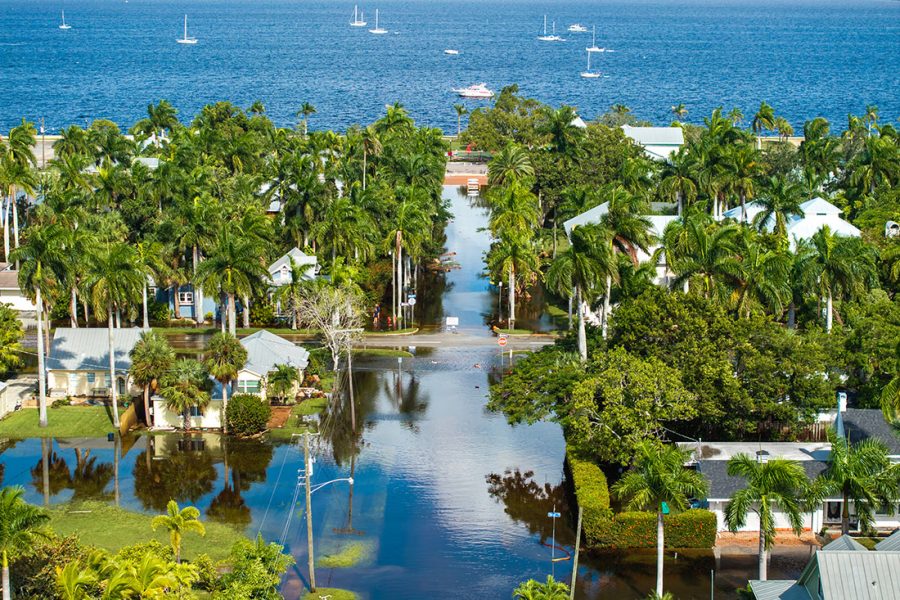
“Routine high-tide flooding in coastal communities could lead to thousands of deaths among older adults by the end of the century, according to a new study co-authored by Florida State University researcher Mathew Hauer. Published in The Lancet Planetary Health , the study projects that without significant adaptation, premature deaths among adults aged 65 and older linked to high-tide flooding could increase 43-fold by 2100. Unlike storm surges from major hurricanes, high-tide flooding happens regularly and is often viewed as a nuisance rather than a danger. But researchers found even shallow flooding on roads can delay emergency medical care for older adults during time-sensitive emergencies such as cardiac arrest. Mathew Hauer. (College of Social Sciences and Public Policy) “When we think about climate change threatening people’s lives, we picture hurricanes and heat waves,” Hauer said. “What we found is that the routine, ankle-deep flooding people have learned to live with is on track to kill more older adults than storm surge does in these same coastal areas. It’s a quiet, cumulative form of climate mortality, and until now nobody had put a national number on it.” The research team, which included Hauer from the FSU College of Social Sciences and Public Policy’s Department of Sociology and Center for Demography and Population Health , found that flooding creates significant traffic disruptions that obstruct emergency medical access. This is particularly dangerous for time-sensitive conditions where every minute of delay significantly reduces survival rates. Researchers identified three major findings: A growing crisis: By 2100, the model projects nearly 10,000 additional deaths annually among older adults in coastal U.S. regions. Economic impact: The monetized damages associated with these premature deaths could reach $1.1 trillion by the end of the century. The 8-minute threshold: Seniors living in areas with more than an 8.85-minute drive to the nearest hospital are especially vulnerable to these flood-induced delays. The findings are a wake-up call for the Sunshine State, which stands at the epicenter of the issue. The study identified Florida as the nation’s most vulnerable state because of its large older population and extensive low-lying coastline. “Simple things like raising roadways, better sited-hospitals, and other changes could make a significant impact on reducing this anticipated mortality. An ounce of prevention today is worth a pound of cure tomorrow.” – Mathew Hauer, FSU associate professor and study co-author By 2060, Florida could account for 24% to 38% of all high-tide flooding deaths in the coastal contiguous U.S., with an estimated 360 to 1,590 annual fatalities. “Florida has twin threats of an older population and a large, low-lying coastal zone,” Hauer said. “So, the demography, the geography and climate change all combine to account for a large percentage of these anticipated deaths.” Researchers said the projected death toll could be significantly reduced through infrastructure improvements and planning. Implementing protective measures, such as elevating roads or building new healthcare facilities in accessible locations, could reduce premature deaths by 57%. The researchers recommend three critical steps for coastal communities: Protect road networks that are essential for emergency medical access. Increase accessibility by building more critical care facilities in at-risk coastal areas. Manage the retreat of vulnerable populations to areas with better infrastructure and healthcare access. The study concluded that the economic costs associated with these deaths exceed many other climate-related impacts, making healthcare infrastructure a priority for policymakers. “The deaths show up when an ambulance can’t get through and the adaptive infrastructure to prevent these are things we already know how to do,” Hauer said. “Simple things like raising roadways, better sited-hospitals, and other changes could make a significant impact on reducing this anticipated mortality. An ounce of prevention today is worth a pound of cure tomorrow.” The study was funded by the U.S. Environmental Protection Agency and included collaborators from Arizona State University, Industrial Economics and the International Food Policy Research Institute. The post FSU study warns routine coastal flooding could become deadly for older adults appeared first on Florida State University News .
Original story
Continue reading at FSU News
news.fsu.edu
Summary generated from the RSS feed of FSU News. All article rights belong to the original publisher. Click through to read the full piece on news.fsu.edu.
