
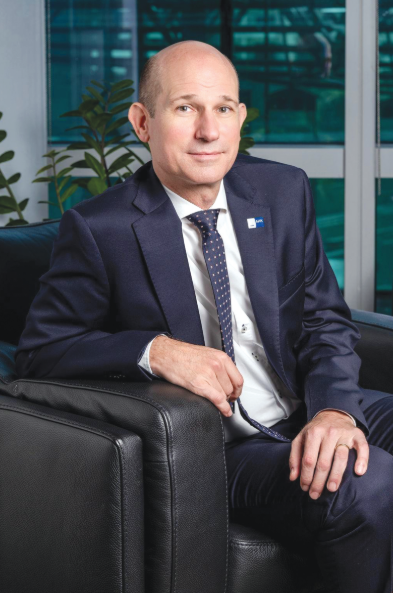
“The ongoing conflict in the Middle East is taking a heavy toll on German businesses, with more than four in five companies reporting negative effects on their operations, according to a flash survey by the German Chamber of Commerce and Industry (DIHK). The survey, conducted between April 13 and 15 among more than 2,400 German companies across all major economic sectors, found that 83% of firms are feeling the impact of the crisis, with rising costs, supply chain disruptions and deepening uncertainty cited as the dominant pressures. Transport and logistics companies are the hardest hit, with 94% reporting adverse effects, followed by construction firms at 91% and retailers at 90%. The ripple effects are being felt across the Gulf, where German logistics firms operating through regional ports and trade corridors are facing particularly acute pressure, according to Dr Martin Henkelmann, Regional CEO of the German Chambers of Commerce (AHK) covering Qatar, UAE, Kuwait, Oman, and Pakistan. Dr Henkelmann, who was in Doha recently, told Gulf Times that the region had become “a high-risk maritime environment rather than a stable transit hub,” with the disruption of the Strait of Hormuz at the centre of the crisis. Cost increases are bearing down across the board. Rising freight and transport costs are the most widely felt burden, cited by 73% of affected companies, followed closely by higher energy costs at 71%, according to the DIHK survey. Raw material and supply costs are adding to the strain for 58 per cent of firms — three pressures that, the DIHK noted, operate simultaneously and reinforce one another along the value chain. Nearly half of companies (46%) are also reporting a decline in demand or orders, while 36% are experiencing supply bottlenecks and delays. The squeeze is beginning to show up in raw material availability. Some 12% of affected companies say they are already facing shortages of raw materials or intermediate products, rising to 16% among manufacturers and construction firms. Companies identified a broad range of scarce inputs, including plastics and polymers, chemical raw materials, crude oil-based products such as bitumen and lubricants, diesel and kerosene, electronic components and semiconductors, and metals including aluminium, copper, steel, and rare earths. The sectoral picture sharply reveals differing pressure points: In the transport sector, energy costs are the dominant concern for 87% of firms, while the manufacturing industry is most exposed to material costs and supply bottlenecks. Construction companies are grappling with both energy and material cost increases, cited by 86% and 75%, respectively, while hospitality and retail businesses are more acutely affected by the slump in consumer demand, at 60% and 56%. Companies are responding on multiple fronts: Half intend to pass increased costs on to customers, at least in part, though the DIHK noted that existing price agreements and long-term contracts are limiting room for manoeuvre in many cases. Some 43% are stepping up risk management and monitoring, while 37% are postponing projects or investments. A fifth are adjusting their supply chains and 22% are building up inventory levels. Across all sectors, free-text responses from companies pointed to cost-cutting as the predominant coping strategy, including short-time working, staff reductions, restraint on wages and investment, and strict cost discipline. Beyond the immediate financial pressures, the survey highlighted the corrosive effect of uncertainty itself. Companies across sectors pointed to the unpredictability of the situation as a significant operational burden, with consumer reluctance to spend a recurring theme in retail and hospitality, and concern about rising inflation and interest rates prominent among construction firms and service providers. Despite the pressures, Dr Henkelmann said German firms continue to view Qatar as a reliable long-term market. The German Chambers of Commerce has maintained an office in Doha for over 20 years, he noted, adding that the overall presence of German companies in the country remains stable. He pointed to several sectors where German companies still have considerable room to expand, including digital health, smart industry solutions, cybersecurity, vocational training, sustainable urban development, and environmental technology. “Therefore, the next step is not only exporting products, but increasingly contributing through local partnerships, research and development cooperation, training initiatives, and long-term technology transfer,” Dr Henkelmann added.
Original story
Continue reading at Gulf Times Qatar
www.gulf-times.com/qatar
Summary generated from the RSS feed of Gulf Times Qatar. All article rights belong to the original publisher. Click through to read the full piece on www.gulf-times.com/qatar.
