
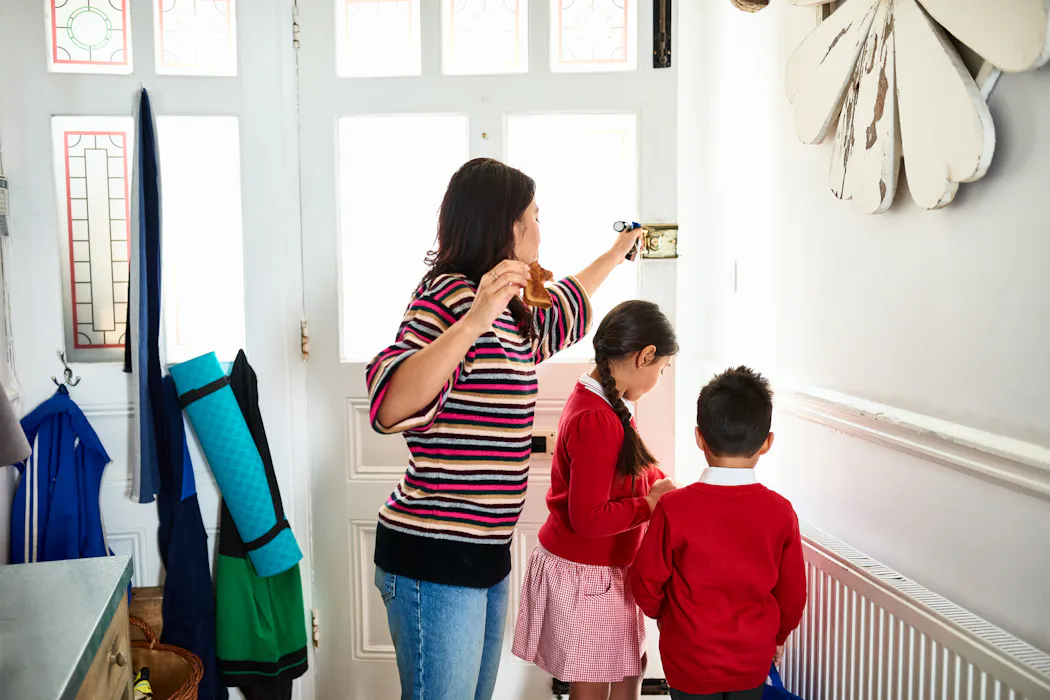
“10'000 Hours/Getty Images Getting the kids out the door for school can feel like herding cats in the rain. Just when one child is ready, another can’t find a shoe, someone remembers homework, and someone else starts crying because they want more breakfast. The more you rush, the more it unravels – leaving you totally frazzled before 9am. Is there a calmer way to get through the mornings with young children? Why mornings can feel so hard Research tells us the move from home to school is a significant transition in a child’s day. This is because it combines developmental, relational and practical demands. For example, a child may struggle to switch from sleep to awake, or another might struggle with leaving or finding belongings (such as wanting to keep playing with their toys and finding it difficult to locate their water bottle). At the same time, adults are juggling a lot mentally. They need to keep an eye on the time, coordinate tasks, anticipate what might go wrong, and manage the overall mood of the household. This can quickly turn into a sense of urgency where even small disruptions can escalate and everyone needs to be at school and work on time. I’m asking, why aren’t they doing? You have now asked your child to put their socks on nine times. And it still hasn’t happened. But what can look like “resistance” or even “disobedience” may instead reflect their developing executive function skills such as planning, attention and organisation. For example, your child hears you ask them to put their socks on, but is distracted by the Lego on the bedroom floor. When you say “put on your socks”, your child has to listen to you, stay focused, hold the instruction in their mind, figure out the steps and locate their belongings. They need to shift from play to putting on their socks and manage any frustration they might feel. Executive function skills develop gradually across childhood and into adolescence. So it’s normal for children to struggle with these skills. Don’t chase the chaos Calmer mornings are less about correcting behaviour and more about creating the right conditions for kids to do what they need to do. You can do this through structure, support and responsive interactions. One way to reframe it is the adult’s role is not to “chase the chaos” (or react to everything happening), but to reduce both the cognitive and emotional load within it. Preparing what you can the night before – laying out clothes, packing bags and checking what’s needed – reduces decision-making in the morning. This then helps you to be calm and responsive in the moment. Predictable routines support this further . When mornings follow a familiar sequence, children are better able to anticipate what comes next and move more smoothly between tasks, while also benefiting from the sense of security routines provide. Staying calm Equally important is how adults respond when things do not go to plan. Co-regulation research highlights how children learn to manage their emotions through warm, responsive interactions with adults who can share their calm during moments of stress. Keeping a cool head, lowering your tone and simplifying expectations can help de-escalate situations. Emotions can be contagious within families, and the adult’s ability to regulate themselves is central to supporting children to regain composure and continue with the task at hand. So instead of yelling “Finn, if you don’t put your socks on in five seconds, I will ban TV for a week!”, try getting down to your child’s level, using a calm tone and giving a clear, simple direction. For example, “Finn, I can see you’re busy. It’s time to put your socks on. Let’s do it together.” Or offer gentle guidance and structure: “Socks on first, then we’ll go get your shoes and head to the car.” Giving kids a say Within this, there is an opportunity to help children take some initiative and responsibility . This can include packing their bag, packing a simple part of their lunch (such as their fruit), and checking a simple list the night before. For example – have I got my hat, water bottle and jumper? Research suggests if parents support their child’s autonomy, it can strengthen both self-regulation and motivation. In other words, it encourages children to engage more willingly in everyday tasks because they have some say in the process. These moments also allow children to experience a sense of pride and achievement. ‘Big hugs for a happy day, buddy’ Alongside structure, small moments of connection matter. Simple rituals like a special breakfast or shared phrase as you go out the door can strengthen family bonds, and soften the morning rush. Research shows routines with these touches boost wellbeing because they are personal and connect you to one another. Even small moments of joy can ease time pressure and create a calmer mood. Fiona Boylan received funding from the Association of Independent Schools WA for research investigating school transitions. Amelia Ruscoe received funding from the Association of Independent Schools WA for research investigating school transitions. She is affiliated with Early Childhood Australia.
Original story
Continue reading at The Conversation Education
theconversation.com
Summary generated from the RSS feed of The Conversation Education. All article rights belong to the original publisher. Click through to read the full piece on theconversation.com.