
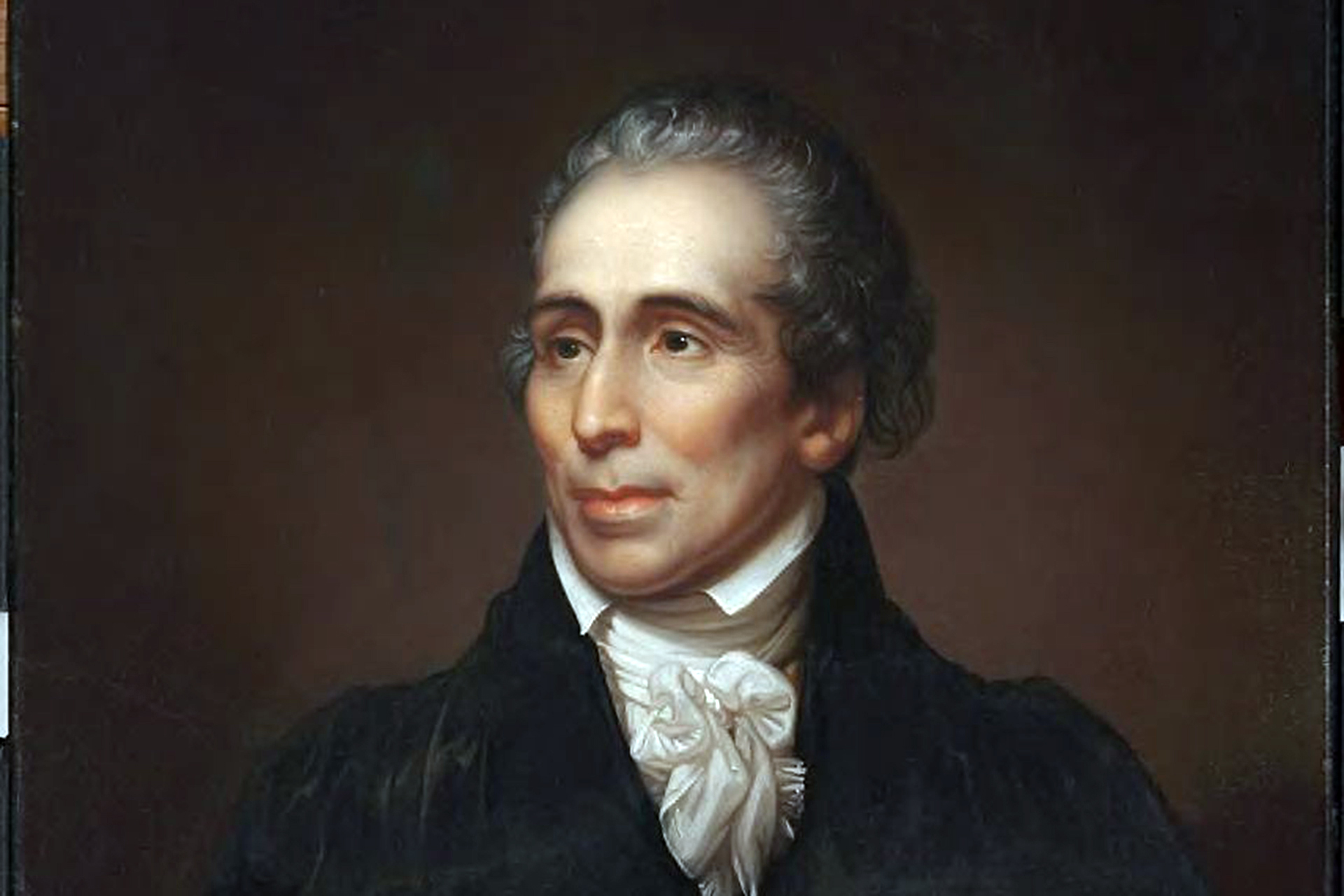
“Campus & Community Helping to give birth to nation — and Harvard Med School founder John Warren numbered among alumni who were part of revolutionary generation Alvin Powell Harvard Staff Writer May 11, 2026 9 min read “Portrait of John Warren,” Rembrandt Peale In addition to coverage of related events and exhibits, the Gazette will publish a series of occasional features marking the 250th anniversary of the Declaration of Independence. It took days for John Warren to find his missing older brother. When he did, his worst fears were confirmed: Joseph, a Colonial militia general and guiding light for Warren, had been killed in battle on Breeds Hill in June of 1775. A grieving Warren initially reached for his gun, but cooler heads persuaded the young physician he’d be more valuable to the cause treating the wounded in Cambridge during the Siege of Boston, then in its early months. Warren was part of a revolutionary generation that counted a number of Harvard graduates in its ranks. They played key roles in the birth of the nation and in defining its character in the years that followed. In the ensuing years, Warren would pass through the upheaval of the Revolution, taking the accelerated lessons in medicine and innovation learned in battlefield surgery back to his Boston practice. The Harvard graduate became noted as a doctor and lecturer, skills would serve him as the primary founder of Harvard Medical School in 1782. “One side effect of war — and you see this through history — is medical progress,” said Dominic Hall , manager for curation and stewardship at HMS’s Countway Library . “Especially for surgery, you’re going to see things, respond to things that aren’t elective, things you aren’t necessarily choosing to do, that you have to respond to and create treatments. He didn’t have a lot of peers in surgery late in life.” John Adams, the nation’s second president, traced the birth of the new nation not to 1775, when the fighting started, or to 1776, when the Declaration of Independence was signed. In Adams’ mind, the seeds of independence had been sown more than a decade earlier, in fiery speeches of Harvard Law School alumnus James Otis Jr. in 1761 as he argued in court against British Writs of Assistance, which gave wide powers to search for smuggled goods anywhere, anytime. Besides Adams, other well-known Revolution leaders such as John Hancock and Samuel Adams had Harvard roots. And there were other alumni like John and Joseph Warren. The older Warren, also a physician, had published anti-British essays, delivered speeches, and led the self-rule-minded Provincial Congress and its military parallel, the Committee of Safety. He helped plan the Boston Tea Party and dispatched Paul Revere and William Dawes on their midnight rides to warn of British troop movements. The next day, Joseph led militia troops that harried the British on their retreat from the war’s first engagements at Lexington and Concord. Joseph was killed two months later while defending a fort-like redoubt on Breeds Hill, which the British took after three costly assaults in which they suffered substantial casualties. 1775 John Warren’s brother Joseph dies in battle at Breeds Hill. “The Death of General Warren at the Battle of Bunker’s Hill, June 17, 1775,” John Trumbull 1776 Warren joins the Colonial army’s hospital division during the Siege of Boston. “Evacuation of Boston,” W.J. Aylward 1776 Warren travels with George Washington’s troops to New York. Months later, he is there for the victory at Trenton, New Jersey, made famous when Washington crossed the Delaware River. “Washington Crossing the Delaware,” Emanuel Leutze 1781 During an early meeting of the Boston Medical Society in the Green Dragon Tavern, Warren proposes creating a medical school, which would be the country’s third. 1782 Warren plays a key role founding Harvard Medical School, which moved several times — including to this location near Boston Common in the early 1800s — before settling at its current location on Longwood Avenue in Boston in 1906. Younger brother John’s life followed a different path. He entered Harvard College at 14, where the anatomy club provided an outlet for his passion. After graduation, he became his brother’s apprentice, serving for two years in his Boston practice while some wealthier classmates traveled for training at European medical schools. When the apprenticeship ended, John Warren moved to Salem, Massachusetts, joining the practice of a respected physician. When the fighting broke out in 1775, he was just 22 and about to enter what Hall described as essentially a new phase of his training. After his brother’s death, John Warren left behind the practice in Salem, and joined the Colonial army’s hospital division during the Siege of Boston, which ended in March 1776 with the British withdrawal. He then traveled with George Washington’s troops to New York. He led a hospital on Long Island before New York fell to the British. Months later, Warren was there for the victory at Trenton, New Jersey, made famous when Washington and his troops crossed the Delaware River on a freezing Christmas night. In early 1777, Warren was reassigned as senior surgeon to the military hospital in Boston, bringing with him his wartime experience managing battlefield wounds, disease, and death. Medical practice at the time was crude by today’s standards. Germ theory was still a century away and bloodletting remained common. Diseases uncommon today — smallpox, yellow fever, typhus, and diphtheria — were regular visitors, and severe injuries on the battlefield were routinely treated by amputation. In addition to the medical cases themselves, Warren learned from his peers, physicians from other parts of the nascent country who had rallied to the Colonial cause, according to Scott Podolsky , professor of global health and social medicine at HMS and director of Countway Library’s Center for the History of Medicine. “Wartime has often provided the opportunity, as it were, for such exchange,” Podolsky said. “Warren’s real contribution, on a macro level, was the founding of the School, and on a micro level, it’s clearly the students he trained and patients he helped.” Dominic Hall On his return to Boston, Warren was a welcome addition to a city that had lost a third of its doctors to the war’s turmoil, according to medical historian Stephen C. Craig. By Craig’s account, published in 2010 in the Journal of Medical Biography, some of the city’s small population of physicians had died, others had been exiled, and still others — Tory sympathizers — had fled. Warren started a new practice and attended to his hospital duties — which Hall said provided the opportunity to practice dissection and hone his knowledge of anatomy. That opportunity was otherwise hard to come by. Finding bodies was difficult, often limited to executed criminals and bodies unclaimed by relatives. Dissection was disapproved of by the public and often had to be done secretly. As the war continued in the south, Boston physicians looked to the future of American medicine and began to organize. The Boston Medical Society was established in 1780, in large part to regulate physicians’ fees during a period of war-related economic strain. A year later, Warren had a hand in founding the Massachusetts Medical Society, today the oldest state medical society in the U.S. During an early meeting of the society in the Green Dragon Tavern, Warren proposed creating a medical school, which would be the country’s third, after Columbia in New York and the University of Pennsylvania, then the College of Philadelphia. “It’s a period of organizing, recognizing existing deficiencies, envisioning future possibilities,” said Podolsky, co-author of a series of New England Journal of Medicine articles on medicine and the American Revolution. “And he’s at the center of this, looking to ground medicine in shared knowledge concerning anatomy and medical practice. He’s central to the founding of Harvard Medical School and to establishing the importance of anatomical instruction, which was a complicated endeavor at the time.” More like this Did the British unleash biological warfare against Washington’s troops? Walking in Harvard’s ‘Revolutionary footsteps’ Later that year, Warren delivered a series of private anatomical lectures. Then in 1781, he delivered a second series, public this time, which was attended by members of the Harvard Corporation and Harvard President Joseph Willard. Warren’s knowledge and skill at dissection were on display, as was his engaging speaking style, which conveyed an infectious enthusiasm for his subject. Afterward, Harvard College asked Warren to draw up a course of medical study, and in 1782 voted to establish three professorships to establish the fledgling School, whose financial foundation had been laid a decade earlier by an alumnus’ £1,000 donation. Warren would be the chair of anatomy and surgery while Benjamin Waterhouse, who in 1800 would first test the smallpox vaccine in America, would be the chair of the theory and practice of physic. Physician Aaron Dexter would join in 1783 as chair of materia medica and chemistry. The School’s early lectures were delivered in fall of 1783, about the time the Treaty of Paris ended the American Revolution. Sessions ran two to three hours and occurred in the basement of Harvard Hall. Warren’s teaching would continue as classes expanded and lectures moved nearby, to Holden Chapel in Harvard Yard. By the early 1800s, additional faculty had been hired, including, in 1809, Warren’s oldest son, John Collins Warren, who would eventually become the first dean of HMS and a founder of both the New England Journal of Medicine and Massachusetts General Hospital. John Collins was also the first of five Warren children, grandchildren, and great-grandchildren to become associated with the Medical School, and they would play pioneering roles in reconstructive surgery, cancer surgery, and forensic anthropology. Harvard Medical School, meanwhile, had a semi-nomadic existence, moving from Cambridge to Boston in 1810. A few years later the growing School moved into a house on Mason Street near Boston Common, moving two more times before arriving at its current location on Longwood Avenue in Boston in 1906. As Warren cared for patients and looked to the future of American medicine, he also suffered from heart problems of his own. He died in 1815, at age 61, from what was described as inflammation of the lungs. That same year his son, John Collins Warren, was named Hersey Professor of Surgery and Anatomy. “You see him as a skilled operator and a powerful, influential teacher. People eulogize his work ethic — a day or two prior to his death he’s still seeing patients,” Hall said. “His real contribution, on a macro level, was the founding of the School, and on a micro level, it’s clearly the students he trained and patients he helped.”
Original story
Continue reading at Harvard Gazette
news.harvard.edu
Summary generated from the RSS feed of Harvard Gazette. All article rights belong to the original publisher. Click through to read the full piece on news.harvard.edu.
