
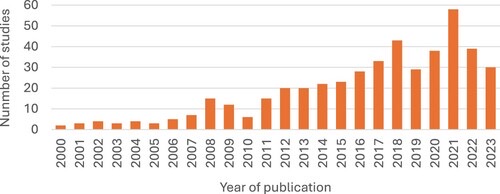
“Below is the text of a speech delivered by HEPI CEO, Nick Hillman OBE, to the Belonging in Higher Education conference hosted by the University of Warwick. Thank you for inviting me. I am the CEO of HEPI, which is an Oxford-based think tank and charity specialising in higher education. Alongside the dozens of reports and events that we do each year, we run a daily blog which I mention, in part, because my own last contribution to it was a book review that focuses on student-on-student bullying . This obviously relates to our theme today of whether or not students feel like they belong at their higher education institution. I want to divvy up my remarks into three: some reflections on the issue of belonging in higher education to set the scene from a policy perspective; three tactics to avoid when seeking to ‘influence the influencers’ – by the way, I have interpreted ‘influencer’ in the traditional sense, referring to those in leading positions in politics, policy and the media, not in the TikTok sense; and 10 ideas that my experience suggests work well when seeking to influence those in authority, which – if they hold true – relate to every area, not just belonging. Belonging in HE When I started working in higher education policy back in 2007, almost 20 years ago, we did not talk so much about belonging in higher education as we do today, nor the other side of the coin – loneliness. In fact, although I attend dozens of events on higher education policy every term and have done so ever since I joined HEPI back in 2014, this is the first event I can remember ever being invited to that is solely on the topic of ‘belonging in higher education’. Nonetheless, the issue has of course always been rumbling away in the background, probably for as long as universities have existed, even if we have not always labelled it as ‘belonging’. Google AI, for example, informs me that David Hume, Sir Isaac Newton and Alan Turing are among those long-dead people who felt out of place as students. As part of my preparation for this session I went back to look at the self-help book First Year at University by Bruce Truscot, which appeared in 1946 (although I was looking at the heavily revised version from 1964). This paints a memorable and blunt picture of life for a minority of students who struggle to fit in: for some, the sudden change from the small community of school where everyone knew everyone else, to a large heterogeneous collection of people where nobody seems to care whether you live or die, can be an inhibiting experience leading to loneliness and despair. The book continues by looking specifically at students who find it harder to make friends: There are more students like this than we imagine and for them, in digs of bed-sitter, university is a menacing place full of thoughtless people. So the problem of a lack of belonging and a surfeit of loneliness has obviously always been there. Yet the issue has risen up the agenda in recent years and it is fantastic to see the Centre for Belonging in Higher Education, our hosts today, go from strength to strength. The academic research referred to on the Centre’s own website confirms the topic of belonging in higher education has been slowly gaining interest, with a particularly large number of relevant published articles just before and just after COVID. Source: https://www.tandfonline.com/doi/full/10.1080/03075079.2026.2643785#d1e544 Of course, it is not just in relation to higher education that belonging has become the issue de nos jours : by 2029, all schools will be expected to monitor pupils’ sense of belonging and engagement. However, while I am in general someone who thinks universities often have a lot to learn from schools, belonging at school and belonging in higher education are probably qualitatively different – for one thing, schooling is compulsory for children and higher education is voluntary for adults and, for another, universities are typically (much) larger. Moreover, contact time is generally lower in higher education ( against the expectations of many higher education applicants ) and student life is much more likely to be residential. Perhaps the high level of interest in belonging in recent years is explained by the fact that the student body has changed significantly, potentially making it harder to find one’s tribe. Looking back from today’s perspective at that quote from Truscot’s book, ‘heterogenuous’ seems an odd word to use to describe university life back in the 1960s. From today’s perspective of more diverse campuses, students in post-war universities look rather homogenuous. This whole topic has also risen up the agenda because of the sense that there is a mental health crisis among students, and young people more generally. They find it harder to socialise , even sometimes struggling to talk on the phone and feeling uneasy when eating out . The other day, I visited one of the UK’s biggest higher education institutions, Arden University , which has more students than our hosts today, the University of Warwick. I met a student counsellor there and asked him about the crisis in mental health among young people. He immediately ascribed this to two factors above all, neither of which will surprise you but both of which did not exist years ago: the lingering impact of the COVID-19 pandemic and social media. Another reason why ‘belonging’ has risen up the agenda is that better data have become available, including through our own research, such as the annual HEPI / Advance HE Student Academic Experience Survey . As our summary report looking back over the past 20 years published the other day reminds everyone, this important survey has been running for 20 years. Halfway through its life, we added a bunch of student wellbeing questions (based on those used by the Office for National Statistics ) and, even more recently, we have added some questions specifically on belonging and also loneliness. Last year, the results showed that one-in-eight (13%) full-time undergraduate students did not have a sense of belonging at their university while almost one-third (30%) felt lonely ‘all of the time’ (6%) or ‘most of the time’ (24%) – and a further one-third (33%) felt lonely ‘at least once a week’. At our Annual Conference on 11 June, we will reveal whether the picture on belonging has got worse or improved over the past 12 months. Of course, this is all a bit ‘chicken-and-egg’ because one reason why better data have become available is that we had all been sensing that there was a problem that needed a spotlight shone on it. Three specific trends affecting the student experience that are particularly notable in recent times are: a doubling to two-thirds in the proportion of students who do paid work during term-time over the past five years or so – sadly, the Government have not just ignored this, they have actively denied it has happened ( using pre-COVID data! ); a 1 percentage point increase each year over the past decade in the proportion of students who opt to live at home for whatever reasons; and related to both of these previous points, an increase in non-attendance at timetabled hours – catching up online is potentially a useful way to absorb missed content but it is no replacement for chatting to your neighbour in person before the lecture begins, perhaps to plan a night out, or else going for a coffee afterwards. Universities have sometimes sought to get around these problems by squashing up their teaching for a course so that it fits into just a couple of days a week. This is the new reality, given the shortfall in maintenance support, and it is appreciated by many students. But you cannot easily build a community on one or two days a week teaching. … you cannot easily build a community on one or two days a week teaching … I still hanker more for the sticky campus model developed during the rebuilding of Christchurch University in New Zealand after the devastating 2011 earthquake, which sought to keep students on campus for longer rather than less time. I have written before about how well Edge Hill University has done this – even the details are impressive, with every student flat having an Edge Hill edition of Monopoly to encourage freshers to play together while learning the geography of their own impressive campus rather than the streets of London. Three things to avoid Much of what is written about belonging in higher education, which at heart is a pretty basic concept that most people can understand on first sight, seems to me as a policy wonk quite impenetrable. For example, when researching what I might say in this speech, one of the first things I found was a recent-ish article on a UK university website that sounded useful, titled ‘“Belonging in Higher Education”: What might this mean for our diverse student body?’ But I quickly became lost. It said: Culturally affirming, validating and relationally just personal tutoring and advising invite us into a more expansive space, one rooted in radical listening, cultural humility, and relational accountability. … It entails embracing an infinitude of ways of knowing and being, through a relational orientation that centres care, and co-liberation to cultivate the conditions for students to ‘speak as equals’ (hooks, 2015), where difference and plurality are not framed as problems to be fixed, hierarchised, or annihilated. … To facilitate this, personal tutoring requires: Introspection (looking inward): interrogating ontological and epistemic positionality, assumptions and biases that (un)consciously shape practice. Outrospection (looking outward): interrogating institutional systems, structures and cultures that shape practice and the student experience. Reorientation (intentional shift): decentring hegemonic ways of being and knowing, to allow an openness to different and a plurality of ideas and realities. In just a few hundred words, this piece falls into most of the traps identified in my favourite ever article from Times Higher Education . Titled ‘How not to write: 14 tips for aspiring humanities academics’, it begins: Good writers are often fooled by the lure of plain English. Most academics in the humanities are not duped so easily, though. They understand the power of jargon, obscurity and incoherence. I am not meaning to be unfair to the author of the piece on belonging that I quoted from. It is likely that people across the higher education sector will find it useful. But my title today is ‘influencing the influencers’ and, in all honesty, it sort of does not matter if the piece I have just read from makes perfect sense to you or not. No time-poor politicians or civil servant or journalist or other opinion former is going to wade through it to work out what it all means. I also do not want to insult our hosts today: despite the Centre for Belonging in Higher Education still being new, they have already undertaken masses of critically important work and their convening power is both impressive and useful. But I nonetheless fear that the multi-part, multi-coloured circle known as ‘Warwick Building Belonging Framework’ falls into a similar trap to the article I quoted from above. Source: Warwick Building Belonging Framework by Hide-Wright, Ritchie, Alcock, & Mencarini© 2024 is licenses by CC BY-NC 4.0 The explanatory text accompanying the circle states: Integrated within the framework is the recognition of different participation types (For, With, and By), acknowledging building belonging practices differ across audiences and contexts. The framework encourages you to consider what is being or could be done: For the audience In partnership With the audience And, led By the audience. Yet the usual purpose of a diagram is to clarify things and to make complicated concepts explicable at first glance, including for people who are not going to read screeds of information. I am sorry to say I have not the foggiest idea what practical advice the Building Belonging Framework is trying to impart. I have so many questions about it but will limit myself to just one: why is ‘Trust’ a clockwise concept? There might be good answers to all my questions but the fact that they need asking suggests the roundel may fail to do what it is designed to do, which is to simplify something potentially quite complicated. Instead, it complicates something that could be quite simple. I am sure I am being unfair. I am sure that if I spent some time delving more deeply, all would all become clear. But to repeat my point, that is the point: policymakers and the media, to take the two most important groups to influence, are time poor. You are competing for their time with others and they will reward those who make their lives easier. Influencing the influencers Let me begin the third and final part of my speech on how to influence the influencers by reminding you that HEPI is not a lobby group but an independent non-partisan and non-ideological think tank. We are generally on the side of staff, students and institutions, but we publish reports on the whole gamut of higher education issues and, where the quality is good enough (as assessed by our peer-review process), that includes papers that contradict things we have said before. For example, we have published numerous ideas on student finance, many of which contradict one another but all of which are worthy of debate. Our sector is full of mission groups and representative bodies and others who do lobby for specific things, but our role is different: we are more of a debating chamber, but a debating chamber for those with experience and evidence at their fingertips. Despite (or because of) this impartiality, our work is regularly quoted by policymakers and my previous role, as a political adviser to a Minister for Universities and Science (the Rt Hon David Willetts) in the Coalition years, means I have watched politicians and officials up close and have also been on the receiving end of lots of lobbying myself. There are 10 things you need to do, in my opinion, to get the issue of belonging closer to the centre of the policy radar. In one sense, these go for pretty much any issue, but most of the examples I have chosen are on the topic being discussed today: belonging in higher education. Find counter-intuitive examples People often think that politicians and other opinion formers are after material that bolsters their pre-existing views (or prejudices). Sometimes that is true, especially with the less open-minded ones. But those who are genuinely interested in policy will often be more interested in counter-intuitive examples that confound their existing worldview and from which they might learn something new. I was lucky enough to work for a politician like that. To take a specific example, one seemingly counter-intuitive fact in the area of belonging is that care-experienced students sense, on average, a greater sense of belonging at their higher education institution than other students. I was initially surprised by this fact, not least because we once ran a piece about care-experienced students that included the heart-wrenching line, ‘ a deserted campus on Christmas Day is a lonely place to be. ’ But when you think about it carefully, the fact that care-experienced students feel like they belong at university even more than others do shifts from being counter-intuitive to, if not entirely intuitive, then at least explicable. If you do not come from a traditional family environment, your university is not a home-from-home, it is home. It is not the place you leave at weekends to pick up your regular life; it is the place where you set down roots. The man of the moment, Wes Streeting, makes a similar point in his childhood memoir ( which I reviewed on the HEPI website ) when he writes that his time at Cambridge differed from that of his fellow students because, while they escaped the pressure of student life in the holidays, ‘for me, Cambridge always felt like the great escape’. Hard data My next point is: do not forget the importance of hard data. Even if you have an incredibly data-rich report with multiple interesting numbers, it is unlikely ever to scratch the surface of public opinion unless you pick out the top one or two killer facts to wave in people’s faces. For example, perhaps the most striking statistic to have scraped people’s consciousness on the theme of belonging and loneliness in recent years is the claim from the US that, ‘ The mortality impact of being socially disconnected is similar to that caused by smoking up to 15 cigarettes a day ‘. I cannot tell you how often HEPI authors have drafted press releases that try to summarise the entire contents of whatever report they have written for us and which we have had to delete and start afresh, building up from whatever the main killer number in their document is. Incidentally, the gradual spread of AI across think-tank land has made this problem more common because AI does not always have a good nose for killer facts. Just remember, the purpose of engagement materials, like a press release, is to act as a shop window to entice people in; it is not to lay out all your wares. Fortunately, this is pretty easy to do because, when it comes to belonging, there is a burgeoning wealth of data that is eye-popping and which resonates when flagged in the right way. I think, for example, of: the data from our own student surveys, such as the HEPI / Advance HE Student Academic Experience Survey and the HEPI / Unite Students, Applicant Survey ; other HEPI research, such as the HEPI / TechnologyOne Minimum Income Standard for Students , the Unipol / HEPI Accommodation Costs Survey and the HEPI / University of Lancashire Student Working Lives project; and as well as others’ work, such as the all-important new Pre-Arrival Questionnaire . I note in passing, given the importance of student finance in enabling students to feel like they belong, that the last time a Westminster Government commissioned a really deep independent dive into students’ true cost of living was in 1958, when the Macmillan Government commission the Anderson report . Simple and accessible measures My third point is a plea for simple, quick and easy-to-collect measures. I found the learned academic article linked to on your website on ‘How to measure belonging in higher education confusing on this point. The authors assess ‘six factors … four domains … four themes … 15 concepts … [and] 52 instruments’ before concluding they are all useless: we would not recommend using any of the scales currently being employed to measure belonging in the higher education sector. If you want influencers to recognise the importance of this whole topic, telling them current measures are woeful and to wait until better measures have been developed and more research has been undertaken is not going to work. By the time those better measures come along, if they ever do, we will be on to another Minister, Prime Minister and Government – the Minister for Universities job has changed hands nine times in the past decade. In my view, if we really want to know if students feel like they belong at their institution, the first thing we should do is simply to ask them if they feel like they belong there. It is not a difficult concept to grasp. That is what we ourselves do in the Student Academic Experience Survey when we ask students to respond to the statement ‘I have a sense of belonging at my university’. To my untutored eye, the academic literature seems to have gone down a bit of a rabbit hole. It is, of course, true that we may learn stuff while we are down that hole, but it is also likely to take too long to escape from it. Anecdotes work (whether you like them or not) My fourth lesson is to remember the power of the anecdote. We all know the plural of ‘anecdote’ is not ‘evidence’ but nonetheless nothing speaks louder to policymakers than a powerful anecdote, whether from a constituent, a professional contact or, often in higher education, a family member. When it comes to belonging in higher education, I often think back to a story that a former President of the NUS said at a HEPI event. Originally from the Midlands, she talked about how out of place she felt when she started university in the north of Scotland. Sitting alone in her room, she gave herself one more chance to stick with it and decided if that did not work then she would return home. But the chance she decided to take was getting involved in student union politics and suddenly she found her métier , rising to the top of her own students’ union and then national student politics. For me, that one story is more resonant than whole books about the atomisation of society. Choosing the mot juste My next point is the importance of choosing your words carefully. Language really really matters. There is always a bland way to say something and a vivid way to say the same thing. The job of a think tank like HEPI and the job of a unit like the Centre for Belonging in Higher Education is to take a subject that could be dry and make it so interesting that it is hard to ignore. Yet often in our sector, we seem to take things that could be interesting and then undersell them. I had an experience of this only the other day when we were publicising our new report on the student experience over the past 20 years. Data-rich, carefully-written and nuanced, in my view this is one of the most important reports on higher education that is likely to be produced this year. But it was still not guaranteed to gain the attention it deserved. So to make the picture vivid, I talked in the press release about how the report proved there had been a ‘hacking away at the traditional university experience’. This is a vivid way to describe the report’s contents and, presumably, helped to secure the media coverage it received. Importantly, this is different to political spin, which is making more of your contents than they can sustain rather than simply making your research sing for a bigger audience. The power of a league table You may not like my sixth point but I am going to risk it anyway: do not underestimate the power of a league table. Everyone loves a league table. If you doubt this, consider this old story told by the much-missed journalist Richard Garner in a HEPI paper: When the first school league tables came out, I was at the Daily Mirror at the time and – in line with the Labour Party’s then line – we decided that we would not publish them. They were misleading, or so the argument went, and did not give a true reflection of a school’s worth. We still had to write a story about them, though, so I gathered together a printed version of the tables and put it on the desk beside me to refer to as I wrote my story. I lost track of the number of senior executives and reporters who queued up to look at them in order to find out how their son or daughter’s school had fared. A wry smile formed on my lips These days, we have league tables on seemingly everything in higher education except belonging. You may say in response that league tables dumb things down, that metrics only tell half a story, that we already have too many league tables and so on. I know these criticisms as well as anybody. But I can also tell you that the annual Social Mobility League Table we do with LSBU has more engagement each year than almost everything else we do. The point is that league tables get people talking. And if you really hate them, just remember the way to devalue something is to have more of it, so the best way to oppose league tables is to produce more of them. Those who love league tables and those who hate them should both want more of them. Constructive case studies Having sat in a ministerial office, I can promise you that few things speak louder than an illustrative case study. Yet the pace of politics, which can sometimes be frustratingly slow, can also be extremely fast – for example, in the latter stages of compiling a ministerial speech. During my time in Whitehall back in the 2010s, I was sometimes asked why we so regularly picked case studies from institutions in the University Alliance mission group and so rarely used ones from Russell Group members. The answer was much simpler than you might think: we knew that if we rang up the University Alliance and requested an urgent example of something or other, they would have one ready at their fingertips or else would get it within the hour. As the University Alliance has recently expanded, the situation I describe may very well still be so; I do not know. But given the head of the University Alliance back then has just started as the new boss of the Russell Group, plus there is a new kid on the block in the form of the ResearchPlus group of institutions, the relative strengths of the different sector groups is going to be an interesting space to watch in coming months. Analogies The next point on my list is: do not forget the power of an analogy because they can turn policies that seem impossible or just exceptionally hard into things that seem workable and implementable. For example, as we all know there is a particular challenge in helping commuter students belong, especially where they are only a small minority of the total student body. One way to tackle this is to link non-residential commuter students to a live-in unit, like a college or a hall of residence. At first glance, this might seem to policymakers like an odd thing to do but I found most traction with the idea when I compared it to the ‘day boarder’ concept developed by boarding schools , in which day pupils get nearly all the benefits of the residential experience – just no bed. If that sounds elitist, impractical or even a little silly as a way to engage those with influence (given the minuscule percentage of the population who attend boarding schools), I would simply remind you that – until recently – we had a Cabinet where 37% of people had been to boarding school , almost double the proportion that had been at state schools (with the rest attending private day schools). Around half of the same Cabinet had been to Oxbridge, so they tended to have limited understanding of non-collegiate universities and the challenges faced by non-residential students. You might say times have changed but they have not changed that much: under Keir Starmer, the proportion of Oxbridge-educated Cabinet members is still at 40% . Paint a story It is a cliché to say a picture paints a thousand words but it is nonetheless true. For example, when I was lucky enough to be a guest on the wonderful My Imaginery University podcast , hosted by Paul Greatrix, the former Registrar at the University of Nottingham, I tried to invent a new university that put belonging at its centre. I came up with, in Paul’s words: a novel approach to the residential university which involved taking over a National Trust property [Hartwell House in Aylesbury] and adding a new stop on the HS2 line. My goal was to invent a university from the ground up where every member felt they truly belonged in the community, for example by having basic-but-similar accommodation for all, shared meals and a campus with a heart. Make use of existing structures My tenth and final point is straightforward but surprisingly easy to forget: do not forget to use existing structures that are already there to help bolster your case. Most notably perhaps, when it comes to belonging in higher education, do not forget the role of the Higher Education Student Support Champion. The first holder of the post was Edward Peck during his time leading Nottingham Trent University and before his elevation to the Chair at the Office for Students. Edward was particularly interested in using technology, including big data and artificial intelligence , to improve student support services. The new postholder is Steve West, who is not only one of the UK’s longest-serving university leaders but also someone who has put a very welcome focus on the more human side of student life, including during this time as Universities UK President. Conclusion Let me end by looking ahead to three pieces of future HEPI work, all of which relate to your themes today. First, at the sold-out HEPI Annual Conference on 11 June , kindly sponsored by TechnologyOne and Kortext, we will be launching the 2026 iteration of the HEPI / Advance HE Student Academic Experience Survey . I will not give the game away now other than to reiterate that the data we issue on that day will continue to build up the longitudinal picture we have been building up in recent years on students’ perceptions of belonging. Then, later in June, we will be launching the 2026 iteration of the HEPI / Unite Students Applicant Index . HEPI has been conducting robust polls with Unite Students for well over 20 years and we have worked with them on other important projects related to today’s themes as well, such as the Living Black at University initiative. These days, our work together tends to focus predominantly on applicants. This is vitally important because no one else has polled applicants methodically over time, yet applicants’ views change as cohorts change – plus, critically, it is only by knowing what applicants expect that we can ensure they receive appropriate pre-arrival information, deliver smooth transitions and meet (or else shape) their overall expectations. So do come along to our free webinar on 24 June to hear more about the 2026 survey and to discuss the issues. I should also emphasise that, as part of this whole area, I wholeheartedly welcome the Pre-Arrival Questionnaire pilot under Michelle Morgan of the University of East London and Jonathan Neves of Advance HE, which is teaching us so much about what people on the cusp of higher education expect. Thirdly, in early July, we will focus on the role that student accommodation plays in shaping the student experience by publishing – in conjunction with UPP – an important new paper by the Revd Canon Professor William Whyte of St John’s College, Oxford, on the role of the residential university in the modern world. As my brilliant former colleague, Lucy Haire, now UPP’s Director of Sector Engagement, wrote the other day : The key question remains how intentional institutions are about the role accommodation plays. The decisions made now will shape not just where students live, but how they experience university, and what they take from it. In other words, if we only look at the academic experience inside the lecture halls, seminar rooms and libraries, rather than the fuller experience UK universities have tended to try and offer as part of the ‘ boarding-school model ’, we will not solve the problem of a lack of belonging. But to return to my main theme, given the high proportion of leading civil servants, policymakers and other opinion formers who studied for their degrees in benign collegiate environments as part of an ancient university, that is potentially an area where policymakers will feel they can engage. Get our updates via email Enter your email address to subscribe to this blog and receive notifications of new posts by email. Email Address Subscribe The post How to Influence the Influencers: Belonging in Higher Education appeared first on HEPI .
Original story
Continue reading at HEPI Blog
www.hepi.ac.uk
Summary generated from the RSS feed of HEPI Blog. All article rights belong to the original publisher. Click through to read the full piece on www.hepi.ac.uk.

