
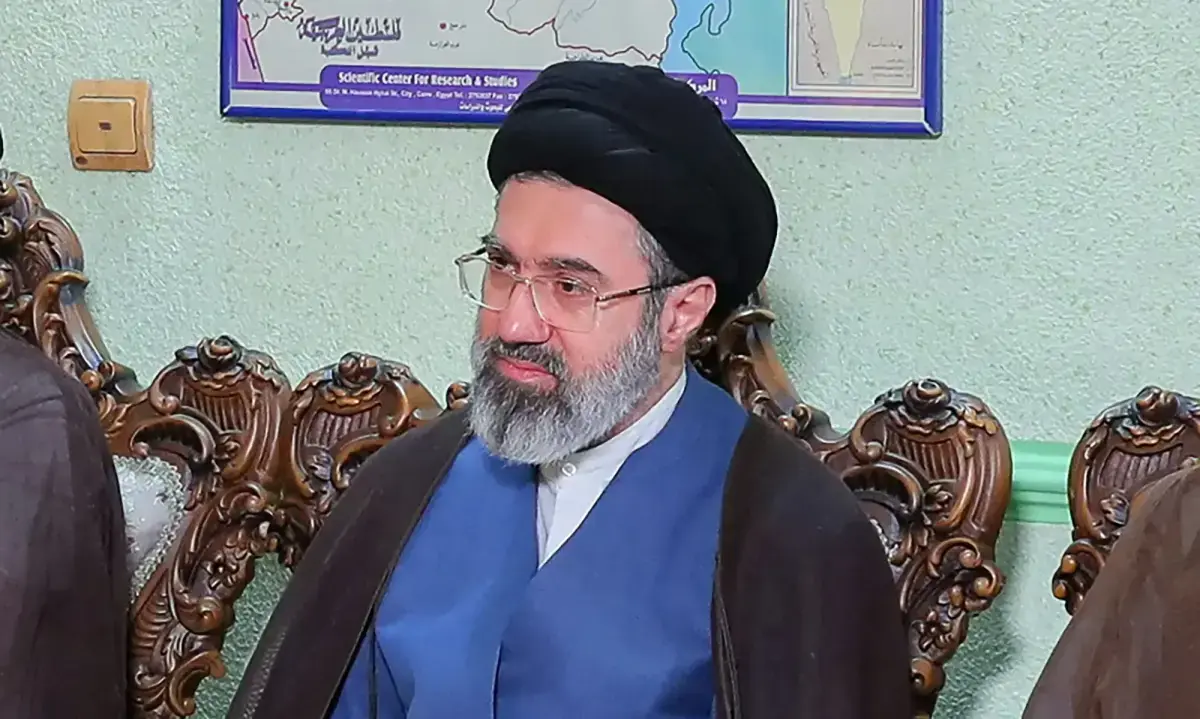
“Iranian Supreme Leader Ayatollah Mojtaba Khamenei said in a statement on Tuesday that nations in the Middle East would “no longer serve as shields for US bases”. Mojtaba, who has not appeared publicly since being named as the supreme leader on March 8, made these remarks in his Haj message and hours after the US carried out fresh strikes in Iran despite a fragile ceasefire and the two sides engaging in negotiations for a deal to end the almost three-month-long war. “The hands of time will not turn back, and the nations and lands of the region will no longer serve as shields for US bases,” the supreme leader said in his message, which was shared on his X account and reported by Iranian media. He said that the US “will no longer have a safe haven for its mischief and for establishing military bases in the region“, adding that it was “growing more distant from its former status day by day”. “The future belongs to the Muslim ummah and the new Islamic civilisation,” he said. He further stated, “The Muslim ummah and the nations of the region possess many shared capacities and common interests that will shape the new order and the future architecture of the region and the world.“ Iran’s state-run Press TV further reported that Mojtaba also highlighted the role of the Axis of Resistance, a network of Iran’s regional proxies. He described it as a unified movement extending “from Iran to Lebanon and Palestine and Iraq and Syria, from Africa and Yemen to Afghanistan and Pakistan”. The report said that Mojtaba noted in his message that this network had “confronted American influence, challenged Israeli occupation” and fought the militant Islamic State group. He further termed Israel a “cancerous tumor” and an “unstable regime” nearing “the final stages of its cursed life”, Press TV reported. It further quoted Mojtaba as stating: “The Islamic Republic succeeded in rendering the Zionist regime helpless under its heavy blows, delivering a hard slap to the aggressive America, and thwarting the enemy’s goal of forcing Iran into surrender.“ The report said the supreme leader also lauded the Iranian armed forces and their allied resistance groups for achieving “remarkable victories” against the US and Israel. The recent conflict between Tehran and Washington began with US-Israeli strikes on Iran on February 28, which also resulted in the assassination of former supreme leader and Mojtaba’s father, Ayatollah Ali Khamenei. The conflict widened to the rest of the Middle East as Iran targeted US bases and assets in Gulf countries and blocked the Strait of Hormuz — a maritime corridor that served as a passage for one-fifth of the world’s oil and gas supply in peacetime — as retaliatory measures. However, Iran has not accepted responsibility for all attacks in Gulf countries. And while strikes on Iran and in Gulf nations have largely been paused since a Pakistan-brokered ceasefire on April 8, the US has enforced a naval blockade of Iranian ports as core issues between the two sides remain unresolved. Hence, indirect negotiations between Washington and Tehran are currently focused on ceasefire stabilisation, sanctions relief for Iran, maritime security and sequencing of nuclear concessions. Meanwhile, Pakistan, along with other countries, has continued efforts to mediate between the US and Iran, after plans for a second round of negotiations in Islamabad fell through . The first round of historic direct US-Iran talks was held in Islamabad on April 11 and 12. It had ended without an agreement, but also without a breakdown . On Monday, US President Donald Trump seemingly predicated an emerging peace deal with Iran on Muslim-majority nations across the Middle East and beyond normalising relations with Israel — a move that is said to risk complicating an already fragile diplomatic process, which is still struggling to move from conflict management towards even a limited political framework. In a lengthy Truth Social post, Trump called on more Arab and Muslim states to sign up to the Abraham Accords, brokered during his first term in office and aimed at normalising ties between those states and Israel. He said Saudi Arabia and Qatar should immediately sign and Pakistan, Egypt, Jordan and Turkey should follow suit, calling his request mandatory.
Original story
Continue reading at Dawn Pakistan
www.dawn.com
Summary generated from the RSS feed of Dawn Pakistan. All article rights belong to the original publisher. Click through to read the full piece on www.dawn.com.