
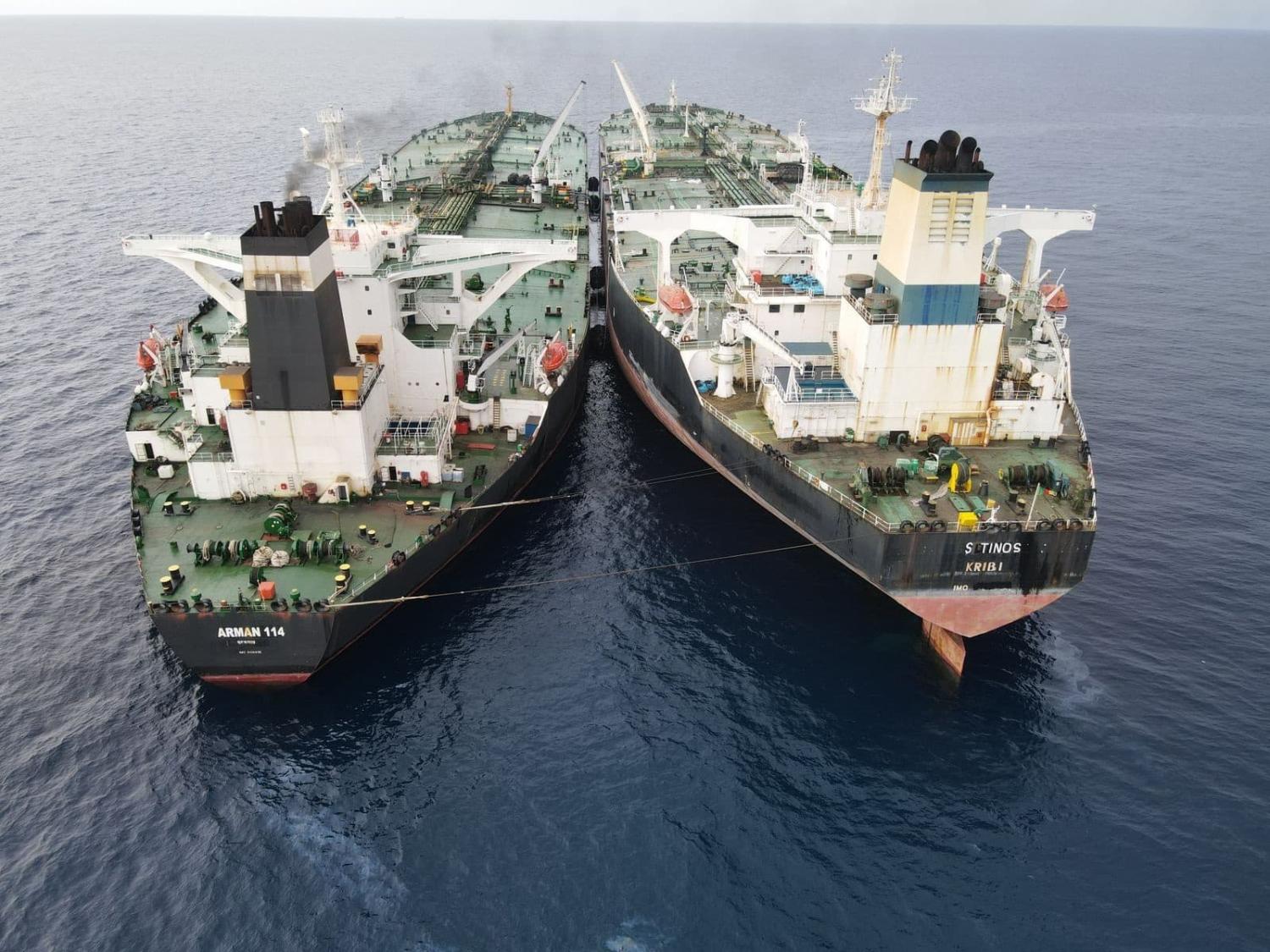
“Iranian oil shipments are successfully bypassing a vast US naval blockade in the Gulf of Oman, utilising highly complex evasion tactics to continue supplying China despite an “unprecedented” level of American focus on intercepting vessels, according to maritime data and satellite imagery. The reliance on deceptive maritime practices to circumvent the blockade, which was imposed in mid-April to choke off Tehran’s oil revenues and restrict its regional financing, comes as the US Navy deploys extensive forces to the region. China remains the world’s largest importer of Iranian oil, and the ongoing trade coincides with recent meetings between US President Donald Trump and Chinese President Xi Jinping. The continued flow of crude has prompted US Treasury Secretary Scott Bessent to accuse Beijing of “effectively funding terrorism” by maintaining its purchases of Iranian oil, according to the New York Times. To grant Washington the capacity to monitor and intercept Asia-bound vessels, the US Navy has pushed significant forces into the region, beginning in the Gulf of Oman. US officials state the blockade has achieved substantial results, with more than 70 vessels intercepted since operations commenced. These include interventions near the Iranian coast and at significant distances in the Indian Ocean. Notably, US forces seized the tanker Majestic X, which was carrying an Iranian oil cargo destined for China, more than 2,000 miles from the Gulf of Oman. However, a New York Times analysis of shipping data and satellite imagery demonstrates that several oil-laden vessels departing Iranian ports concurrently with or following the blockade’s implementation have successfully maintained their routes to East Asia. Sophisticated Concealment Tactics To evade detection, these vessels employ a variety of concealment methods, including deactivating tracking devices, spoofing geographical locations, sailing under false flags, and conducting ship-to-ship transfers at sea to obscure the true origin of the cargo. According to maritime intelligence firm Windward, the number of vessels utilising such deceptive practices surged by 600% between April 19 and May 3. A prominent example is the Iranian supertanker Huge, which loaded approximately 2m barrels of crude from Kharg Island, Iran’s primary export terminal, before crossing the Strait of Hormuz in early April. Satellite imagery indicates the vessel departed the Gulf of Oman around April 13, almost exactly as the US blockade was enforced. The tanker kept its tracker deactivated for nearly its entire journey, briefly switching it on in early May when it appeared off the Indonesian coast in the Lombok Strait. Captain Tim Hawkins, a spokesperson for US Central Command, stated that Washington does not consider the Huge to have evaded the blockade, as its crossing predated official enforcement. Conversely, the New York Times noted that US forces intercepted and seized another vessel carrying Iranian crude, the MT Tiffany, in the Indian Ocean on April 21, despite it also leaving the Gulf of Oman prior to the blockade’s imposition. Satellite imagery tracked the Huge near Sri Lanka on April 23 before it continued north along the Vietnamese coast, with estimates suggesting it is bound for China or waters near Hong Kong. The vessel’s route is significant as it navigated the Indonesian Lombok Strait rather than the more frequently used Malacca Strait. Ami Daniel, chief executive of Windward, observed that an increasing number of Iran-linked vessels are adopting this route to minimise detection. Describing the level of US focus on the blockade as “unprecedented,” Daniel added: “I do not think a 300-metre tanker can leave the Strait of Hormuz without being detected.” He suggested that some vessels successfully transiting the region may have secured understandings or waivers from US authorities for humanitarian or other considerations. Electronic Spoofing and Covert Transfers The US-sanctioned tanker Atomis utilised electronic spoofing to mask its location while loading Iranian crude. On April 2, tracking data positioned the vessel in Kuwait, whilst satellite imagery confirmed its presence at Kharg Island. The ship, which was falsely flying the Comoros flag, changed its name from Davit to Atomis just one day before crossing the US blockade zone. Captain Hawkins asserted that electronic spoofing operations have not impeded the US Navy’s enforcement capabilities, noting that Washington relies on multiple monitoring means, including radio frequency data and radar-based satellite imagery. Analysts project the Atomis, which continued its journey across the Indian Ocean to a waiting area near Hong Kong, will likely transfer its cargo to another vessel. Smaller vessels are proving highly manoeuvrable, frequently executing ship-to-ship transfers at sea. The US does not classify these transfers as a direct violation of the blockade, which prioritises vessels entering or exiting Iranian ports. The Salute Legend, a small Hong Kong-flagged tanker, used spoofing techniques to disguise its true location. According to a Lloyd’s List report, the vessel likely received Iranian oil from another tanker in the Gulf of Oman before sailing east to the Chinese port of Quanzhou. The analysis indicates at least eight small Iran-linked vessels have departed the Gulf of Oman for Asia since the blockade began, with half believed to have engaged in ship-to-ship oil transfers in the Gulf or off the Malaysian coast. The waters near Malaysia have served as a primary hub for covert Iranian oil transfers for several years. Floating Storage Declines Despite the continued flow of some shipments to Asia, analysts assess the US blockade is actively impacting the volume of Iranian oil stored on vessels at sea. According to data from Kpler, a global crude tracking firm, the volume of Iranian oil stored on tankers off the coast of Malaysia has dropped from approximately 85m barrels in early February to 51m barrels currently. This decline indicatesthat a significant portion of the floating inventory is no longer being replenished with fresh shipments at its previous pace. The post Iranian tankers use ‘unprecedented’ evasion methods to bypass US Gulf blockade first appeared on Dailynewsegypt .
Original story
Continue reading at Daily News Egypt
www.dailynewsegypt.com
Summary generated from the RSS feed of Daily News Egypt. All article rights belong to the original publisher. Click through to read the full piece on www.dailynewsegypt.com.