
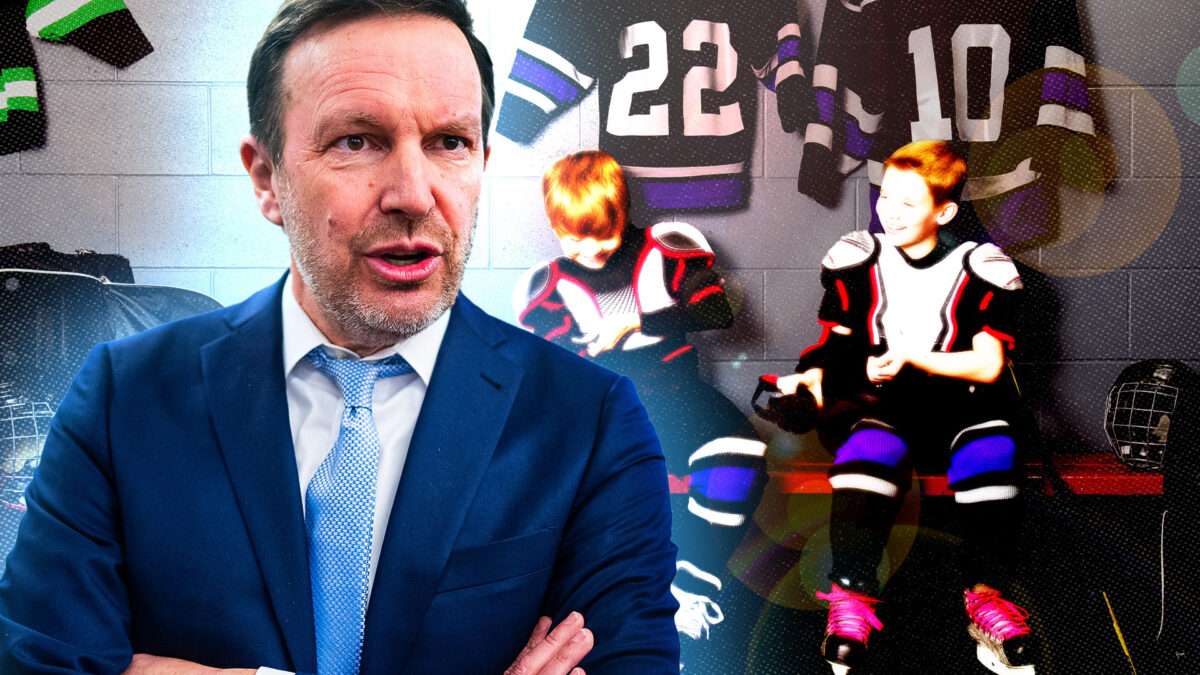
“Fifty years ago this summer, The Bad News Bears was released. Despite its PG rating, goofily disarming poster , and use of Georgees Bizet's Carmen as a soundtrack, the film followed the travails of Little League misfits who are coached by an openly alcoholic pool cleaner, whose uniforms are supplied by Chico's Bail Bonds , and whose sweet-faced, pre-teen players are prone to reeling off foul-mouthed wisecracks like "All we got on this team are a buncha Jews, spics, niggers, pansies, and a booger-eatin' moron!" and "you can take your apology and your trophy and shove 'em straight up your ass!" Matt Welch has called it a " '70s latchkey classic ," noting that both in its vulgar language and its depiction of the Me Decade's divorce-driven disregard for kids, it was a near-perfect representation of its time. For Sen. Chris Murphy (D-Conn.), though, that era in American kidhood represents something like the last good time, when youth sports were local and less demanding of children and parents alike. In an excerpt of his new book Crisis of the Common Good published in The Atlantic , he complains about his 14-year-old son Rider's hockey team, which has "a five-month, 60-game season" requiring travel so extensive that he confesses "I occasionally miss votes in the Senate to watch him." His and his son's experience is, he suggests, a sort of synecdoche for a "deeper rot [that] festers in the American soul: a callousness toward our neighbors, a me-first selfishness, a relentless focus on 'getting mine' even if it leaves others behind." There's a lot to unpack in such claims and, to put it mildly, it's a hell of a leap to jump from talking about organized youth hockey, which has grown over the past decade but still only serves around 600,000 kids a year , to what ails "the American soul." He tells us his son has no delusions of someday becoming a pro player and even manages to play other sports like "flag football, basketball, and golf." Yet something stinks on the ice run by the Atlantic Hockey Federation (AHF), the league his kid plays in. The AHF is owned by the Black Bear Sports Group, which is itself "backed by the private-equity firm Blackstreet Capital Holdings"—well, you can see where this is headed. "Whereas Rider sees hockey as character-building fun, Black Bear's objective is far simpler: to make a grotesque amount of money," pronounces Murphy. Among other things, that means that "youth-league hockey ends up being about the players, not about the team. Rider never plays with the same kids from one season to the next" because the best kids keep moving on to more elite teams. The unbridled greed of the AHL's corporate masters results in "a youth-sports culture in which profit and individual achievement matter more than teamwork or character building." Worse still, the company charges "as much as $37 a month" for video streaming of all games. Let's put aside for the moment that Murphy never bothers to quantify the "grotesque amount of money" Black Bear or Blackstreet Capital is squeezing from him and other parents. Because of its need for large and expensive equipment and infrastructure, hockey, like figure skating, gymnastics, swimming, and a few other sports, has always been pricier than, say, soccer, basketball, or baseball (quick scans for Reddit forums show estimates ranging from around $1,000 a year up to five digits for more involved travel teams). A recent Wall Street Journal video documentary about Black Bear sounds many similar notes to Murphy. For instance, its title reads "This Company Is Building a Hockey Empire. Many Say It's Ruining Youth Sports." But the Journal also notes that Black Bear only owns and operates about 50 indoor ice rinks out of about 2,100 in the United States, so it's not quite clear how it's calling all the shots any more than large investors, who own less than 1 percent of single-family homes, are the reason that housing prices are high. Which brings me to the question of "resentment" in Murphy's excerpt. In passing, he notes that both he and his son like the way the AHL produces extensive individual statistics for players ("if I'm honest, I also spend too much time on those pages") and he cops to the fact that "parents and profit-hungry owners alike" play a role in today's youth-sports culture. It seems to me that he's as angry with himself as he is at Black Bear. As the father of two adult sons and a 6-month-old boy, I'm glad that my older kids played sports but never got interested in time- and capital-intensive pastimes like hockey or horseback riding. But if they had, their mother and I would have figured out if we could afford them or not and work from there. Especially coming from a U.S. senator, it seems nothing short of insane to project outward from your kid's enjoyment of a niche sport to a theory of American cultural rot. But such a move is nothing new. Fifty years ago, The Bad New Bears used kids' sports—and adult roles in leagues—to articulate and discuss anxiety over changing social roles and expectations. The difference is that Chris Murphy has the power to pass laws to ease his conscience. The post Is Private Equity Really 'Buying Up the Rituals of American Childhood'? appeared first on Reason.com .
Original story
Continue reading at Reason
reason.com
Summary generated from the RSS feed of Reason. All article rights belong to the original publisher. Click through to read the full piece on reason.com.