
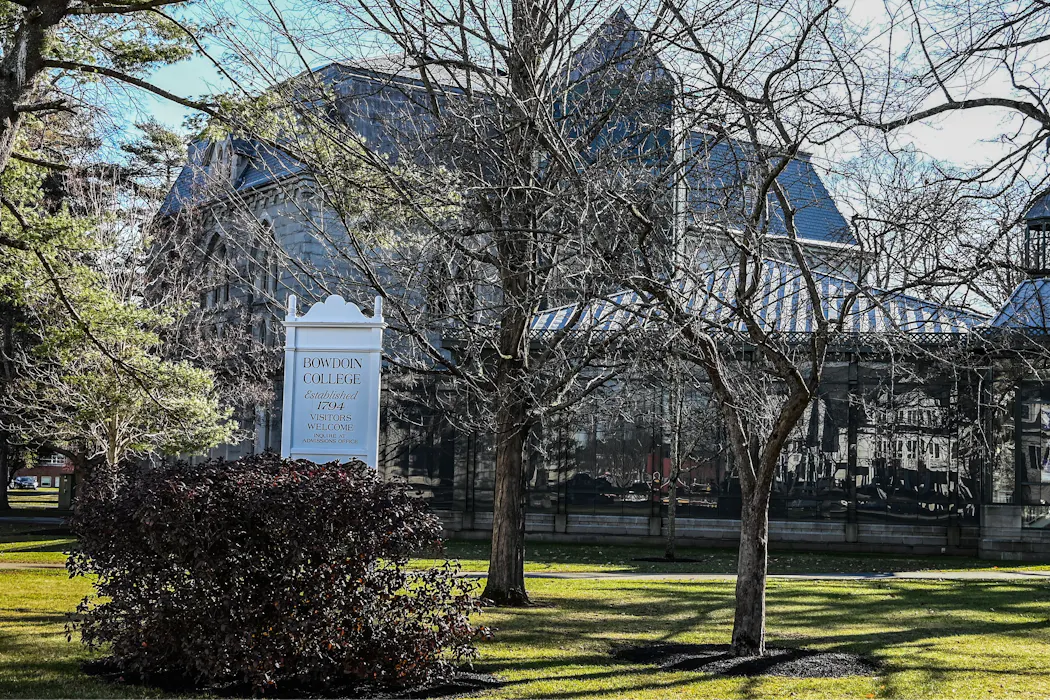
“The campus of Bowdoin College in Brunswick, Maine. Catherine Robotis/UCG/Universal Images Group via Getty Images In 2014, a group of students at Bowdoin College thought it would be fun to dress up as Pilgrims and Native Americans for a Thanksgiving-themed party. This is not the first or last event like this, nor is it unique to one college. Attendees later told me that, at the time, they did not understand why others might find the theme offensive. After all, many had dressed as Native Americans as children. One student told me he chose a Native American costume for the party “because it was way cheaper and I didn’t have to wear a shirt.” The college privately disciplined the students who dressed up as Native Americans but chose not to discipline all of the partygoers. My research shows that this selectivity sent a message to other students: Bowdoin saw racism as a problem affecting individual students, not a broader issue . I am a sociologist at Bowdoin and studied this and two other racially charged costume parties at the college in 2015 and 2016. I wrote a book about this topic in 2024. On each occasion, students, mostly white, dressed up using harmful racial stereotypes. As national movements for racial justice gathered momentum a decade ago, students on campuses were also becoming more aware and outspoken about racial harms. At Bowdoin, too, students began to speak up after these parties. And after each party, administrators sent emails to students and staff that condemned partygoers’ behavior. Yet, some students still didn’t understand why the parties could be seen as offensive. And other students just didn’t care. Asked for comment from The Conversation, Doug Cook, Bowdoin’s director of communication, wrote in an email: “We work hard to build community at Bowdoin and respond to all forms of intolerance in thoughtful and serious ways.” He also noted that the parties took place more than a decade ago. But an April 2026 report from the Yale Committee on Trust in Higher Education cited a 2015 Halloween costume controversy there, noting, “At Yale as elsewhere, such events became identified with "cancel culture”: The idea that one wrong word or departure from campus orthodoxy could yield outsize punishments and social sanctions.“ At Yale and elsewhere, old questions about costume parties are feeding new questions about trust in higher education. Colleges generally try to create respectful campus communities in which students feel seen and safe. But they also try to encourage open, reasoned debate. Racially charged controversies, such as costume parties, tend to put those two goals at odds with each other, leaving college administrators to decide whose interests to prioritize. And being on the front lines of debates about free speech and racism puts higher education in a spotlight. A problem that keeps happening While racially charged events happen on campuses in many ways, costume parties can be among the most visible. It is why, in part, I chose to study what happened at Bowdoin. But Bowdoin is hardly alone. In 2015, the Halloween controversy mentioned in the report took place at Yale. The university’s Intercultural Affairs Committee emailed students a few days before Halloween, asking them to avoid "culturally unaware and insensitive costumes.” Shortly after, Erika Christakis , associate head of one of Yale’s residential colleges, contradicted the email. She argued that the university should not tell students what costumes not to wear . Many costume controversies came before, and others followed, including at Brigham Young University , the University of Central Arkansas and Franklin & Marshall College, to name only a few. Fallout from Bowdoin’s parties In October 2015, one year after the Thanksgiving party and at the same time as the Yale Halloween controversy, another racially charged student party took place on Bowdoin’s campus. This one featured stereotypical gangster attire – baggy pants, jerseys, gold chains and a white student sporting cornrows . In 2017 and 2018, as part of research for my book on the subject, I spoke with students who attended this and other parties. Students who attended the 2014 Thanksgiving-themed party participated in an educational session with members of the Native American student group to learn more about why their costumes were hurtful. Some students told me they “learned a lot” from that experience and realized that offending a certain group of people “is not something to just be pushed aside.” But students I spoke with who did not participate in these educational sessions remained confused, resentful or oblivious to the harm caused. After the 2015 gangster-themed party, the college asked the partygoers – all members of the school’s sailing team – to sit down and talk with the Black student group in a facilitated conversation . The students who attended this party apologized publicly and worked to change their team’s culture through measures such as talking with new members about the hurtful party so they do not repeat the same mistakes. The college administration praised these conversations in an email to the campus, writing, “In our view, the most powerful and effective response is an honest, open discussion between the students who dressed as they did, those who were stereotyped, and the larger student community.” However, some other students posted in anonymous online apps such as Yik Yak that they felt all of these measures were taking away their fun and removing their right to say and do what they wanted. As one self-described white guy wrote in a 2015 op-ed in the campus newspaper, “How can we have an open exchange of ideas when we’ve already decided that one side is right and the other is wrong?” My research shows that the burden of educating the offending students fell almost entirely to students of color . These students organized meetings, participated in conversations, wrote educational columns and shared painful personal stories – all while keeping up with their own coursework. A deepening divide When yet another racially charged costume party took place at Bowdoin in the winter of 2016, this time a tequila-themed party that featured sombreros, the mood was different . Many students felt like the partygoers should have learned something from the prior parties. Mexican and Mexican American students said they felt exhausted discussing the party at length. But others felt this new set of partygoers were being unjustly attacked. As one student said to me, “I remember feeling like I couldn’t speak because I was a white female on this campus who wore a sombrero and exercised white privilege.” Many of the accused students I interviewed called their parents, and some consulted with lawyers to try to avoid disciplinary action by the college. Conservative and more mainstream media outlets picked up on the story. While some Yik Yak posts featured outright racism, the student newspaper showcased a range of views. One student of color condemned the costumes , while another student of color took no issue . One white student called for restorative justice through education and reconciliation, while another white student wanted to promote uncomfortable conversations. And still another pushed back against “ disciplining ignorance .” A series of racist costume parties at Bowdoin College offers insight into some of the trust issues plaguing higher education. iStock/Getty Images Plus As one partygoer told me in 2018, “Everyone was afraid to step on each other’s toes, no one knew what was right and wrong, and everyone felt like a victim. … People on my side who attended the party or wore sombreros felt victimized by administration. Obviously, the Latinx community felt victimized by us.” What’s right or wrong What’s striking about these parties is not that they kept happening – they have been happening for generations, and not just at Bowdoin – but what has happened in the decade since they caught the public eye. My research suggests that Bowdoin, and elite colleges like it, can treat racism like blight carried by a few bad individuals rather than a condition baked into the institutions themselves. I believe this is important, because higher education cannot build trust among all students without acknowledging hard truths that may not even be obvious to leaders. Elite colleges, according to research, remain elite because they serve elite interests . They tend to admit the children of alumni and donors at higher rates. They often reward the kinds of extracurricular activities, such as expensive club sports , that mainly wealthy families can afford. They market “ diversity ” but maintain social structures that keep white students comfortable and in control. When racist incidents happen, colleges sometimes respond with educational programs that ask students of color to fix white ignorance for free. Meanwhile, wealthy students can opt out entirely, using their social and economic capital to shield themselves from consequences. That’s not a system designed to address racism. That’s a system designed to manage public relations while preserving the status quo. Ingrid A. Nelson receives funding from the Spencer Foundation.
Original story
Continue reading at The Conversation US Education
theconversation.com/us/education
Summary generated from the RSS feed of The Conversation US Education. All article rights belong to the original publisher. Click through to read the full piece on theconversation.com/us/education.
