
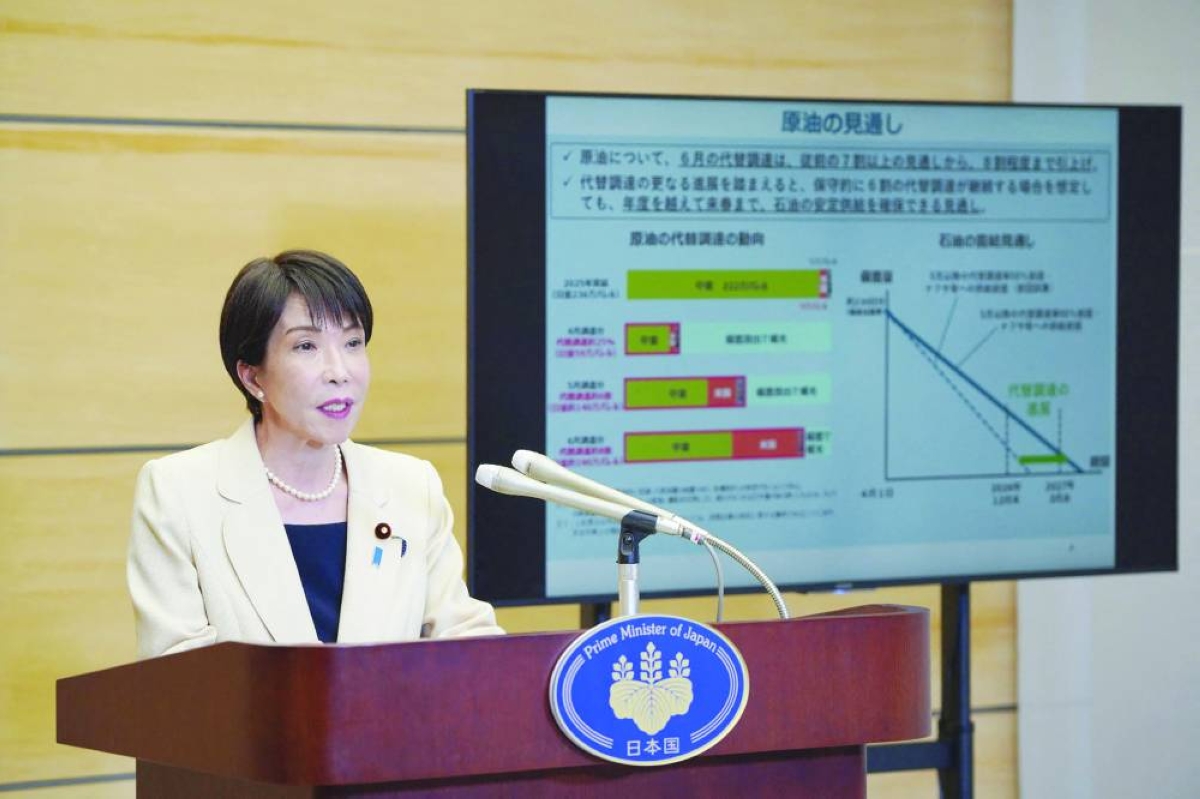
“Japan will build up an extra $19bn in reserves to subsidise fuel costs and help tackle cost of living pressures, Prime Minister Sanae Takaichi said on Monday, while looking to assuage bond market concerns by promising no extra borrowing overall. The supplementary budget, first reported earlier this month, marks a reversal from Takaichi's previous remarks ruling out the need for extra spending, but comes as a spike in energy prices following the Iran war - along with rising import costs from the weak yen - threaten her persistently high support among the electorate. The extra budget of some 3tn yen ($19bn) comes after the government decided to use roughly half of its 1tn yen contingency reserves to fund subsidies aimed at curbing utility bills, increasing the need to replenish reserves amid the risk of a prolonged Middle East crisis. Japan has also been extending separate subsidies to keep gasoline prices steady, a costly step that is quickly using up its contingency reserves as oil prices remain elevated. Takaichi told reporters the extra spending will be financed by deficit-financing bonds, but added she believes the measure could be implemented 'without affecting the government bond market.' The overall amount of bond issuance will remain unchanged from the original plan, she said, as stronger tax revenues, non-tax income and expected underspending are likely to eliminate the need for around 3tn yen in deficit bonds that had been scheduled for issuance through June. 'While closely monitoring daily market developments and economic indicators, the government will steadily reduce the debt-to-GDP ratio to ensure fiscal sustainability and maintain market confidence,' Takaichi told reporters. A Reuters report that the government is likely to issue fresh debt as part of funding for the extra budget helped drive the yield on the benchmark 10-year Japanese government bond (JGB) to 2.8% last week, its highest since October 1996. While analysts say holding planned bond issuance steady signals the Takaichi administration is taking into account market concerns about Japan's fiscal position, risks to the fiscal outlook extend beyond the supplementary budget. The government is considering cutting consumption tax on food, a move that could reduce tax revenue by as much as 5tn yen, while rising JGB yields threaten to push debt-servicing costs higher than expected. In the 122.3tn yen general-account budget for fiscal 2026, debt-servicing costs for interest payments and debt redemption jumped 10.8% to 31.3tn yen, based on an assumed interest rate of 3.0% - the highest in 29 years. Any sustained rise in long-term interest rates beyond that level would force the government to secure additional funding, adding to pressure on its already heavy debt burden.
Original story
Continue reading at Gulf Times Education
www.gulf-times.com/community/education
Summary generated from the RSS feed of Gulf Times Education. All article rights belong to the original publisher. Click through to read the full piece on www.gulf-times.com/community/education.