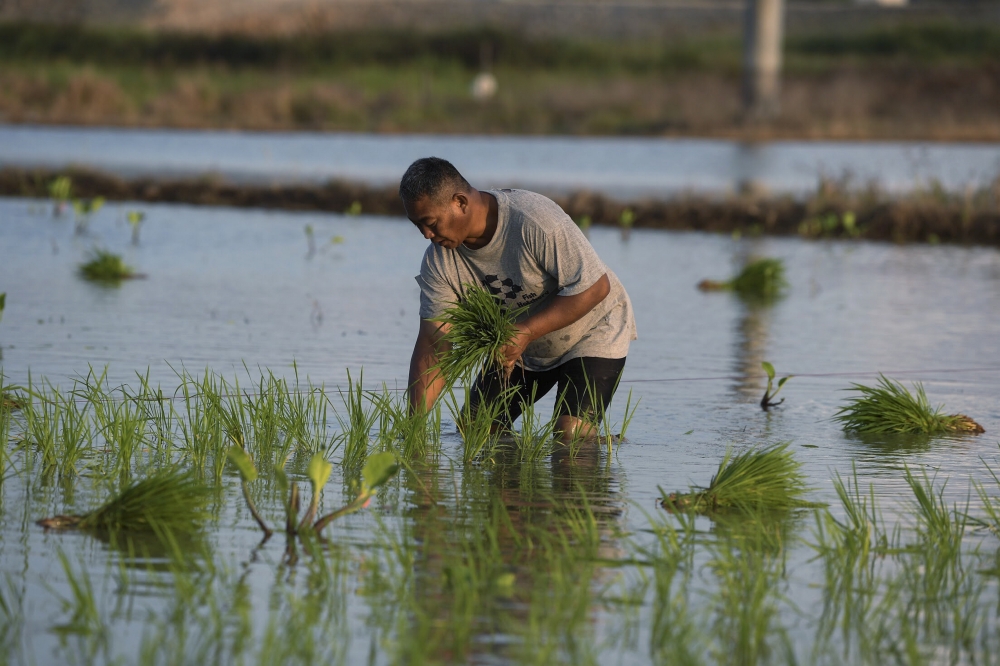
“ALOR SETAR, May 5 — The Muda Agricultural Development Authority (MADA) appeared to explain the real situation regarding the delay in rice planting in Kedah, while emphasising that the institution is always closely monitoring the situation of padi fields, which are affected by the lack of water supply and increasing operating costs. Its chairman, Datuk Dr Ismail Salleh, said that several cases raised at farmers’ gatherings previously were seen as inappropriate and required explanation so that the public would understand the real situation of managing rice planting in the Muda Region. According to him, the water supply for irrigating padi fields depends on four main sources, namely dams, rivers, rain and water recycling, with approximately 50 per cent depending on dam storage. “The three main dams, namely the Muda Dam, the Pedu Dam and the Ahning Dam, are important sources, but the current level is insufficient to release water for irrigation purposes. “This water shortage is a big challenge that does not originate from MADA. Therefore, blaming MADA is not appropriate,” he told reporters here today. He said the total rainfall until April 30, 2026 was recorded at only 790 millimetres (mm), much lower than the 1,545 mm last year and the 20-year average of 1,272 mm. He said the situation caused the dam levels to be at a low level of around 39 per cent overall, with the Muda Dam at a critical level of less than 10 per cent. “In this situation, we are not able to release water as usual. This is a big challenge that stems from weather factors, not management weaknesses,” he said. Explaining further, he said that late planting also occurred because they were waiting for sufficient rainfall at padi fields to reduce the risk of loss, even though the land preparation work had exceeded 50 per cent. In this regard, he urged farmers to take advantage of the rain that has started to fall at this time and to use pumps in areas near the canals to begin planting by wet broadcasting while waiting for the release of water from the dam. He also reminded farmers not to delay planting for too long considering the risk of the El Nino phenomenon which is expected to begin around June, in addition to the possibility of floods at the end of the year that could affect the harvest. Meanwhile, he admitted that the increase in diesel costs had an impact on agricultural machinery operations but emphasised that the increase figures previously reported were incorrect. “Data shows that the increase in diesel costs affects machinery by around 27 to 30 per cent, while the overall increase in costs for farmers is around 10 per cent,” he said. He added that the government had increased plowing incentives to RM300 per hectare to help reduce the burden on padi fields, while the application for diesel subsidies through the Subsidised Diesel Control System (SKDS) was still under consideration. Yesterday, the media reported that approximately 90 per cent of padi fields in the country, including in the MADA area, were still suspending rice planting activities for the 1/2026 season due to increased operating costs and water supply constraints. — Bernama
Original story
Continue reading at Malay Mail Education
www.malaymail.com/news/malaysia
Summary generated from the RSS feed of Malay Mail Education. All article rights belong to the original publisher. Click through to read the full piece on www.malaymail.com/news/malaysia.


