
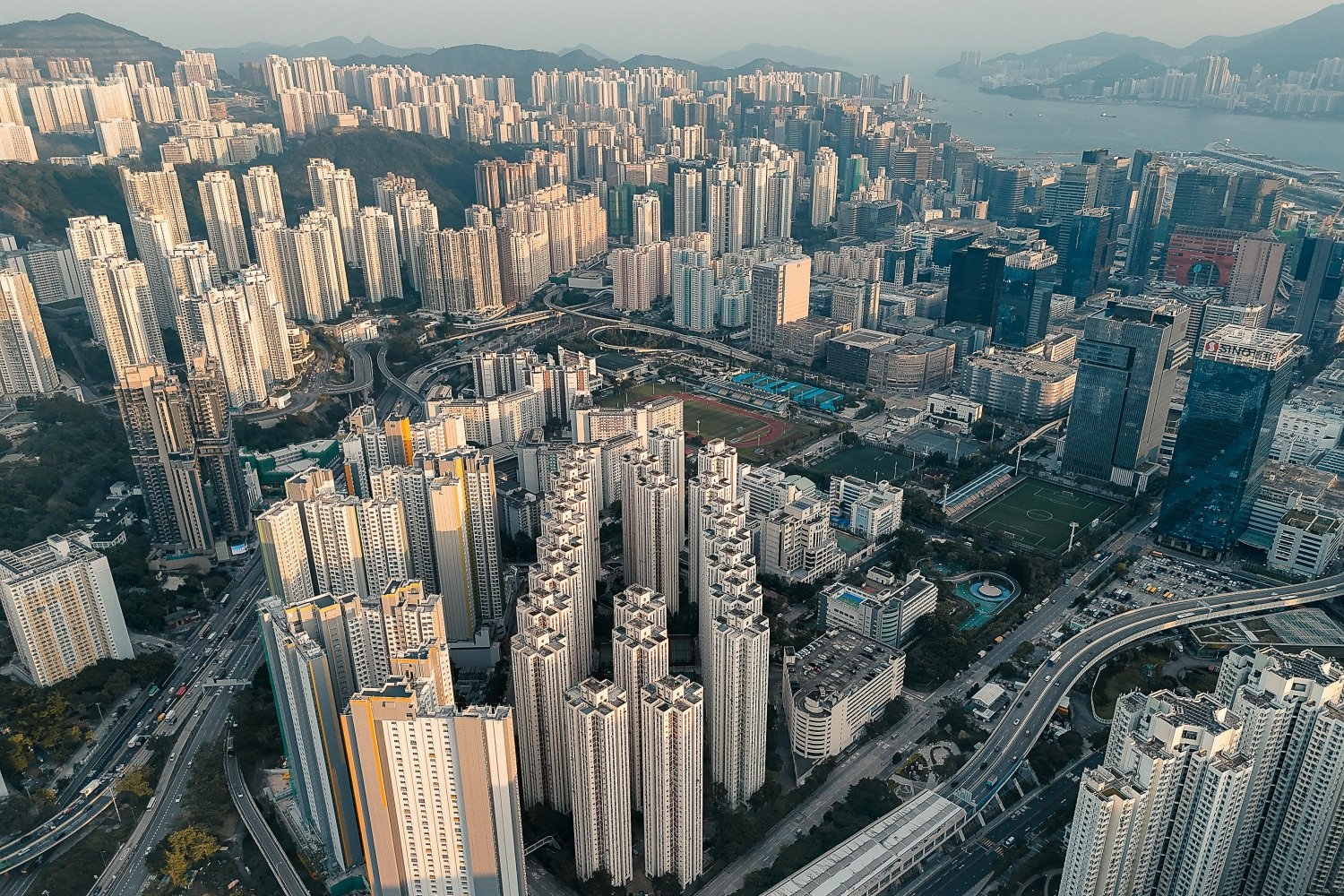
“Urbanization in the Asia-Pacific region of the world is occurring at an alarmingly rapid pace, with more than 2.2 billion people now living in cities in the region, and an additional 1.2 billion projected to migrate to cities by 2050, according to a February 2026 report from the U.N. Economic and Social Commission for Asia and the Pacific, the Asian Development Bank, and the U.N. Development Program. Such rapid growth places stress on nearly every aspect of urban areas, including housing, drinking water and sewage sources, roads and other transportation modes, and often results in environmental degradation and an increased vulnerability to climate-related disaster. But the situation also presents opportunities for doing things differently by deploying improved urban planning and management approaches, economic development strategies, as well as innovative technologies in real estate development and investment. With a keen awareness of this ongoing urbanization and the pressures it brings, the MIT Center for Real Estate (CRE) within the MIT School of Architecture and Planning established the MIT Asia Real Estate Initiative (AREI) in 2022. The AREI mission is to serve as a platform for collaborative research, education, and industry engagement that will help urban areas across the Asia-Pacific region and the Gulf Corridor adapt to these ongoing challenges and allow their growing populations to thrive. The AREI is co-directed by Professor Siqi Zheng, faculty director of the CRE and director of the MIT Sustainable Urbanization Lab, and James Scott MS ’16, a lecturer who is director of industry and professional programs for the CRE and director of the MIT Real Estate Transformation Lab. “Imagine a region building the equivalent of a Boston every 40 days,” says Zheng, the STL Champion Professor of Urban and Real Estate Sustainability. “Asia is not just urbanizing. It’s redefining city life on a planetary scale. “Drawing on MIT CRE’s deep roots in the region — more than half of international students in our MSRED program hail from Asia, and we have a robust 40-year alumni network spanning the Asia-Pacific countries and Gulf Corridor countries of West Asia — the AREI will naturally extend MIT’s role as a global convening point for real estate thought leaders.” The initiative’s work will center on three pillars tailored to Asia’s urban needs: sustainable cities and real estate, urban vibrancy and dynamics, and technology and innovation. Zheng is a leading scholar of sustainable urban development, real estate markets, and environmental quality, with particular expertise in China and Asia. She currently serves as president of the American Real Estate and Urban Economics Association and is a former president of the Asia Real Estate Society. Her research, which has appeared in leading journals across urban and real estate economics, environmental science, and urban studies, examines the tensions and synergies between fast urbanization and quality of life in cities, and how cities can develop their resilience against future uncertainties. She is now coauthoring a book with Matthew Kahn titled, “The Triumph of Asian Cities: Growth, Risk and Resilience in the 21st Century” (Harvard University Press). Co-director Scott specializes in technology and innovation in the built environment. While attending MIT as a graduate student, his focus quickly moved in this direction. He has since played a pivotal role in advancing innovation and adoption of technology across some of the largest and most forward-thinking real estate organizations. Much of his work now is in PropTech, an inclusive phrase referring to new technologies in all areas of real estate, including financing, construction, sales, and materials lifespan, among others. His focal areas are Japan, South Korea, the United Arab Emirates, and other West Asian countries. Scott credits the quick uptake of new PropTech for helping advance the speed of development in these regions. “The sheer scale and pace of development across the Asia-Pacific and Gulf Corridor regions is extraordinary, from landmark projects like the Burj in Dubai to the transformative mega-developments in Saudi Arabia and the remarkable urban expansion seen in cities like Beijing and Shanghai over the past 10 to 15 years,” Scott says. “Boston, by contrast, reflects a more incremental but equally important model of urban evolution,” he says. “The difference is not one of ambition, but of tempo and scale, and it underscores the diverse ways cities around the world are driving innovation in the built environment. This also highlights how the AREI can foster two-way learning across different development contexts, creating a platform for shared insights between rapidly evolving markets and more incremental urban ecosystems.” In addition to its MIT headquarters, the initiative has two regional hubs — one in Tokyo, the other in Dubai, with a third planned for Hong Kong. The hubs will serve as loci for regional research, as well as provide a means of organizing the CRE’s many alumni in these areas for professional opportunities. For this reason, successful alumni have been selected to head each of the hubs. Taka Kiura MS ’00 is director of the Toyko hub. After working for the global real estate development firm Heitman for more than 20 years, Kiura last year founded Base-K, a real estate and venture capital investment firm. He also is CEO and founder of HyStat, an investment firm that backs and accelerates the adoption of next-generation technologies. The Dubai Hub is directed by Ocean Saleem Jangda MS ’25, who works on development innovation partnerships at Majid Al Futtaim Properties, one of the largest mixed-use developers in the Gulf Region. This spring, Zheng is co-taught course 15.S67 (Special Seminar in Management) in the MIT Sloan-CRE Real Estate Lab . The course, co-taught with Hong Ru, a visiting associate professor in the MIT Sloan School of Management, deployed interdisciplinary student teams to work on applied projects, one of which is in Singapore. Zheng also has partnered with MIT International Science and Technology Initiatives, a program under the MIT Center for International Studies, that is offering student internships with the AREI Hong Kong hub next January. Another of the steps in the directors’ goal of coalescing CRE alumni in these areas will be organized by Ryan Othman, who will return to Saudi Arabia following completion of his master’s this month to launch his real estate development business in mid-sized market residential and industrial projects. Othman, who also holds a BS in civil engineering and an SM in finance, will lead an MSRED/AREI trek to introduce next year’s MSRED students to alumni and other business and government officials in Saudi Arabia. “The MIT’s master’s in real estate development is the oldest in the country,” he says. “It’s a powerful program with an amazing alumni network, which I’d like to help expand.” “Asian cities have become the defining arena for global economic growth, environmental change, and human welfare in the 21st century,” Zheng explains. “Their future depends on durable, place-based infrastructure, real estate investments shaped by regional integration, human capital, and how these cities interact with each other and the rest of the world. “The outcome of this incredible growth will largely determine global living standards and environmental consequences for the remainder of this century. I believe the MIT Asia Real Estate Initiative is a great platform for the MIT community to make its intellectual contribution to these mega-dynamics.”
Original story
Continue reading at MIT News
news.mit.edu
Summary generated from the RSS feed of MIT News. All article rights belong to the original publisher. Click through to read the full piece on news.mit.edu.


