
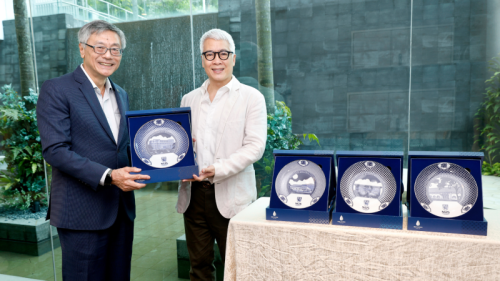
“The National University of Singapore (NUS) Baba House has received a major gift from the Tun Tan Cheng Lock Trust, which will support regional research collaborations, expand public programmes, and broaden digital access to Peranakan heritage. This gift will play a key role in accelerating the growth of this unique landmark into a global hub for heritage conservation, research and education in the next two decades. NUS Baba House, a restored 19th-century townhouse located at 157 Neil Road in Singapore’s historic district of Blair Plain, was acquired by NUS in 2006 through a gift from the late Ms Agnes Tan Kim Lwi, the youngest daughter of Malaysian businessman and community leader Tun Tan Cheng Lock. Since opening in 2008, the NUS Baba House has introduced visitors to Peranakan culture, using its architecture, objects and spaces to evoke everyday life for a typical prominent Peranakan family in the early 20th century. With major restoration works underway and set for completion in 2027, the gift — which continues Ms Tan’s longstanding support and honours her father’s legacy — will cement NUS Baba House as a leading centre for Peranakan heritage study and public engagement in Singapore and across Southeast Asia. “NUS Baba House stands as a lasting testament to my late aunt Agnes’ belief that heritage should be carefully preserved and meaningfully shared. It is a precious jewel that continues to offer invaluable insights into the rich history and culture of Peranakan Chinese. This gift ensures that the House remains a vibrant site for research, learning and public engagement for generations to come. It is remarkable how much we can still learn from it,” said Mr Peter Lee, nephew of Ms Agnes Tan and grandnephew of Tun Tan. Mr Lee is also the Honorary Founding Curator of NUS Baba House and advisor to the Tun Tan Cheng Lock Trust. Mr Ahmad Mashadi, University Curator of NUS Museum which manages NUS Baba House, said, “NUS Baba House exemplifies how conservation, scholarship and public engagement can come together in a university museum. The Tun Tan Cheng Lock Trust’s generous gift reaffirms our commitment to preserving Singapore’s heritage while advancing research and education that deepen our appreciation of Peranakan history and culture.” A world-leading centre for heritage stewardship, scholarship, and engagement Associate Professor Daniel Goh, who is Associate Provost (Undergraduate Education) at NUS and oversees NUS Museum, will provide leadership to steer the NUS Baba House’s 20-year roadmap and its transformation into a research-driven global hub for Peranakan culture. “NUS Baba House was envisioned not simply as a preserved historic home, but as a place where heritage can be studied, questioned and shared. This support from the Tun Tan Cheng Lock Trust enables NUS Baba House to enhance our existing programmes, scale up digitally and develop new initiatives that allow audiences to engage with the stories and material culture of the House. We are deeply grateful for the Trust’s belief in our mission,” Assoc Prof Goh said. NUS Baba House will focus its next phase of growth on three key areas, with the gift playing a key role in supporting these efforts. Research : Advancing joint research initiatives, collaborations and publications across Southeast Asia, positioning Peranakan culture within wider regional conversations about migration, urbanisation, hybridity and heritage. Public programmes : Organising workshops, residencies, exhibitions and an international symposium to keep heritage interpretation dynamic and relevant. Digital access : Expanding access to the NUS Baba House’s collection of more than 2,000 artefacts through digital tools and platforms, creating new opportunities for the public to learn and deepen cultural understanding.
Original story
Continue reading at NUS Newsroom
news.nus.edu.sg
Summary generated from the RSS feed of NUS Newsroom. All article rights belong to the original publisher. Click through to read the full piece on news.nus.edu.sg.

