
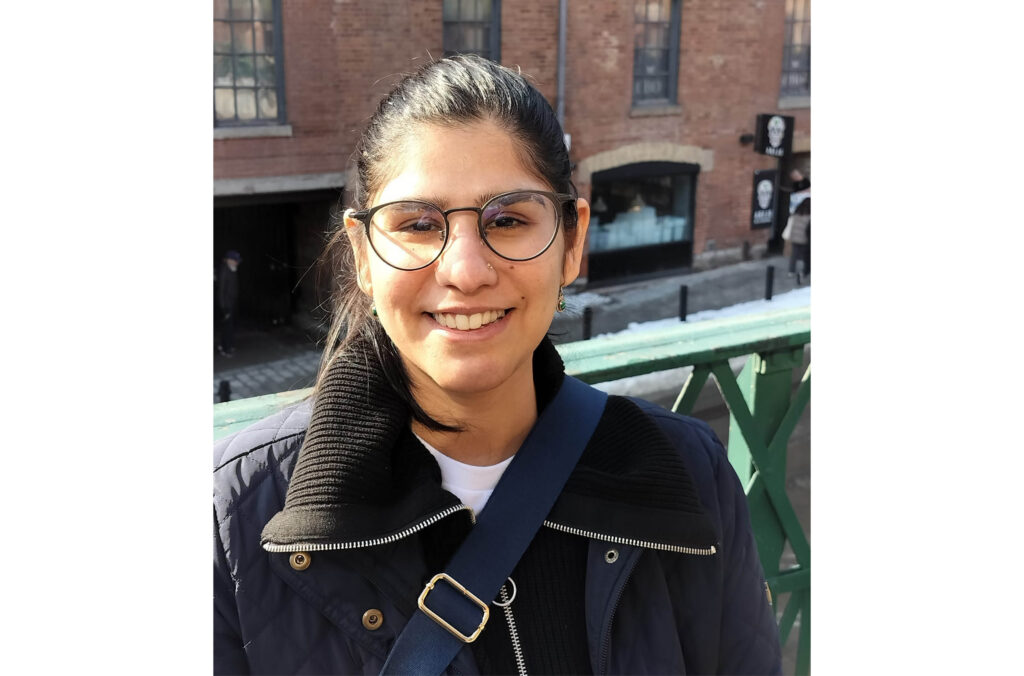
“With an interest in international relations pedagogy and a love for academia, I decided to pursue a doctorate at McMaster University in 2019. During this graduate journey, I was involved in research and teaching activities. However, in my attempts to explain my work to friends and family, I realized that they had a completely different perception of life in graduate school. Here, I hope to bridge the gap between commonly held assumptions and the reality of the academic pursuits of a PhD student. Photo courtesy of: Mehak Kapur Assumption 1: PhDs are experts who attend lectures and take exams To my friends and family, a doctorate student knows everything about a given discipline, much like the encyclopedia or the internet. To build this knowledge, the student goes to lectures daily, takes and memorizes notes, and demonstrates knowledge by writing standardized tests composed of multiple choice and one-word responses. Critical thinking or research are not necessary. My reality: A doctoral student’s focus is on research. This is a detailed and rigorous pursuit to answer a research question. The result is a combination of creativity, innovation and discovery of new information that adds to a body of knowledge. During my graduate studies, I took courses in my first year, which was followed by a 72-hour comprehensive examination that included responding to three questions on the state of international relations theory, merged with argumentative essays oriented toward critical thinking. Contrary to popular assumption, learning in lectures was an active (rather than passive) experience, which included participating in seminar discussions. Leading up to each lecture, I dedicated time to reading and assessing the assigned and additional readings. Assumption 2: Research publication equals fame, riches and a secure job Of course, publication means making money, right?! If not, it must at least lead to a job. My reality: This assumption is far from reality. Publishing is a way for aspiring academics, like me, to contribute and introduce themselves to academic communities. For example, I co-authored an article with accomplished academics in a peer-reviewed journal. Although this resulted in no monetary renumeration, I was ecstatic to have published, especially as English is my second language. The publication was evidence that I can meaningfully converse with the academic community in my second language. The experience also solidified the idea of taking steps toward becoming a successful academic. To my friends and family who are curious, I earn money from being a sessional instructor and teaching assistant, not from publications stemming from my research. Assumption 3: Teaching means showing up in a classroom and assigning grades From afar, my closest relations thought that my work as an instructor / teaching assistant was to simply show up for class. They imagined me reiterating the lecture content (maybe reading from my notes or a textbook) and assigning grades without offering meaningful feedback to the learners. Essentially, they thought that my work as an educator included no intentional thought or design. My reality: I wanted to walk into a classroom prepared, with intention, and to impart relevant information appropriate to the course level. So, I learned the art of teaching by enrolling in teaching and learning courses and workshops, offered by the university’s teaching and learning center, to develop my educator posture and pedagogical skills. I was so inspired from my own growth that I read independently about engaging activities to increase student motivation (e.g., multi-modal assignments like film reviews and verbal analyses), curated writing resources, and structured the sessions with useful feedback (e.g., by mentoring international students). More than simply showing up and grading, I devoted time and energy to honing my teaching skills to support students’ learning. The journey included intellectual and emotional efforts far beyond what was reflected in the teaching contract. The post PhD studies: perception vs reality appeared first on University Affairs .
Original story
Continue reading at University Affairs CA
www.universityaffairs.ca
Summary generated from the RSS feed of University Affairs CA. All article rights belong to the original publisher. Click through to read the full piece on www.universityaffairs.ca.
