
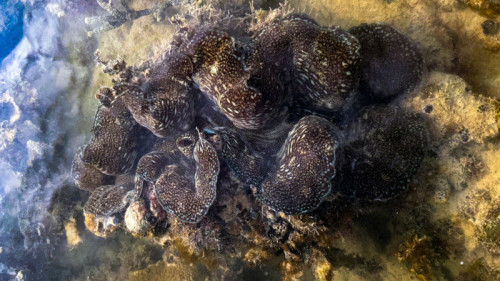
“Southeast Asia is home to eight out of the world’s 12 giant clam species and their numbers are dwindling. Addressing this issue, Dr Neo Mei Lin, Senior Research Fellow at the NUS Tropical Marine Science Institute (TMSI) , led a study on the conservation of giant clams in Southeast Asia. Following an analysis of insights from experts in the region, key actions to address the declining numbers of giant clams include enforcing anti-poaching laws and improving the survival of offspring. Sufficient funding also plays an important role in sustaining conservation programmes. Results from the study, published in Aquatic Conservation: Marine and Freshwater Ecosystems on 6 April 2026, were an important output from a regional workshop organised by TMSI in 2023. The policy paper, which has contributions from experts in Singapore, Canada, Cambodia, Indonesia, Malaysia, Myanmar, Thailand and the Philippines, is the first of its kind on conserving giant clams in Southeast Asia. The study is a significant component of Dr Neo’s ongoing work as a recipient of the 2021 Pew Fellowship in Marine Conservation which supports her research on conserving endangered giant clams in Southeast Asia. “We conducted a SWOT (Strengths, Weaknesses, Opportunities, and Threats) analysis based on our collective experiences in Southeast Asia. Through the analysis, we discovered our common strengths and weaknesses, and overlapping opportunities that we can potentially expand upon to improve conservation and management of giant clams in our region,” said Dr Neo. In Singapore, giant clams are threatened not by poaching but the degradation of habitats and sedimentation due to coastal development. Found mainly in the reefs of the Southern Islands, two giant clam species – the critically endangered fluted giant clam and endangered boring giant clam – are in very low numbers. Dr Neo and scientists in the region have started breeding and culturing giant clams and restocking them in the wild. However, challenges to restocking in the region include low juvenile survival rates, high mortalities of restocked clams, poaching and high costs of production. Following the policy paper, Dr Neo has plans to revamp giant clam conservation projects here and in the region. She intends to work with the International Union for Conservation of Nature (IUCN) to conduct a species conservation planning exercise focused on Southeast Asia. The exercise will incorporate a population viability analysis which evaluates the threats faced by giant clam populations, their risks of extinction and chances for recovery. These new insights could potentially enhance conservation projects that are tailored for each country. Read more about the study here .
Original story
Continue reading at NUS Newsroom
news.nus.edu.sg
Summary generated from the RSS feed of NUS Newsroom. All article rights belong to the original publisher. Click through to read the full piece on news.nus.edu.sg.

