
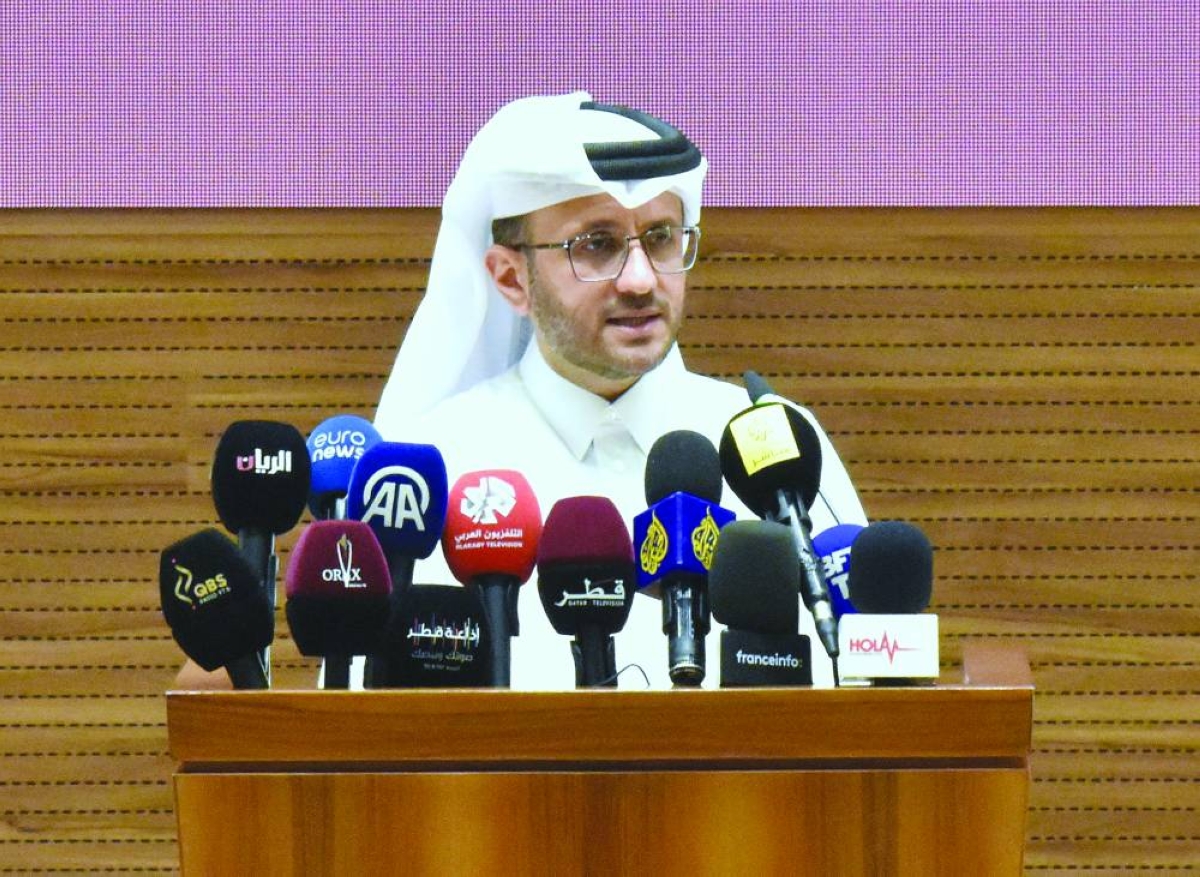
“Ten Qatari energy shipments remain unable to transit the Strait of Hormuz, the Ministry of Foreign Affairs confirmed Tuesday, as the waterway’s closure continues to weigh on the country’s oil and gas exports and ripple through global energy markets. His Excellency Dr Majed bin Mohammed al-Ansari, Adviser to the Prime Minister and Official Spokesperson for the Ministry of Foreign Affairs, said the suspended shipments reflect the most significant operational challenge Qatar faces from the ongoing closure even as the country’s domestic supply chains and commodity stockpiles have remained intact. “Since the beginning of the crisis, and despite the closure of the Strait of Hormuz, Qatar’s supply chains, including for communities, have not faced any shortage,” al-Ansari told reporters at a media briefing. He noted that Qatar had maintained strategic reserves and developed alternative supply arrangements to protect domestic needs, but acknowledged that export disruption on this scale carried broader consequences. “The biggest challenge we now face, however, concerns the export of energy-related products, such as oil and gas, and the effect this is having on energy prices worldwide. We are currently undertaking special preparations, but a prolonged closure of the Strait of Hormuz will complicate supply chains globally,” he explained. Earlier this month, two Qatari tankers managed to pass through the strait under regional coordination. The LNG carrier Al Kharaitiyat departed Ras Laffan on May 10 bound for Port Qasim in Pakistan, becoming the first Qatari LNG tanker to transit the strait since the start of the US-Israel war on Iran. A second tanker, Mihzem, followed the next day, also heading to Pakistan, according to a Reuters report. Al-Ansari cautioned, however, that the passage of those two vessels did not signal a return to normal conditions through the strait. Tuesday’s briefing took place against the backdrop of public remarks by US President Donald Trump, who said he had spoken with His Highness the Amir Sheikh Tamim bin Hamad al-Thani and other Gulf leaders before deciding to hold off on a planned military strike against Iran. Al-Ansari declined to comment on HH the Amir’s private conversations with international leaders but emphasised Qatar’s position had been clearly conveyed to its partners in the US. “We have communicated our position to our partners in the US, emphasising the region’s desire to avoid being drawn into a war again. Our priority is to stave off any escalation that could immediately impact the people of the region as a whole,” he stressed. Al-Ansari also lauded Pakistan for playing an effective role as a peace broker and said Qatar’s leadership-level engagement with the mediation effort was reflected in ongoing communications with regional and international counterparts. Speaking on the Strait of Hormuz, al-Ansari reaffirmed that any attempt to restrict freedom of navigation through the waterway would be contrary to international law and that Qatar does not support any arrangement that would alter the strait’s current status. Al-Ansari also addressed Qatar’s relations with Iran, saying Doha would maintain “good-neighbourly relations” while acknowledging that Iran’s conduct during the conflict had strained those ties. “The people of Iran, like others in the region, deserve to live in peace and prosperity. They should not be affected by war and conflict, as they are closely connected to the neighbouring countries across the Gulf,” he said.
Original story
Continue reading at Gulf Times Education
www.gulf-times.com/community/education
Summary generated from the RSS feed of Gulf Times Education. All article rights belong to the original publisher. Click through to read the full piece on www.gulf-times.com/community/education.