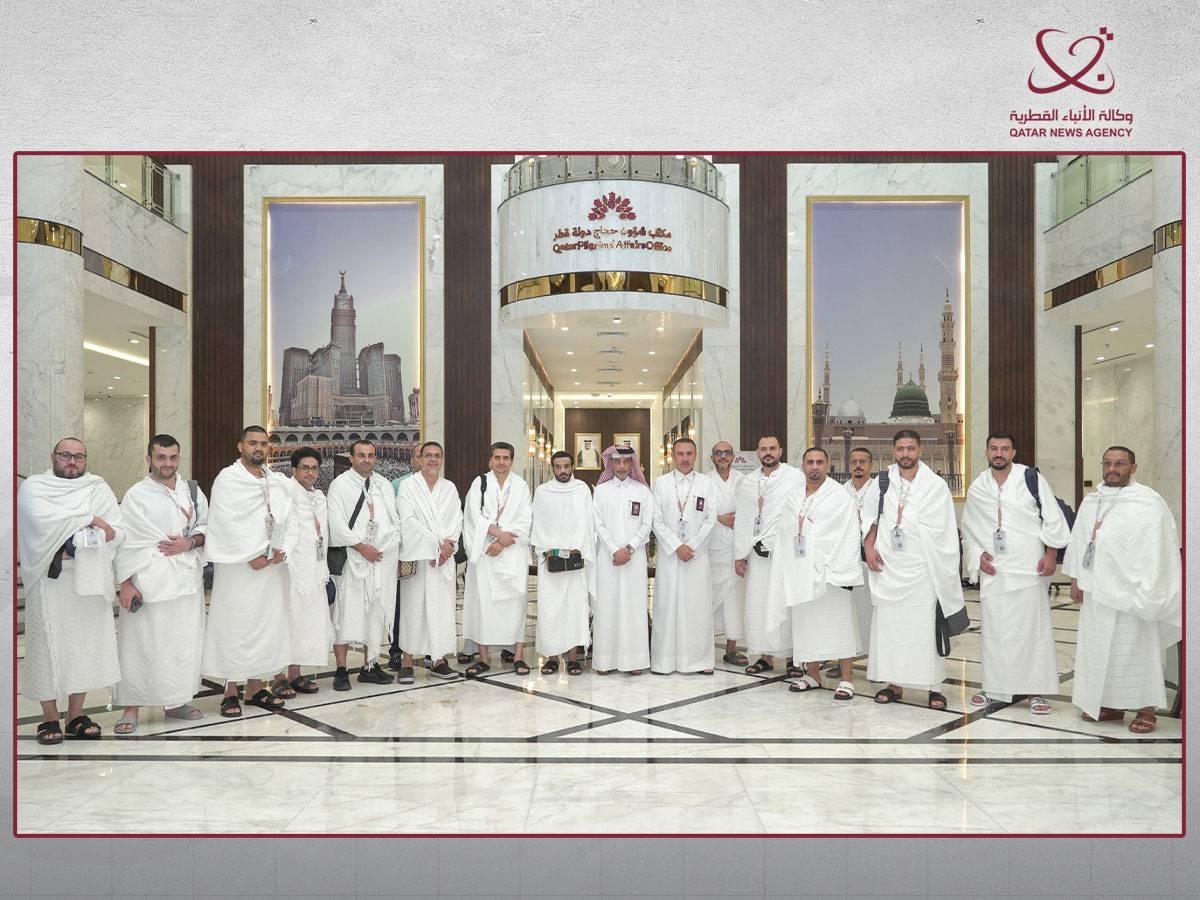
“All members of the medical unit personnel escorting the Qatari Haj Mission have arrived in Makkah Al Mukarramah, the Ministry of Endowments (Awqaf) and Islamic Affairs confirmed yesterday. The ministry added that the move is part of the comprehensive preparations the mission is undertaking to provide integrated healthcare for the pilgrims of Qatar throughout this season, to ensure their safety and enhancement and help them perform pilgrimage rites in a secure and serene atmosphere. The preparations are generally part of the unwavering efforts Qatar is undertaking to provide the best medical services for the pilgrims and prop up the combined efforts among the state institutions. The purpose is to unify efforts and ensure pilgrims enjoy comprehensive healthcare starting from their arrival in Makkah Al Mukarramah until their safe return back home, the ministry asserted. The mission’s medical services unit has confirmed that it is fully ready for this pilgrimage season through leveraging a system of combined efforts between Awqaf, the Ministry of Public Health (MoPH), Hamad Medical Corporation (HMC), and Primary Health Care Corporation (PHCC). This collaboration overtly embodies the integration among the nation’s institutions and their continuous co-ordination to provide the highest standards of healthcare and medical services for pilgrims of Qatar to ensure they perform rites in a secure and healthy environment where tranquillity prevails, the ministry noted. Dr Khalid Abdul Hadi, Head of the Medical Unit at the mission, stressed that the overriding priority entails the safety of the pilgrims, revealing that the country has leveraged all potential and deployed qualified medical personnel to ensure the well-being of pilgrims throughout this pilgrimage journey. The unit undertakes a national and humanitarian responsibility as the primary health defence line whose role goes beyond medical treatment to encompass prevention, monitoring, and rapid intervention, Dr Abdul Hadi noted, emphasising that the unit operates fully in unison with relevant health entities at home and in Saudi Arabia. Abdul Hadi recalled that this year the mission is escorted by an integrated 36 medical personnel, namely physicians and specialists in the areas of family medicine, contingencies, and epidemiology, alongside all medical teams who operate 24/7 to instantly serve pilgrims in all areas where they stay. The mission includes pharmacy officials, nursing officials, and technical staff, who arrived early in Makkah Al Mukarramah, Dr Abdul Hadi said. He added that they are embarking on finalising the technical and technological equipment inside clinics in close co-ordination with the relevant health entities in the sisterly Kingdom of Saudi Arabia to ensure all medical services are in place ahead of pilgrims’ arrival. Dr Hadi pointed out that the health system includes the establishment of integrated medical clinics for both men and women at the mission’s premises in Makkah Al Mukarramah, alongside other clinics in the Holy Sites in Mina and Arafat, and a chamber dedicated to medical observation and isolation for cases that require medical intervention. A fully equipped medical team is escorting the pilgrims in Muzdalifah, he said, adding that this will ensure the continuation of healthcare in all phases of their commutation and performance of rituals. He added that the clinics were equipped with a full range of medications, treatments, and essential medical supplies, in addition to triage and rapid assessment units, enabling medical teams to provide immediate care for various medical conditions in accordance with the highest approved medical standards. The medical unit also provided a fully equipped ambulance operating to advanced medical specifications to accompany the mission throughout the Hajj season, supporting rapid emergency response and strengthening the healthcare safety system for pilgrims. The mission confirmed that the unit’s operational plan isn’t confined to clinic operations or residential facilities, but also includes escorting the pilgrims throughout all stages of the Hajj rituals, including the movement from Arafat, overnight stay in Muzdalifah, and the transfer to Mina for the stoning of Jamarat Al Aqaba, in order to ensure rapid medical intervention and the timely delivery of emergency medical care. As part of efforts to strengthen medical response capabilities, Dr Hadi revealed that collaboration is underway with Makkah Park Clinics in the Kingdom of Saudi Arabia to provide emergency treatment services for pilgrims of Qatar and grant them treatment priority, in addition to leveraging specialised medical expertise within the unit’s medical teams. Dr Hadi recalled the agreement forged with the Saudi German Hospital in Makkah for the observation and treatment of emergency medical cases, thereby strengthening the efficiency of healthcare services provided to pilgrims and ensuring advanced levels of medical care. Over the past few days, the clinics of the unit at the premises of the Qatari Haj Mission in Makkah obtained official licensing approval from the Saudi Ministry of Health following an on-site inspection conducted by the specialised delegation, which commended the clinics for meeting all required standards and operational requirements, he clarified. He indicated that all medical personnel were also credentialed and officially licensed to practice within the Kingdom, marking the launch of operations and confirming the clinics’ readiness to receive patients and visiting pilgrims from the State of Qatar. Agreement with Saudi German Hospital in Makkah for observation and emergency case management, enhancing healthcare delivery and advanced care services. The medical unit’s clinics received official licensure from the Saudi Ministry of Health following an on-site inspection confirming full compliance with regulatory standards. All medical staff were credentialed and licensed to practice in the Kingdom, ensuring full operational readiness to receive patients. Overall, the communications and support unit of the Mission plays a pivotal role in enhancing response speed and co-ordination between pilgrimage operators and the medical unit through a 24/7 hotline, ensuring rapid medical intervention and immediate handling of medical or emergency cases, in addition to providing continuous support and follow-up for pilgrims of the State across all locations, he said. The Mission applauded the significant efforts undertaken by the Ministry of Health in Saudi Arabia in serving pilgrims, through the development of an integrated and advanced healthcare system operating in accordance with the highest medical and regulatory standards, ensuring pilgrim safety and the provision of necessary healthcare across the holy sites.
Original story
Continue reading at Gulf Times Qatar
www.gulf-times.com/qatar
Summary generated from the RSS feed of Gulf Times Qatar. All article rights belong to the original publisher. Click through to read the full piece on www.gulf-times.com/qatar.