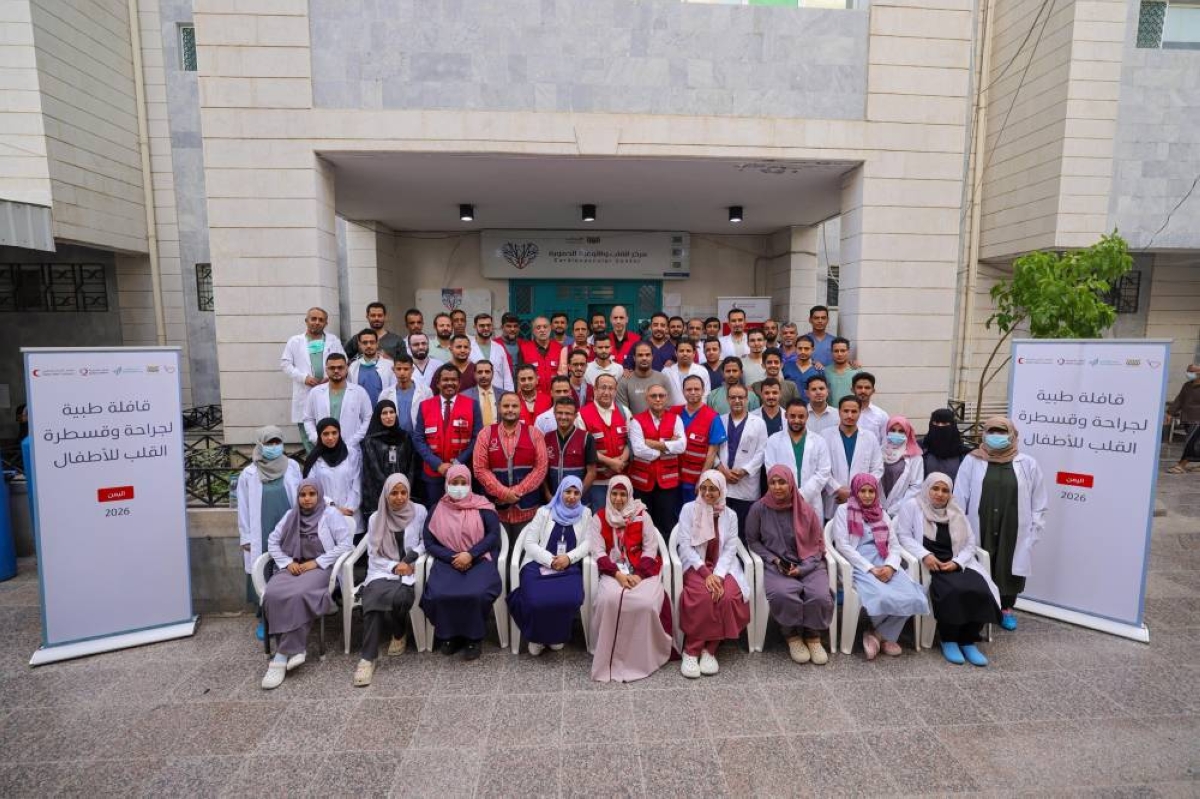
“The Qatar Red Crescent Society (QRCS), Qatar Charity (QC), and Sidra Medicine have concluded a specialised medical convoy for paediatric cardiac surgery and catheterisation in Yemen. Over one week, the volunteer team of medical professionals has been performing medical examinations, interventions, and life-saving surgeries for many children with congenital heart defects. The mission was more than successful, with a total of 107 free medical interventions for children (86 cardiac catheterisations and 21 open-heart surgeries) performed by the visiting consultant and specialist cardiologists, who were assisted by the medical staff at the Cardiovascular and Kidney Transplant Centre in Taiz. In terms of capacity-building, the programme involved a specialised training workshop for the medical staff at the host centre on ultrasound-guided arterial catheterisation techniques, to increase their skills and enhance the quality of medical services provided for critical cases, particularly in paediatrics. During the closing ceremony, the medical team was recognised for their dedicated efforts to serve and take care of the Yemeni children with heart conditions. The ceremony also honoured the representatives of the three partners – the QRCS, QC, and Sidra Medicine – whose contributions helped make this medical project a significant success. The organisers praised the level of co-ordination with local authorities and medical facilities in Yemen. They emphasised that such effective humanitarian partnerships help overcome the challenges facing the Yemeni health sector and give patients, especially children, a fresh hope for having a normal and stable life. Eng. Ahmed al-Sharaji, the head of the QRCS representation office in Yemen, said: “This medical convoy represents the QRCS’s commitment to providing continued and diverse humanitarian assistance for the people of Yemen, especially in healthcare.” “Together with our partners, we work to support Yemeni health facilities, bridge the gap in financial and human resources, and make them able to keep serving the population,” he said. “Also, transfer of expertise and capacity-building ensure sustainable and better healthcare for patients in the long term.” Dr Abdullah al-Nuaim, the director of the QC’s office in Yemen, commended that achievement. “We are proud of what we have accomplished, alongside our partners at the QRCS,” he said. “This joint humanitarian intervention was not just a one-time response, but rather a practical manifestation of our 2026-30 strategy, which deals with empowerment, sustainability, and maximised impact at top priorities.” “Today, we are working to deliver health projects that not only meet immediate needs but also leave a lasting developmental impact that makes a real difference in the lives of the most vulnerable people in Yemen,” Dr al-Nuaim added. “This convoy sought to alleviate the suffering of children with weak hearts, allowing them to live normally like other children.” “This medical project was an essential humanitarian opportunity to perform over 100 major medical interventions for sick children within a short timeframe, with a view to improving their lives and reshaping their future,” said project manager Dr Monira al-Aini. “We focused on the highest quality and safety standards, while engaging local medical professionals throughout, helping to develop their expertise and upgrade paediatric cardiac surgery and catheterisation services in the country.” The success of the medical convoy was the outcome of cumulative efforts and fruitful partnership. Earlier, the QRCS and QC had supported the Cardiovascular and Kidney Transplant Centre in Taiz with state-of-the-art cardiac catheterisation equipment. As a result, the centre increased its capacity and performed more diagnostic and interventional catheterisation procedures free of charge for children and older people. This, by extension, helped ease the financial and health burden on poor patients.
Original story
Continue reading at Gulf Times Qatar
www.gulf-times.com/qatar
Summary generated from the RSS feed of Gulf Times Qatar. All article rights belong to the original publisher. Click through to read the full piece on www.gulf-times.com/qatar.