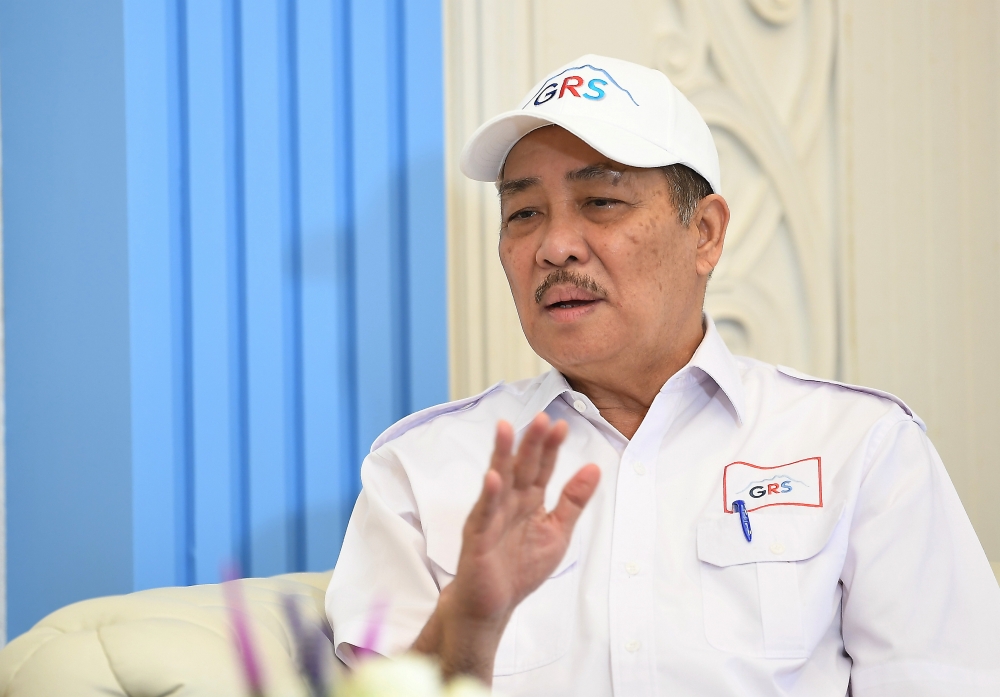
“KOTA KINABALU, May 5 — Sabah is studying proposals to revive barter trade with the southern Philippines, after years of limited activity following earlier security restrictions and tighter controls during the Covid-19 period. Chief Minister Datuk Seri Panglima Haji Hajiji Haji Noor said the state government will study the proposals, taking into account both security concerns and economic benefits. “We will study this. Many quarters have proposed this. All aspects will be taken into account, especially on security and its benefits to our economy. “We will discuss this later at meetings of the National Security Council (MKN) and the State Development Action Council,” he told reporters after a working visit to several islands housing national security posts off Sandakan’s east coast. Barter trade in Sabah, particularly along the east coast, has long functioned as cross-border trade linking communities in towns such as Tawau, Sandakan and Lahad Datu with neighbouring regions in the southern Philippines and eastern Indonesia. While commonly referred to as “barter”, much of the trade in recent decades has operated through simplified, small-scale monetary exchanges rather than conventional goods-for-goods transactions, which started centuries ago. The system was suspended in 2016 following a series of cross-border security incidents, including kidnappings in Sabah waters, a move that affected coastal communities which depended on the trade. Barter trade was gradually reintroduced in 2019 under the Warisan administration under tighter regulations, with designated trading points and stricter monitoring of goods and vessels to prevent the leakage of subsidised items such as cooking oil and fuel. At some ports, barter trade continues on a more limited and closely regulated scale, but industry players have proposed that it be expanded. The visit today was part of the Chief Minister’s Security Inspection Programme to the Eastern Sabah Security Zone (ESSZONE). Hajiji and his delegation visited Pulau Bakungan Kecil, Pulau Selingan and Pulau Langkayan to assess conditions at security posts operated by enforcement personnel, including Sabah Parks staff, police and the military. He said the programme allowed him to observe first-hand the readiness of security forces and the condition of facilities on the islands. “From this inspection, I could see that the preparedness of all security forces, including facilities at control posts, is in good condition, and the facilities have also been upgraded. “I have raised this matter with the Prime Minister and many assets have been allocated, although much more is still needed,” he said. Hajiji also expressed confidence that strong security in Sabah’s east coast waters would continue to support economic activities, particularly tourism. “It has been a long time since any incident was reported in our waters, which certainly encourages tourism on Sabah’s east coast. When the situation is peaceful and security is assured, more tourists are keen to come here and tourism will grow. “Pulau Sipadan, for instance, is a major attraction as one of the world’s best diving destinations, so we must safeguard security to ensure this tourism asset continues to attract visitors,” he said.
Original story
Continue reading at Malay Mail Education
www.malaymail.com/news/malaysia
Summary generated from the RSS feed of Malay Mail Education. All article rights belong to the original publisher. Click through to read the full piece on www.malaymail.com/news/malaysia.
