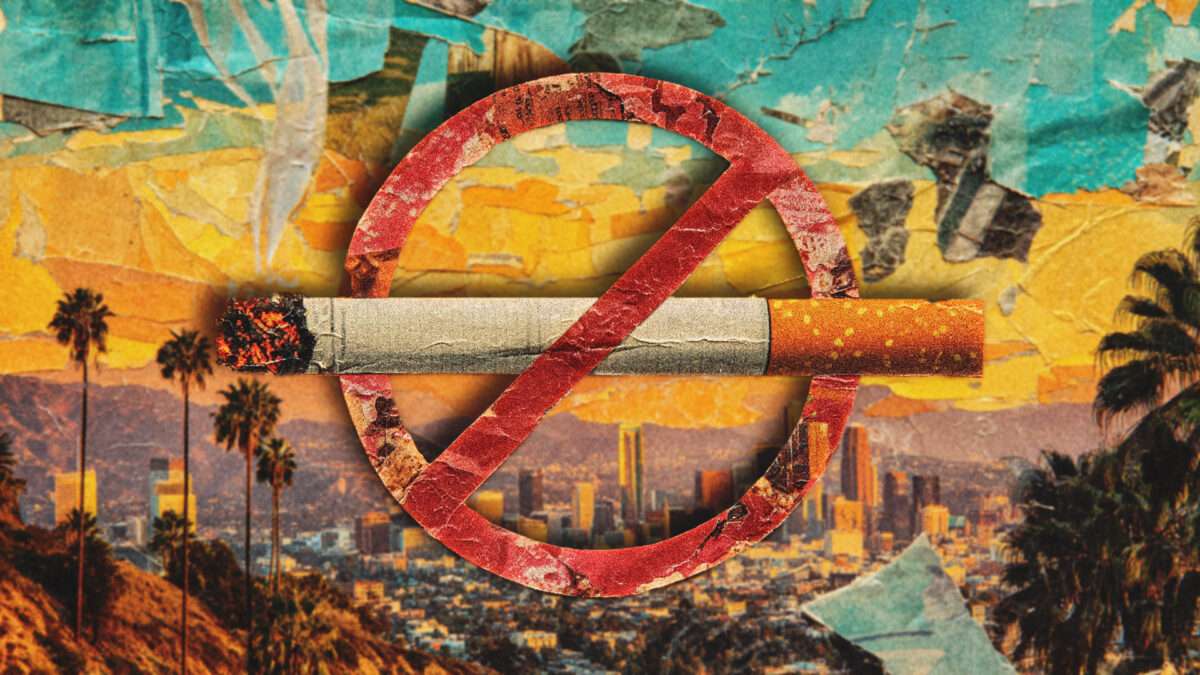
“A proposed law to ban outdoor smoking in San Francisco is pitting the city's government against its bars and breweries. While indoor and outdoor smoking at restaurants in the city has been banned for years, patrons of certain bars and taverns have been allowed to enjoy smoking outdoors in peace. The new ordinance would "eliminate exceptions" like these and "prohibit smoking in outdoor patios of bars and taverns." The measure will go before a city committee on May 18, and if it passes, the Board of Supervisors will vote on it in June. If it's approved, the smoking ban would take effect in early 2027. John Maa, a general surgeon who worked on the proposal, told local Fox affiliate KTVU that the ban aims to "protect the patrons of these establishments and also importantly, the employees and anyone who might be exposed to secondhand smoke." He added that the city's laws should put public health over profits. However, the move has caused outrage among local San Francisco business owners. Over a dozen bars across the city have started a petition , arguing that the "legislation is misguided in its scope, timing, and priorities" and urging the Board to reject the proposal. The businesses argue that the measure would "force some establishments," many of which have not fully recovered from the pandemic, "to close entirely." "San Francisco's bars, restaurants, and small businesses are not obstacles to a better city — we are the fabric of it. We are the neighborhood anchors, the employers, the tax base, and the culture that make this city worth living in," reads the petition. "We ask only that the Board govern accordingly." "The impact on my business would be direct and immediate," Lara Burmeister told SFGATE . Burmeister is the owner of Zeitgeist , a bar and beer garden founded in 1977 that is considered a Legacy Business by the city. "My staff would be required to enforce this change rather than focus on the work that actually serves our customers and drives revenue — creating friction that affects both the employee experience and the customer relationship." San Francisco's economy will suffer if jobs in the hospitality sector are lost. Between February 2025 and February 2026, leisure and hospitality companies added 5,600 jobs to the region—the most jobs of any major sector, reports the San Francisco Chronicle . "Even private education and health services, which have been seeing a nationwide boom, added only 4,000 jobs in that period," adds the Chronicle. The potential ramifications of the law extend beyond the local economy. One aspect of the proposed outdoor smoking ban that is usually overlooked is its impact on shisha and hookah lounges, which are reliant on outdoor patios or semienclosed smoking areas to operate legally. While the ordinance does not explicitly target shisha bars, by eliminating several longstanding smoking exemptions, hookah lounges could be rendered illegal. With potentially 250,000 Arabs residing in the San Francisco area, this would effectively snuff out a key part of the city's Middle Eastern and immigrant nightlife culture. While supporters of the law might argue that an outdoor smoking ban is needed to improve public health, there is no solid evidence that cigarette smoke outdoors can harm the health of bystanders. Ronald Bayer, a Columbia University professor, told CBS News in 2013 that "the evidence of a risk to people in open-air settings is flimsy." In a 2013 study published in Health Affairs , Bayer and Kathleen Bachynski, now a public health professor at Muhlenberg College, found that the evidence for outdoor smoking bans was "far from definitive and in some cases weak." The impetus for these bans, meanwhile, is "the imperative to denormalize smoking." The paper also concludes that, while denormalizing smoking may prove effective in the short term, "it is hazardous for public health policy makers, for whom public trust is essential." If San Francisco lawmakers are concerned with improving public health outcomes, the evidence-based solution would not be draconian bans, but harm reduction. Allowing adults to choose safer nicotine products, such as snus, nicotine pouches, and vapes, makes them far more likely to quit their deadly habit. In Sweden, for example, smoking rates have fallen to almost 5 percent, the lowest in the European Union. This was not achieved by introducing outdoor bans, but by allowing adults to use safer nicotine products. A city already struggling with shuttered businesses and declining nightlife should be wary of regulating away a key aspect of urban social life. If San Francisco continues down the regulatory path, it risks becoming no healthier, but a whole lot duller. The post San Francisco's Outdoor Smoking Ban Won't Improve Public Health, but It Will Hurt the City's Bars and Taverns appeared first on Reason.com .
Original story
Continue reading at Reason
reason.com
Summary generated from the RSS feed of Reason. All article rights belong to the original publisher. Click through to read the full piece on reason.com.

