
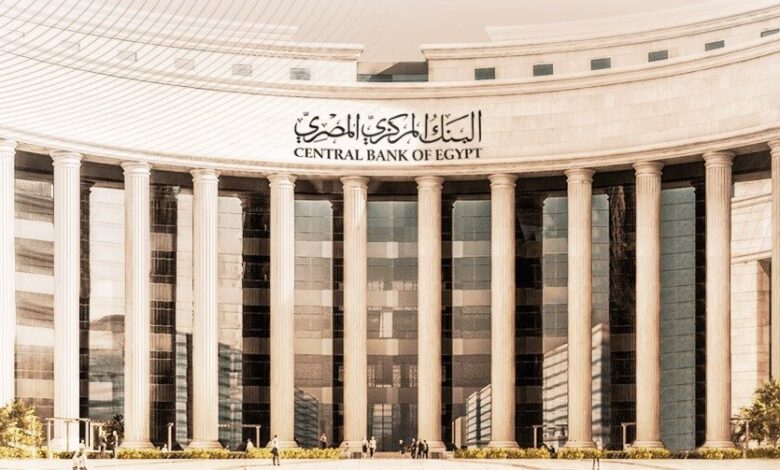
“The Monetary Policy Committee (MPC) of the Central Bank of Egypt (CBE) is set to hold its third regular meeting of the year on Thursday to determine the direction of key interest rates, widely viewed as a leading indicator of short-term pound-denominated borrowing costs. Market expectations strongly favour leaving rates unchanged after two consecutive reductions earlier this year. At its previous meeting on 2 April, the committee decided to maintain the overnight deposit rate at 19%, the overnight lending rate at 20%, and both the credit and discount rate and the main operation rate at 19.5%. In its accompanying statement, the MPC said the decision reflected an assessment of recent inflation developments and outlooks, noting that the path towards achieving its inflation target of 7% (±2%) by the fourth quarter of 2026 faced increasing upside risks. These included the possibility of prolonged regional conflict and stronger-than-expected impacts from fiscal adjustment measures. Earlier this month, the Central Bank of Egypt reported that monthly core inflation, measured by the bank, slowed to 1.1% in April 2026 from 2% in March, while annual core inflation eased to 13.8% from 14%. The monthly headline urban consumer price index, published by the Central Agency for Public Mobilization and Statistics (CAPMAS), also rose 1.1% in April, compared with 3.2% in March, while annual urban inflation slowed to 14.9% from 15.2%. Cautious hold Mohamed Abdel Aal, a banking expert, said the upcoming MPC meeting comes amid broad debate over the future trajectory of interest rates following a period of sharp regional and international volatility that temporarily reignited inflation concerns before price indicators resumed easing at a faster pace than many analysts had expected. Abdel Aal said that while some observers believe the central bank could return to raising rates in response to escalating geopolitical risks and higher inflation forecasts in its latest reports, a deeper assessment of economic and monetary indicators suggests that maintaining rates unchanged remains the more likely scenario, alongside a temporary pause in the easing cycle. “In the current phase, the central bank may prefer a ‘cautious hold’ rather than a return to monetary tightening,” he said. “At first glance, the latest monetary policy report appears more hawkish after the central bank raised its average inflation forecasts to 16% in 2026 and 12% in 2027, compared with significantly lower earlier estimates,” Abdel Aal added. “The report also highlighted persistent upside risks linked to regional conflict, energy prices, shipping disruptions and the possibility of tighter global financial conditions.” Mohamed Abdel Aal, a banking expert However, he argued that these factors alone are insufficient to justify another rate increase for three main reasons. “The first is that the central bank raised expectations, not current realities; and that distinction is important,” he said. “The latest report did not suggest inflation had spiralled out of control, but rather that upside risks could materialise if external shocks persist.” He noted that recent data showed annual headline inflation slowing to 14.9% and core inflation easing to 13.8%, alongside a clear moderation in monthly inflation readings, indicating that actual inflationary pressures remain less severe than precautionary scenarios imply. According to Abdel Aal, the second factor is the reassuring signal from core inflation. “Headline inflation can be affected by temporary factors such as food, energy, transport costs and geopolitical shocks, whereas core inflation – which excludes the most volatile components – is viewed as the clearest measure of entrenched inflationary pressures,” he said. He added that the decline in monthly core inflation from 2% to 1.1%, and annual core inflation from 14% to 13.8%, suggests Egypt has not yet entered a phase of deeply entrenched inflation, while the transmission of external shocks into broader prices remains relatively contained. The third factor, he said, is that Egypt’s current monetary policy stance is already highly restrictive. “Real interest rates in Egypt have become clearly elevated relative to current and expected inflation, particularly after inflation slowed in recent months,” Abdel Aal said. “In addition, the effects of previous tightening cycles have not yet fully materialised due to the lag in monetary policy transmission.” He explained that the impact of higher interest rates emerges gradually over time and is already reflected in weaker demand, slower consumer credit growth, subdued private-sector activity and a decline in the purchasing managers’ index (PMI), indicating softer domestic demand and reducing the need for further tightening. Abdel Aal also stressed that the Central Bank of Egypt no longer relies solely on official rate adjustments to absorb liquidity and tighten monetary conditions. He noted that the central bank has increasingly allowed state-owned and private banks to issue high-yield savings products, helping absorb excess liquidity, support pound-denominated savings, curb dollarisation and speculation, and strengthen the attractiveness of the local currency without direct rate hikes. “As a result, the central bank has effectively achieved part of the tightening effect through indirect and more flexible savings instruments, at a lower cost to economic activity than repeated official rate increases,” he said. Despite the recent moderation in inflation, Abdel Aal believes the central bank is unlikely to rush into resuming rate cuts given ongoing external risks. “The war has not fully ended, foreign portfolio flows remain vulnerable to volatility, and even the US Federal Reserve has not shifted decisively towards easing,” he said. “Cutting rates now could signal greater tolerance for inflation, potentially placing pressure on the exchange rate and affecting foreign inflows.” He therefore sees the most probable outcome as a “cautious hold”, rather than either renewed tightening or a rapid return to easing. Abdel Aal also suggested that the central bank could extend the timeframe for achieving its inflation targets. “This is a significant possibility and perhaps one of the most likely developments in the coming period,” he said. “Given geopolitical shocks, energy price volatility and global economic conditions, the central bank may move towards extending the timeline for achieving inflation targets without materially changing the targets themselves.” “In light of these factors, current policy appears closer to carefully balancing inflation control with preserving growth and monetary stability,” he added. “Accordingly, the MPC may conclude that maintaining existing monetary conditions is sufficient at this stage.” Monetary balance and banking sector stability Shaimaa Wagieh, a banking expert, also expects the Central Bank of Egypt to keep rates unchanged, viewing such a decision as part of a strategy aimed at preserving monetary balance and banking sector stability amid persistent global inflationary pressures and uncertainty in international markets. Wagieh said maintaining rates reflects an approach based on evaluating the cumulative impact of previous tightening cycles, which raised yields and strengthened the attractiveness of savings products while supporting liquidity stability within the banking sector. Shaimaa Wagieh, a banking expert She added that stable rates provide banks with greater flexibility in managing funding costs, particularly following increases in the cost of deposits and savings certificates, which directly affect lending costs and financing conditions. “The hold also reflects monetary policy’s commitment to balancing inflation control with avoiding additional financing burdens on different economic sectors,” she said, noting that further increases could raise borrowing costs for companies and productive sectors, weighing on expansion, investment and credit demand. From a banking perspective, Wagieh said stable interest rates support banks’ ability to restructure credit portfolios and manage assets and liabilities more efficiently. They also help preserve money market stability and enable financial institutions to plan cash flows more effectively amid continued challenges linked to exchange rates, global markets and energy prices. She added that maintaining current yield levels supports the attractiveness of local debt instruments without increasing borrowing costs for the state budget. According to Wagieh, the current phase remains focused on balancing monetary stability with support for economic activity, while preserving the resilience of the banking sector and its ability to finance different segments of the economy. Economic developments and geopolitical pressures Meanwhile, the research department at HC Securities and Investment expects the CBE to leave rates unchanged, citing recent macroeconomic developments and geopolitical risks. Heba Mounir, the company’s macroeconomics analyst, said regional tensions linked to the US-Israeli war against Iran continue to affect both the global economy and Egypt, although Egypt’s external position and exchange-rate flexibility have helped absorb the impact so far. “Despite foreign investors withdrawing around $3.2bn in hot money from Egypt’s secondary treasury market between 19 February and the end of April, net foreign reserves increased by a combined $263m during March and April to reach a record $53bn in April,” she said. At the same time, deposits excluded from official reserves declined by $2.6bn over the same period to $10.8bn, while the banking sector’s net foreign assets fell to $21.3bn in March, largely reflecting foreign outflows from treasury instruments. Heba Mounir, the company’s macroeconomics analyst This contributed to an approximately 10% depreciation in the Egyptian pound since the start of the year, reaching EGP 52.9 against the US dollar by 15 May, reflecting exchange-rate flexibility. Mounir also highlighted domestic inflationary pressures, including a roughly 19% increase in diesel, butane gas cylinder and petrol prices in March, followed by higher industrial natural gas prices in May and a 5% increase in wheat prices to $244 per tonne. “These developments are adding pressure to foreign currency liquidity and, in our view, will contribute to higher inflationary pressures,” she said. To ease pressure on the local currency and absorb liquidity, several state-owned banks introduced new three-year certificates with yields raised by around 1.25 percentage points to an average of 17.25%, prompting some private banks to offer similar products. “This represents indirect tightening that could help contain inflationary pressures while supporting pensioners who depend on high-yield certificates,” she added. Regarding treasury bill yields, Mounir said returns have generally moved higher to preserve attractiveness, with the latest 12-month treasury bill auction yielding 24.4%. “This reflects a positive real interest rate of 4.57% based on our 12-month inflation estimate of 16%, after deducting a 15% tax for European and American investors,” she said. “Accordingly, given geopolitical risks and their implications for Egypt’s foreign currency resources, our revised inflation forecasts, the need to preserve the attractiveness of treasury investments and fiscal deficit targets, we expect the MPC to keep rates unchanged tomorrow,” she added. Inflation concerns remain A Reuters poll also indicated expectations that the Central Bank of Egypt will leave overnight interest rates unchanged at Thursday’s meeting, amid continued concerns over inflationary pressures linked to the US-Israeli war against Iran. Fifteen of sixteen economists surveyed expected the MPC to maintain the deposit rate at 19% and the lending rate at 20%, while only one forecast a 100-basis-point increase. Abu Dhabi Commercial Bank (ADCB) said in a note that real interest rates, which remain elevated at around 5%, provide sufficient room to absorb higher near-term inflation expectations. The bank added that the relative stability of the Egyptian pound in recent weeks, supported by temporary capital inflows, is likely to help anchor inflation expectations and limit imported inflation pressures. The post Strong expectations for CBE to keep interest rates unchanged at Thursday meeting first appeared on Dailynewsegypt .
Original story
Continue reading at Daily News Egypt
www.dailynewsegypt.com
Summary generated from the RSS feed of Daily News Egypt. All article rights belong to the original publisher. Click through to read the full piece on www.dailynewsegypt.com.