
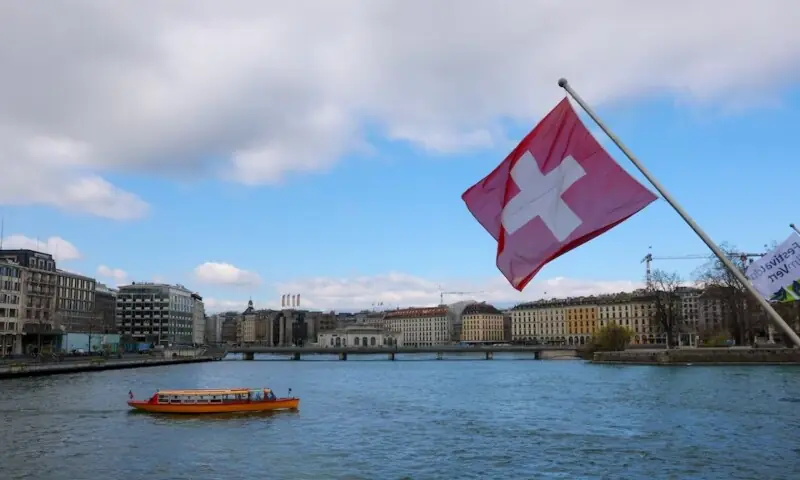
“Switzerland voted on Sunday on whether to back a proposal to cap the country’s population in a referendum likened to Britain’s Brexit vote, which could have far-reaching consequences for the economy and Bern’s relations with the European Union. Driven by concern about immigration, pressure on public services and housing, the constitutional change pitched by the right-wing Swiss People’s Party, or SVP, would mandate that the population must not exceed 10 million by 2050. Official projections put it on track to do so by the early 2040s. The unprecedented scheme to dictate population levels by law sits alongside burgeoning efforts by the political right in Europe to set tougher curbs on immigration, fed by discontent about the cost of living, weak economic growth and crime. “If it goes above 10m, it will become tight, and immigration should be restricted,” said Helen Gulea, a 58-year-old seamstress and part-time kiosk worker in Zurich, originally from Kenya, who voted by post for the cap. Results of the vote are expected to begin coming in from around midday (3pm PKT). If the proposal were adopted, reaching the 10m mark would trigger a process that could make Switzerland scrap its free movement of labour agreement with the EU, whose member states supply much of the Alpine country’s workforce. Switzerland’s ageing population is already above 9m and polls suggest public opinion is finely balanced. A final survey this month showed opinion turning against the proposal. An earlier poll had suggested it could pass. Patrick Leisibach, a migration expert at the think tank Avenir Suisse, said concern was now widespread that overcrowding was stretching public infrastructure to the limit. “There’s a traditional anti-immigration vote on the right wing, but these days even many on the left are feeling the pressure,” he said. Single market access Under its system of direct democracy, the Swiss electorate generally votes on national referendums four times a year, which also require the support of a majority of its cantons to pass. The government and parliament have urged voters to reject the SVP’s so-called “sustainability initiative” as folly at a delicate time for Switzerland’s export-oriented economy. Johanna Alves, a 33-year-old Swiss student, voted against it, saying she worked in an international environment which, she worried, could be in jeopardy if the proposal passes. “And I think it will also be really terrible for the Swiss economy in general, for our healthcare system, for research, for all of it,” she said. Last year, President Donald Trump slapped the highest US tariffs in Europe on Swiss goods, and the prospect of a population curb could complicate corporate planning. But SVP lawmaker Thomas Matter argued Swiss gains in prosperity had not kept pace with overall immigration and the country needed to step on the brakes. Weeks before Trump returned to power, Switzerland sealed a deal with Brussels to deepen economic integration with the EU. That, and other agreements governing bilateral trade relations, could be cast into doubt by a population cap with free movement a pillar of the EU single market. Swiss voters have often rejected measures deemed harmful to the long-term interests of the economy, but that tendency has become less predictable. In 2014, the voters bucked expectations by narrowly passing an SVP-backed proposal to curb EU immigration. Still, its impact was later diluted in the legislative process. Should the current initiative pass, parts of it, including the prospect of Switzerland terminating free movement with the EU, could face their own referendums, officials say in private. Even some SVP figures say the proposal is not meant to stop free movement, but to serve as a wake-up call. “I don’t want freedom of movement ended,” said Heinz Taennler, an SVP politician and finance director of the canton of Zug. “Another million people can still immigrate to Switzerland, but the government needs to take action.”
Original story
Continue reading at Dawn Pakistan
www.dawn.com
Summary generated from the RSS feed of Dawn Pakistan. All article rights belong to the original publisher. Click through to read the full piece on www.dawn.com.
