
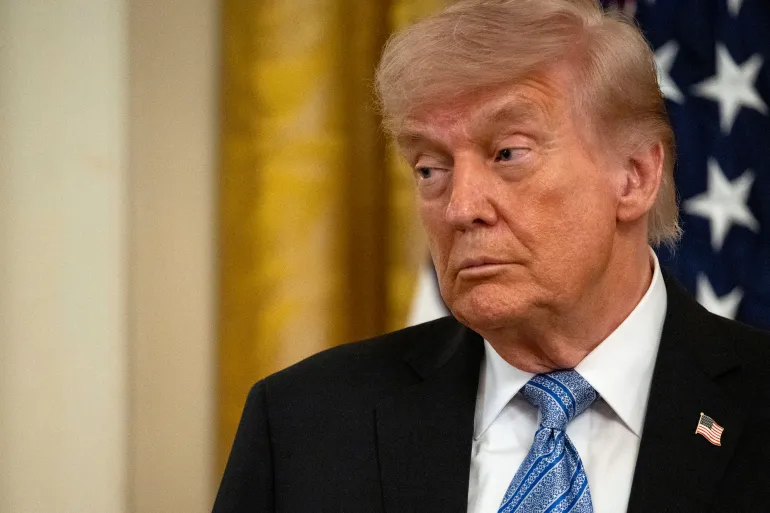
“Tensions between the United States and Iran have intensified in the Gulf, with both sides exchanging accusations over threats to shipping in the Strait of Hormuz, while regional and international diplomatic efforts accelerate to avert a broader confrontation. US President Donald Trump adopted a hardened tone, stating that Iran “has no real naval or air power” and describing the situation as a “small military engagement,” despite ongoing discussions about potential negotiations. Chairman of the Joint Chiefs of Staff Dan Kane announced the launch of “Project Freedom” to secure maritime transit through the strait, accusing Iran of threatening global shipping and weaponising supply chains. He said Iranian forces had targeted commercial vessels nine times and attacked US forces ten times since a ceasefire was declared. Kane added that US forces remain prepared to resume combat operations if ordered, calling on countries with strategic interests in the strait to contribute to safeguarding navigation, as Washington continues its maritime blockade on Iran. Iranian officials, however, insisted the crisis cannot be resolved through military means. Foreign Minister Abbas Araqchi said recent developments demonstrate that “there is no military solution,” noting that talks are progressing through Pakistani mediation. Meanwhile, Iran’s ground forces commander warned of “severe consequences” in the event of any miscalculation. Iranian Parliament Speaker Mohammad Baqer Qalibaf described the current situation in the strait as “unsustainable for the United States,” accusing Washington and its allies of undermining maritime security through the blockade. On the ground, US media reported that two American destroyers successfully transited the strait despite Iranian attacks involving boats, missiles and drones, without sustaining damage. Iranian media, by contrast, claimed US vessels had become stranded in southern waters, highlighting conflicting narratives and the difficulty of independently verifying developments. Iran’s Revolutionary Guards navy also reported seizing vessels in the area, while shipping data indicated a growing backlog of tankers awaiting clearance—underscoring disruptions in one of the world’s most critical energy corridors. Elsewhere, the United Arab Emirates said its air defences intercepted Iranian missiles and drones, while France and United Kingdom condemned the attacks and called for restraint and renewed diplomatic engagement. Regionally, Egypt has intensified diplomatic contacts with Gulf states and the United States in support of de-escalation efforts. Egyptian President Abdel Fattah Al-Sisi expressed solidarity with the UAE during a call with President Sheikh Mohamed bin Zayed, while Foreign Minister Badr Abdelatty stressed the need to sustain negotiations and warned of serious risks to regional and global stability. Saudi Arabia also voiced concern over the escalation, calling for restraint and supporting Pakistani mediation, while emphasising the importance of ensuring safe maritime navigation through the strait. At the international level, United Nations Secretary-General Antonio Guterres welcomed the extension of the ceasefire, describing it as an opportunity to reduce tensions, as countries including South Korea consider joining international efforts to secure vital shipping routes. The post Tensions escalate in Strait of Hormuz as diplomacy races to contain US-Iran crisis first appeared on Dailynewsegypt .
Original story
Continue reading at Daily News Egypt
www.dailynewsegypt.com
Summary generated from the RSS feed of Daily News Egypt. All article rights belong to the original publisher. Click through to read the full piece on www.dailynewsegypt.com.