
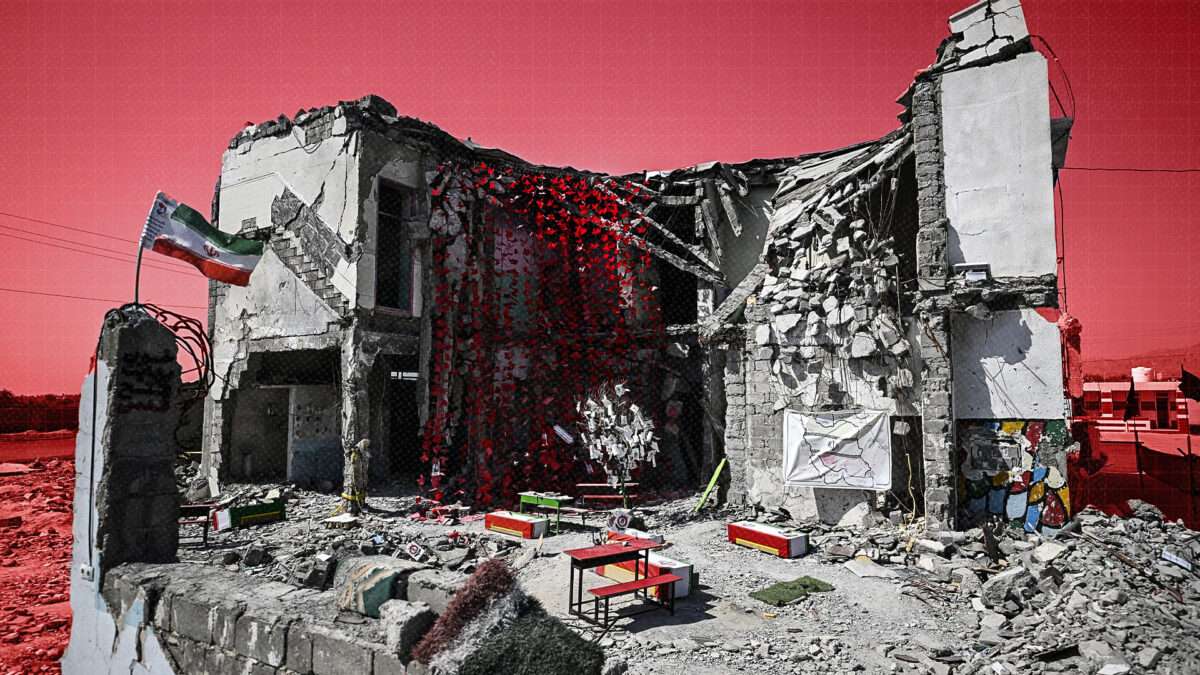
“The most infamous atrocity of the U.S.-Iranian war happened in its first few hours. During the U.S.-Israeli surprise attack on Iran on the morning of February 28, 2026, a missile blew up an elementary school in the small town of Minab, Iran, killing 156 people, most of them children. "Sometimes I close my eyes and recall her laugh, her voice, how she used to run at school, laugh with her friends, and how we used to dream of her future," Amina Karimi told Drop Site during her nightly graveyard vigil for her seven-year-old daughter Leila. "The night is heavy and the cold bites. But the dim candlelight gives me some warmth." U.S. President Donald Trump was originally told by the CIA that the school was hit by an Iranian missile, and repeated that explanation in public. Adm. Bradley Cooper, head of U.S. forces in the Middle East and Central Asia, came out with a new explanation on Tuesday. "It's a complex investigation. The school itself is located on an active [Islamic Revolutionary Guard Corps] cruise missile base," he told Congress in response to questioning. Both of these claims are lies. The school was bombed by a Tomahawk missile , which is only possessed by the U.S. and its allies. And the school is down the street from barracks, a medical clinic, and a gym for Iranian navy sailors, not a missile base. U.S. government sources have told CNN , The Washington Post , and The New York Times that the U.S. military attacked the school due to mistaken or outdated intelligence. The school used to be part of the same compound as the barracks, clinic, and gym, but it was walled off ten years ago. During its attack on the compound, the U.S. military hit the school at least twice , including with a missile aimed directly at the ground floor to collapse the building. Secretary of War Pete Hegseth told reporters at the beginning of the war that the military would fight "with maximum authorities—no stupid rules of engagement." Hegseth has also gutted the offices at the Pentagon meant to prevent and track civilian casualties. With those kinds of signals from the top, it would not be a surprise that military planners failed to follow up on the accuracy of their target list in Minab. Cooper told Sen. Kirsten Gillibrand (D–N.Y.) that the U.S. military was not investigating any civilian casualty reports outside of Minab and had no "indications" about those incidents. Iranian opposition media has documented 1,701 civilian deaths in the war, including 254 children. Two hours after the Minab bombing, a missile hit a gym where a girls' volleyball team was practicing in Lamerd, Iran, killing 21 people. Like the Minab school, the Lamerd gym was down the road from an Iranian military base (which was relatively undamaged ). And, as in the Minab case, the U.S. government was evasive and dishonest about its role in Lamerd. U.S. Central Command claimed that Lamerd was hit by an Iranian cruise missile, despite clear video and physical evidence that the missile was the U.S. Army's cutting-edge Precision Strike Missile. On April 2, a few days before a ceasefire took effect, the U.S. military bombed the unfinished B1 highway bridge outside Tehran, killing 13 people at a nearby family picnic . U.S. military officials told Axios that the bridge was being used to move missile parts, but the bridge wasn't even finished yet, and Trump said that he attacked it "just to show them" that he can. It's ironic that the Trump administration has flaunted its devil-may-care attitude to enemy populations, only to get offended at the suggestion that this recklessness might get schoolgirls killed. "We don't target [civilians]. Iran does," Hegseth told reporters when announcing the investigation into the Minab attack. "You're playing gotcha questions," Hegseth later told Rep. Ro Khanna (D–Calif.) when asked about Minab and the overall cost of the war. But the Trump administration didn't invent cover-ups of civilian casualties. In 2015, a U.S. gunship bombed a Doctors Without Borders hospital in Kunduz, Afghanistan, killing 42 people. The Obama administration kept changing its explanation for the attack, first claiming that the hospital suffered collateral damage from nearby combat, then saying the Afghan government called in the airstrike, then admitting that the U.S. military "mistakenly" targeted the hospital. During Cooper's hearing, House Armed Services Committee Rep. Adam Smith (D–Wash.) got to the core of why these coverups are so insidious. "Even if a further investigation is necessary to figure out prevention methods, can you at this moment acknowledge that a mistake was made and that we were responsible for it?" he asked. "It's something we didn't want to do and don't want to repeat." The post The U.S. Government's Shifting Excuses for Bombing a School in Iran appeared first on Reason.com .
Original story
Continue reading at Reason
reason.com
Summary generated from the RSS feed of Reason. All article rights belong to the original publisher. Click through to read the full piece on reason.com.