
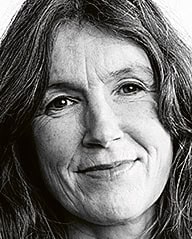
““I sometimes feel that the debate about course literature is a bit too simplistic,” says Måns Svensson, Chair of the Association of Swedish Higher Education Institutions’ expert group on university libraries and Vice-chancellor at Jönköping University. It is a complex problem, and we need to put our heads together to solve it, across different stakeholder groups, and perhaps set aside old preconceptions about how things ought to be.” In Norway, the student organisation NSO has argued that, as education is free of charge, course literature should also be free. “That is a perfectly reasonable idea,” says Svensson. “In a world where we are trying to promote open science, it would obviously be great if it was also free for students.” He believes that the crisis in course literature is partly due to a shift in norms. “Some of the problems our educational publishers are facing are a consequence of students expecting a greater number of free resources to pursue their studies. These are provided in various ways, such as through learning platforms, second-hand book markets, unauthorised distribution channels for copied course materials and so on.” He notes that there is a plethora of consequences arising from the changes affecting educational publishers: “The business model that has served the publishers well for so many years no longer works, so they must find business models that will work if they are to play a role in higher education going forward. But trying to use artificial respiration to prop up a business model that is becoming increasingly difficult to sustain has never worked historically when major technological shifts occur.” But it is still university teachers and researchers who write course literature. “My starting point is that we should work to ensure that teachers and researchers at Swedish higher education institutions have really good conditions for producing high-quality course literature. For me, how it is distributed is of secondary importance.” He says that students’ willingness to buy Swedish course literature published by Swedish course literature publishers appears to be in unequivocal decline over time. “Our students read in other formats these days. The point is that we, as universities and publishers, need to adapt to the logic of the new era. What will our role be within that logic? I think that is where we have to look for solutions.” Svensson believes that academic publishers have a key role to play. “It is important that there is a sensible dialogue on these issues between different stakeholders, where we can discuss how we should respond to the fact that reality is changing. We should nurture such a dialogue,” he says. Stefan Persson, CEO of the educational publisher Studentlitteratur and chair of the trade association Läromedelsföretagen, is sceptical about the proposal from the Norwegian student organisation advocating free course literature. “I do not think it would be possible to gain political support for such a sweeping reform,” he says, suggesting instead that the state should fund course materials for students on certain courses, such as healthcare, teacher training, police training and certain defence-related courses, and see if academic results are affected. “That would guarantee the quality of the students on those courses, as they would not have to resort to unreliable online sources. And if it turns out not to work, well, at least we have tried. And if it does work, then we could extend it to more courses.” We also asked Per Kornhall, Chair of Läromedelsförfattarna, the Swedish trade association for authors of educational literature, whether course literature should be provided free of charge. “That could well be a solution in the end. But ultimately, someone will still have to pay for it. Then you might ask whether this sort of what we might call nationalisation of course literature would be a good thing, or whether it might actually serve both democracy and society better to have a free market in which teachers can choose their course literature. You have to look at it from both angles.” Another proposal that has been put forward, including in debate articles in Universitetsläraren, is that university teachers should be allowed to write course literature during their working time. “We are absolutely in favour of course literature writing being more prominent and carrying greater weight within the teaching profession,” says Kornhall. “But if you say that it should be paid work? If course literature is to be written during working time, then university teachers must be very, very, very cautious about that sort of requirement. If there is an explicit mandate in your role, that puts the teachers’ exemption, ( regarding intellectual property rights under the 1949 Act on the Rights to Employee Inventions, editor’s note ), in a precarious position. Then this becomes a matter of academic freedom, which we must be very careful about.” He believes there is an urgent need to address the crisis in course literature. “The government needs to urgently investigate how we are to resolve this matter going forward. In other words, how Swedish higher education is to be provided with the Swedish-language course literature demanded by students and teachers. We believe this is a strategic issue.” As he believes this is a pressing situation, Kornhall wants to see some form of emergency support. “We are in danger of losing so much expertise among publishers and so many established procedures. The government should step in quickly with some form of targeted support, either for students or for publishers, or however they wish to resolve it. But the government needs to ensure somehow that the market survives until we have decided as a nation how to address the problem.” Student organisations view the issue primarily from a financial perspective. “I think it would be difficult to secure some sort of earmarked study grant for course literature,” says Colin Andersson, Chair of the Saco Student Council. “I think it would be very, very difficult in practice. We would prefer to see a general solution that bolsters students’ finances as a whole.” Rasmus Lindstedt, Chair of the Swedish National Union of Students, also believes that a general increase in student grants could be an option. But he also suggests that there should be more free resources. “The key point is to look at the issue of open educational resources. Having to buy your own books is not an end in itself. I think it would be better if more materials were openly available to those who want to access the course literature. I believe we should look more closely at open educational resources and provide funding to university libraries to make course literature even more accessible,” he says. Sales of higher education literature measured in 2025 prices (SEK million) The chart shows sales of higher education literature by members of Läromedelsföretagen, the Swedish trade association for educational publishers, between 2000 and 2025. Likely factors behind the increase in sales between 2001 and 2011 include the rise in student numbers, peaking in 2010/2011; the reduction in VAT on books from 25 per cent to 6 per cent in 2002; the expansion of online bookshops; and the price war on student literature driven by online retailers. Karin Åmossa , Head of Policy and International Affairs at SULF, is sceptical about many of the proposals to resolve the crisis in course literature. “The materials to be used for learning need to be selected by the teachers, by the academic staff, by the people who design the syllabus and organise the course. Universities have an obligation to provide high-quality education. They should therefore use the methods, materials, literature, films and so on that serve the purpose of delivering the best possible education.” Karin Åmossa Head of Policy and International Affairs at SULF SULF has concluded that politicians should not regulate access to course literature. “We do not think there should be a requirement for course literature to be in Swedish. We think it is good that Swedish-language course literature is available, and that the teachers are able to write it, and it is absolutely vital that they have the right conditions to do so. But if you regulate course literature and say it must be in a particular form during a time of such rapid change, then you are restricting yourself. And it is not the role of politics to regulate the matter.” But surely there are areas that are specifically Swedish, such as laws and regulations, which students need to learn? “It may well be the case that Swedish course literature is needed sometimes in order to meet quality standards. And in such cases, the task for the higher education institution or institutions in Sweden, or for those programmes in collaboration with one another, is to ensure that there is teaching material that enables students to learn what they are supposed to learn.” Åmossa believes that in many subjects, English- or German-language literature may be better suited to achieving the course objectives. “Of course, it would be a shame if the publishing industry for course literature were to die out. But I do not think the solution lies in forcing universities to ensure the production of Swedish-language course literature.” What should be done about the crisis in course literature? Opinions about what is causing the decline in sales of course literature differ. Consequently, there is great variation in the suggestions about what should be done to solve the crisis. Student organisations want to provide students with financial support to buy course literature. In Norway, the student organisation NSO advocates free course literature – but the question is who should pay for it? The educational publishers’ trade association Läromedelsföretagen proposes a trial of free course literature for certain student groups only. One suggestion that has occasionally been put forward is to allow university teachers to write course literature during their working time. Educational material writers want the government to provide urgent support for course literature and to set up an inquiry into what should be done about the problem in the longer term. SULF believes that it is the responsibility of higher education institutions to ensure that suitable teaching materials are available. Inlägget There are no easy solutions to ensure access dök först upp på Universitetsläraren .
Original story
Continue reading at Universitetsläraren Sweden
www.universitetslararen.se
Summary generated from the RSS feed of Universitetsläraren Sweden. All article rights belong to the original publisher. Click through to read the full piece on www.universitetslararen.se.

