
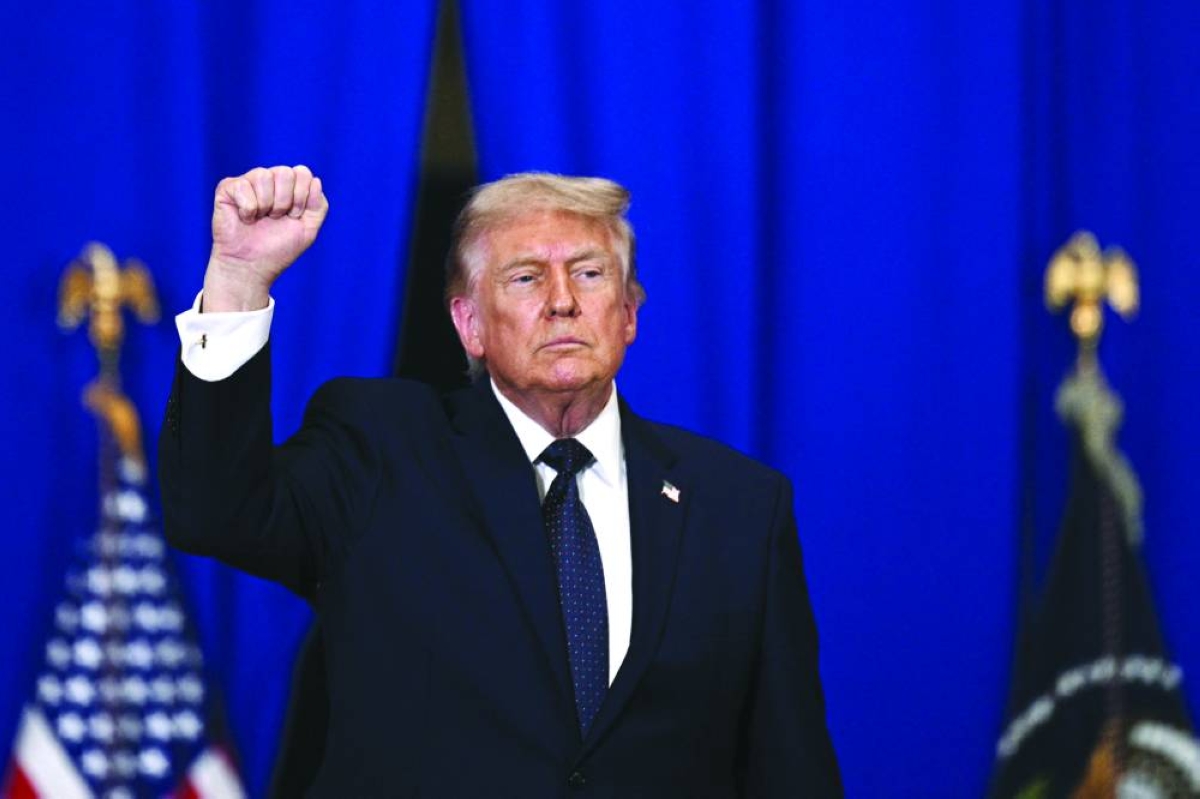
“Over the last few weeks, US President Donald Trump has been on a revenge tour of sorts as he has backed candidates who have mounted successful primary campaigns against Republican candidates he perceives to have crossed him. On May 5, five of the seven state senators in Indiana who had rejected a redistricting plan were defeated by primary challengers supported by the president. Two weeks later, a Trump-endorsed challenger won the Louisiana primary against Bill Cassidy, one of the seven Republicans who had voted to convict Trump on impeachment charges in 2021. Also on May 19, Kentucky Representative Thomas Massie, a vocal critic of the president’s handling of the Epstein files, was defeated in his primary election by a Trump-picked challenger with little political experience. This pattern of results demonstrates Trump’s continuing grip over the Republican Party, eleven years after he declared his ambition to run for president as a political outsider and proceeded to mount a hostile takeover of the party from its establishment figures. The subsequent four electoral cycles – the 2020 and 2024 presidential elections and the 2018 and 2022 primaries – saw a gradual phasing out of the older guard of Republican politicians. The defeat of the few remaining incumbents who have crossed with Trump is a challenge for the party as it moves into a post-Trump era that will begin to take shape after the midterms. Six and a half months remain in the 119th Congress, which sits until January 2, 2027. Republicans hold majorities of 53-47 in the Senate and 218-212 in the House of Representatives with five seats vacant in the latter. Should the current math hold until the midterm elections on November 3, the Democrats would need a four-seat swing to regain control of each chamber. In the midterm elections at the comparable point of Trump’s first presidency, in 2018, the Democrats made a net gain of 40 seats to win back the House but Republicans were able to increase their majority in the Senate with two additional gains. Years of redistricting have generated an era of comparatively small Congressional majorities in which mere handfuls of races are genuinely competitive and control hinges on a small number of seats changing hands. As recently as 2008, the election which swept Barack Obama into the White House gave Democrats sweeping majorities in both chambers which would be unthinkable less than two decades later. Consequently, the loss of just a few votes in the House or Senate, should members vote against their own party or choose to abstain, could make a difference in determining the outcome of votes between now and November. Already Massie has suggested that he will continue to push back against White House policies in the months he has left in the House. In the Senate, Cassidy and John Cornyn, the four-term incumbent from Texas who faces likely defeat in his primary on May 26 after Trump endorsed his opponent, Ken Paxton, are likely to become more independent in their voting. The pair could be joined by North Carolina Senator Thom Tillis and former Majority Leader Mitch McConnell of Kentucky, who have both become more outspoken and critical of the Trump administration since they announced their impending retirement from active politics. Sharp criticism on May 21 from Tillis and McConnell over Trump’s planned ‘anti-weaponisation’ fund gave Republican leaders in the Senate a sign of the difficulty they may face in maintaining discipline in the months ahead. Their unease, which is reportedly shared by significant numbers of their colleagues who did not go public, caused Senate Majority Leader John Thune to delay votes in the Senate rather than risk defeat. In the House, too, Republican leadership cancelled a scheduled vote on a War Powers Resolution to end the war in Iran after they assessed they did not have enough support to defeat it. Earlier in the week, four Republican Senators, including Cassidy on the day of his primary defeat, had joined Democrats to vote in favor of the war powers resolution against Trump’s wishes. For years, the threat of being ‘primaried’, of facing a challenge from a Trump-backed and funded candidate, was enough to instill an internal discipline in the Republican Party, and the events of recent weeks have shown that the threat to incumbents remains potent. As he prepares to leave office, if not necessarily the political stage he has so dominated for a decade, Trump continues to remake the party but this may come at a longer-term cost. This may be the last election in which Trump remains the centre of attention as by 2028 the focus will be on his successor as Republican nominee. Although he has defied the laws of political gravity that would have felled almost any other figure in public life, time horizons will inexorably begin to shift to beyond 2028 and the transition to a new generation of politicians. The challenge for Republicans is that the defeat of more moderate incumbents by inexperienced and, in some cases, significantly more right-wing challengers in the primaries may weaken the party’s chances in the Congressional elections (of course, the same goes for Democrats and the tussle between centrists and progressives in their primary season). Cornyn had been widely admired and respected by his colleagues in the Senate over his 24 years in the chamber and it is only 18 months since he ran Thune a close second in the bid to succeed McConnell as the party’s leader. His seat in Texas had not been considered one of the competitive races that could see a Democrat flip, but Paxton is rather more controversial with a checkered history and he may find it harder than Cornyn to fight off a significant challenge from James Talarico, a moderate Democrat, in November. The fault-lines between a party base still loyal to Trump and a wider electorate that has other priorities end up defining the midterms and setting the parameters for Trump’s final two years in office. The writer is a leading scholar specialising in Gulf politics and international political economy, and a fellow at the Baker Institute and co-director of the Middle East Energy Roundtable.
Original story
Continue reading at Gulf Times Education
www.gulf-times.com/community/education
Summary generated from the RSS feed of Gulf Times Education. All article rights belong to the original publisher. Click through to read the full piece on www.gulf-times.com/community/education.
