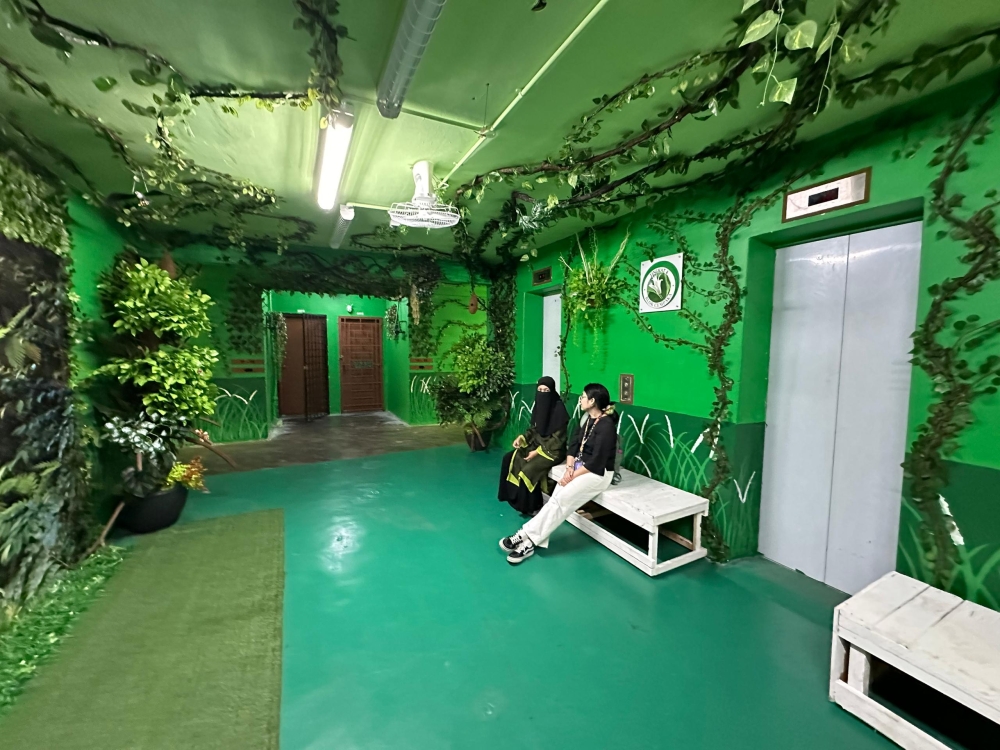
“KUALA LUMPUR, May 25 — Lift lobbies in most People’s Housing Projects (PPR) seldom age well. Instead, they often fade into dingy, dirty and vandalised spaces that residents hurry across without stopping. In fact, the problem extends to many public spaces within PPR complexes that were originally meant to foster friendships and rekindle community spirit. More than 60 per cent of nearly 3,000 residents polled across 10 public housing complexes in the Klang Valley lamented poor living conditions that had not improved or had declined further since the Covid-19 pandemic, a report by Think City revealed recently. The percentage surged to as high as 77.3 per cent in PPR Lembah Subang 1 alone, with 27 per cent of residents reporting that their living conditions had deteriorated. The report, titled “From Roof to Resilience”, also found that more than 50 per cent of residents polled across the 10 PPRs had never used their public facilities, citing cleanliness and safety concerns. A newly-transformed lift lobby in PPR Lembah Subang 1 under the K2K initiative. — Picture courtesy of Think City Against this backdrop, Think City pushed for residents in PPR Kg Baru Hicom and PPR Lembah Subang 1 — which house almost 19,000 people combined — to reclaim their lift lobbies. Only a modest investment of a few hundred ringgit, some encouragement and a friendly competition were required to give the lift lobbies a much-needed facelift. Under its Kita-untuk-Kita placemaking initiative, Think City launched a cleanliness and cheerfulness competition in PPR Kg Baru Hicom and PPR Lembah Subang 1 and provided each participating floor with RM500 to revitalise their lift lobbies. It also facilitated the creation of a resident-driven platform called Forum Komuniti (Forkom) to come up with a shared vision for their lift lobbies and decorate them. In the process, strangers living next to each other for years became friends and pooled their money, raising as much as 20 times the seed funds. The once-neglected lift lobbies bounced back into vibrant community hubs with thriving green plants, painted murals and brighter lighting and decor. Residents have also begun celebrating birthdays, conducting tuition classes, Quran recitations, dance lessons and even a wedding in the newly transformed spaces. Several floors also pooled funds to install CCTV cameras in their newly refurbished lift lobbies to improve safety and new floor coordinators and community leaders came forward to sustain the spaces from slipping back into their grimy past. A before-and-after comparison showing how PPR Lembah Subang 1 residents revitalised one of their once-neglected lift lobbies. — Picture courtesy of Think City The report noted that floors with refurbished lift lobbies also experienced fewer petty crime cases and a reduction in littering — which previously rendered them dirty and unsafe for residents. “The Forkom model showed that when residents are empowered to co-create solutions, even modest investments can spark transformational change. “Above all, the K2K initiative proved a simple but powerful point: community spaces thrive when community themselves are in charge,” Think City said in the report. Nevertheless, it also called on the government to establish a Public Housing Community Development Fund to support similar local projects, capacity-building initiatives and other community-based efforts that make their neighbourhoods more liveable. Think City is a Malaysia-based organisation set up by Khazanah Nasional Berhad in 2009. Its work includes urban policy advisory, regeneration projects, research and community-based programmes aimed at making cities more liveable and sustainable.
Original story
Continue reading at Malay Mail Education
www.malaymail.com/news/malaysia
Summary generated from the RSS feed of Malay Mail Education. All article rights belong to the original publisher. Click through to read the full piece on www.malaymail.com/news/malaysia.

