
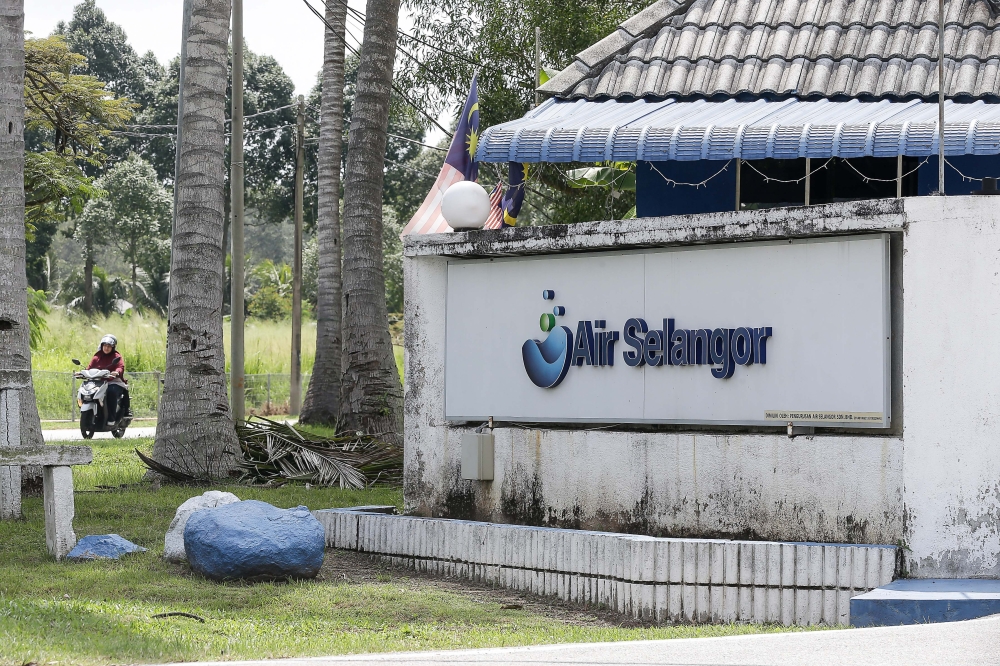
“KUALA LUMPUR, May 26 — Malaysia has spent decades trying to reduce non-revenue water, or NRW, by chasing lower percentages and tighter targets. But once NRW comes down, the losses that remain are often the hardest to eliminate. This is because they are buried in ageing infrastructure: hidden leaks beneath roads, deteriorating pipes, recurring bursts and a repair burden that grows costlier with every kilometre of old network left underground. The National Water Services Commission (SPAN) has long tracked NRW as a core industry indicator, and past commission data shows the issue remains a nationwide structural challenge rather than one confined to a few underperforming operators. The difficulty of further reductions is also reflected in the government’s missed targets. During a parliamentary sitting on Feb 24, 2026, Deputy Prime Minister Datuk Seri Fadillah Yusof said Malaysia was unable to meet its NRW target of 31 percent by 2025 and 25 percent by 2030. He attributed this to the weak financial position of some water operators, tariffs that did not reflect actual operating costs, and delays to planned reduction programmes during the COVID-19 period. The government is now aiming to bring NRW down to 28.8 per cent by 2030. But for operators in densely populated areas, the real question is how to keep reducing losses when much of the network is old, vast and expensive to renew. Air Selangor says that is where its challenge now lies, even after bringing its NRW rate down significantly over the years. Why cutting NRW gets harder According to SPAN, NRW remains a persistent challenge across Malaysia’s water sector. The commission’s reporting shows that losses in Peninsular Malaysia and Labuan remained above 33 percent from 2015 to 2024, even as utilities continued trying to reduce them. The causes of NRW are often mixed, ranging from pipe leaks and bursts to water theft through illegal connections, inaccurate or faulty meters, ground movement, poor maintenance and funding constraints. Air Selangor, however, has recorded a downward trend, with its NRW rate falling from 31.7 percent in 2018 to 26.8 percent last year, with a target of 25 percent by 2030. But how much lower it can realistically go is a separate question. “How low we can reduce the NRW rate depends on a calculation, and that is known as the economic level of NRW,” Air Selangor CEO Adam Saffian Ghazali said in an exclusive interview with Garasi Bernama. “What it means is that the higher the tariff, the lower the economic rate of NRW. Based on our current tariff, Air Selangor’s NRW team estimates that level to be around 23 to 24 percent,” he said. In practical terms, this suggests that further reductions are still possible, but each additional drop may become harder and more expensive to secure. Research on water-loss management has also pointed to the same constraint. A 2020 Delft University of Technology study said some level of water loss will still occur even in well-managed and newly built networks. Beyond that point, utilities can still push losses lower, but the cost of doing so may outweigh the benefit. In Malaysia, the issue is also tied to funding. A December 2025 Bank Islam sector note said tariff constraints have slowed reinvestment and left water operators with an estimated RM1.2 billion annual revenue shortfall. It added that replacing ageing pipes remains the single most important measure for bringing NRW down. At the same time, the cost of the problem itself remains high. A BIMB Securities note in May 2025 estimated that Malaysian water operators lose about RM2 billion a year to NRW. But for Adam, the value of NRW reduction also lies in whether customers actually experience better service. “For example, even if we say our NRW rate is 5 per cent, but when you go back home and open your tap, there’s no water, there’s no point,” he said. That, he added, is why Air Selangor is trying to detect bursts before customers notice a disruption. Leaks remain the toughest problem NRW is not made up of one type of loss alone. It includes physical leaks from pipes, commercial losses linked to metering and billing, and water that is used but not paid for. But not all of these are equally difficult to bring down. For Air Selangor, the hardest part now lies in physical leaks from the pipe network itself. “We operate in three areas and manage a large network of pipes of different ages which makes them more susceptible to leaks,” Adam Saffian said. As of 2025, the utility manages 31,817km of pipes across Selangor, Kuala Lumpur and Putrajaya. That scale is part of what makes physical leaks harder to bring down than other forms of NRW, he added He said meter-related issues are relatively easier to handle through replacement programmes and internal checks, while theft and illegal use can be addressed through enforcement. Buried leaks, by contrast, are harder to detect, costlier to fix and more closely tied to the condition of the network. “Annually, we detect around 200,000 leaks across our service areas,” he said. Air Selangor’s data shows that in 2024 the utility detected 257,448 leaks across Selangor, Kuala Lumpur and Putrajaya. That is also why Air Selangor has been expanding the use of district metering zones, or DMZs, to keep closer watch on pressure levels and identify leaks more quickly. Adam Saffian said current DMZ coverage is about 80 per cent, with a target to raise that to at least 95 per cent by 2028. “When we have ascertained that water loss, we also put a sensor inside the DMZ. We call it PLNCL - Permanent Leak Noise Correlating Logger. “When it detects a leak, it makes a sound. From that sound, you can pinpoint the leak location,” he said. That helps the utility narrow down leak locations more quickly within the network. The 2008 Manager’s Non-Revenue Water Handbook, a widely cited utility guide, says successful leakage management usually rests on four pillars: pressure management, speedy and good-quality repairs, active leakage control, and pipeline or asset management. In other words, leak reduction is rarely about one intervention alone. Old pipes still holding the system back The age of the existing network also helps explain why the NRW problem persists. Some of Air Selangor’s pipes range from one year to 90 years old, and parts of the older network still consist of asbestos cement pipes. Parts of the Klang Valley’s modern water infrastructure trace back more than a century to the British colonial period, when early waterworks and reservoirs were developed to serve a growing urban centre. Much of that older system has since been replaced, but some ageing materials remain in use today. Adam Saffian admitted that Air Selangor still had many very old pipes in the system. “This is because parts of our network date back to the British era. I once went to a site where there was a leaking asbestos cement pipe. “When we opened it up, the year was marked on it. Do you know what year it was? 1915,” he said. Of an estimated 6,000km of asbestos cement pipes originally in the system, 1,089km have been replaced, leaving about 5,000km still in use. The distribution is also uneven across the network. Kuala Lumpur has the largest share of remaining asbestos cement pipes, at about 1,481km out of the 5,000km still in use, or around 30 percent of the total. Air Selangor said asbestos cement pipes in its system were generally designed to last about 30 to 40 years, depending on installation conditions, soil environment and operating stress. Most of those still in service have already exceeded that design life and are considered ageing assets. As these pipes age, they become more brittle and structurally weaker, making them more prone to cracks and bursts, leakage and NRW losses, lower tolerance to pressure fluctuations and external loading, and higher maintenance and operating costs. In turn, those pressures can reduce network reliability and service performance. Air Selangor said replacement is carried out in phases and targeted at high-risk parts of the network, including ageing or poor-condition pipelines, locations with frequent leaks and bursts, and critical or pressure-sensitive lines where repair works could disrupt supply to large numbers of consumers. The pace of implementation depends on annual capital expenditure allocations and approvals from the relevant authorities. These pipes are typically replaced with newer materials such as ductile iron, high-density polyethylene and mild steel. These are generally designed to last 50 years or more. Air Selangor’s data also shows that pipe burst cases per 100km per year fell from 13.52 in 2018 to 3.25 in 2024, suggesting that conditions have improved even as the utility continues dealing with a large and ageing network. But knowing where the weak points are is only part of the challenge. Even when ageing pipes can be identified more quickly, repairing or replacing them across a large live network still takes time, money and careful planning. Technology can help, but replacement still costs Tools such as zonal monitoring, acoustic sensors and faster data analysis can help utilities respond to leaks sooner. Air Selangor says it is trying to strengthen that capability by improving oversight across its network. One part of that is a push towards 24/7 visibility of the network, so that pressure drops can be flagged earlier and bursts can be checked before customers report them. Adam Saffian said the utility already has such monitoring in one region, mostly in Sepang. He added that Air Selangor has already invested heavily in digitalisation, and is now looking at artificial intelligence (AI) and machine learning as the “last mile” of analysis. At present, he said, the initiative is still at the proof-of-concept stage. “Currently, our staff have to get all the data from the system and do the analysis manually, and that analysis can take a week. “But if AI is embedded into the system with machine learning, we can identify areas that are probably leaking much faster. Manual is one week, AI is one day,” he said. But technology does not change the fact that repairing and replacing old pipes remains expensive. Air Selangor’s own expenditure data points to the growing burden of keeping the network running. Its repair and maintenance spending rose from RM328.74 million in 2020 to RM531.92 million in 2024. Adam Saffian said Air Selangor currently replaces about 300km of pipes a year and that this alone can cost roughly RM460 million to RM480 million. He added that such works are especially difficult in dense urban areas, where replacement in built-up parts of Selangor and Kuala Lumpur is both expensive and disruptive. A BIMB Securities note in May 2025 said every 1 percent reduction in NRW can require RM800 million to RM1 billion in investment, adding further strain to already tight budgets. Air Selangor’s replacement programme has been running annually since 2016 and was increased to about 300km a year from 2024. A further rise to 400km a year is planned from 2034 onwards, subject to funding availability and implementation capacity. That may be the clearest way to understand why NRW remains difficult even for the country’s largest water utility. The challenge is no longer just to improve a percentage. It is to keep an ageing network functioning well enough while the slow, expensive and physical work of renewal continues beneath roads, neighbourhoods and industrial areas. — Bernama
Original story
Continue reading at Malay Mail Education
www.malaymail.com/news/malaysia
Summary generated from the RSS feed of Malay Mail Education. All article rights belong to the original publisher. Click through to read the full piece on www.malaymail.com/news/malaysia.
