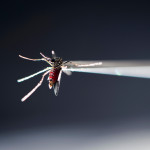
“Zika infections can cause significant developmental problems Even babies born without the virus’s notable physical symptoms may experience sensory, attachment and anxiety issues, according to a new study. By Jenn Bal June 4, 2026 Share this article The Zika virus, spread by mosquitos such as the Aedes aegypti above, is known to cause severe birth defects. A new study explored why 30% of babies born without these physical symptoms still go on to experience developmental problems including vision and hearing loss. Photo: Jeff Miller / UW–Madison Infants exposed to the Zika virus during pregnancy may face hidden developmental challenges, even if they appear healthy at birth. A recent study at the University of Wisconsin–Madison highlights the need for better developmental screening during a child’s first year of life. Zika virus is known to cause severe birth defects — such as brain damage and microcephaly, a much smaller head and brain. However, little is understood about why 30% of babies born without physical symptoms go on to experience developmental problems including vision and hearing loss. To better understand what happens to newborns affected by Zika infection, UW–Madison occupational therapy professor Karla Ausderau and others studied pregnant rhesus macaque monkeys at the Wisconsin National Primate Research Center. The animals were exposed to Zika virus or a placebo early in pregnancy. The scientists followed the resulting infant monkeys through one year with behavioral tests, vision and hearing assessments, and social observations. They found that, like human babies, monkeys with prenatal virus exposure, regardless of maternal vaccination status, had increased risk of vision delays, hearing loss and changes in maternal attachment despite having no outward symptoms at birth. The researchers published their findings recently in the journal Nature Communications . Although the infant monkeys’ eyes appeared structurally normal, researchers found disruptions in how the eyes communicated with the brain, an issue known as cortical visual dysfunction. This type of visual impairment is also seen in children who struggle with vision despite having healthy eyes. Early visual delays appeared in the monkeys as early as 3 months of age; however, those differences resolved by 12 months. The early vision changes did not predict later developmental challenges, however, and researchers say these early disruptions may signal broader effects of prenatal exposure. “Infants exposed to Zika before birth showed altered social-emotional development and changes in cortical visual function during infancy, even when they appeared healthy at birth. And we couldn’t predict those outcomes from the mother’s infection characteristics, which is a problem if we’re trying to identify which babies need closer follow-up,” says Emma Mohr, UW–Madison pediatrics professor and co-author of the new study. The researchers also found that hearing loss appeared more often in Zika-exposed infants than in unexposed animals, although the difference was not statistically significant. Social behavior told another important story. Zika-exposed infants spent more time clinging to their mothers than typically expected at this age and gained more weight than the control group due to increased access to nursing. In rhesus macaques, close maternal contact normally decreases as infants grow more independent. Researchers believe this prolonged attachment may reflect difficulties with sensory processing, emotional regulation and assessing threats, skills that are critical for healthy social development. Zika-exposed infants also showed lower inhibition by approaching new objects and situations more quickly than expected. This behavior may signal early anxiety, delayed emotional learning, or challenges in interpreting sensory information from their environment, which is risky. The study found that maternal virus levels, placental infection and antibody responses did not predict which infants experienced developmental differences, suggesting that common maternal biomarkers are poor indicators of a child’s long-term risk. Human studies have shown that Zika infection during pregnancy can persist for months and increase the risk of miscarriage and brain abnormalities. However, those severe outcomes were not observed in this animal study — limiting conclusions about how maternal immune responses relate to the most severe cases. The findings do point to a clear message. Prenatal Zika exposure alone can influence early development, even in the absence of visible birth defects. “Children with prenatal Zika exposure need long-term neurodevelopmental follow-up, not just a clean bill of health at birth. The subtle differences we’re detecting wouldn’t be picked up on a routine exam, but they’re the kinds of things that can shape learning, behavior and social development as kids grow,” Mohr says. The study strengthens the case for routine developmental monitoring of all children exposed to Zika during pregnancy, regardless of symptoms at birth, according to the authors. Early detection could allow for timely interventions when delays emerge. They also stress that prevention remains the strongest defense. “Vaccines and mosquito control are still the best tools we have,” says Mohr. “Once infection occurs, the damage may already be done.” Support for this research was provided in part by grants from the National Institutes of Health (P01AI132132, R01 AI153130, P01AI132132, P30EY016665 and P50HD105353).
Original story
Continue reading at UW-Madison News
news.wisc.edu
Summary generated from the RSS feed of UW-Madison News. All article rights belong to the original publisher. Click through to read the full piece on news.wisc.edu.

