
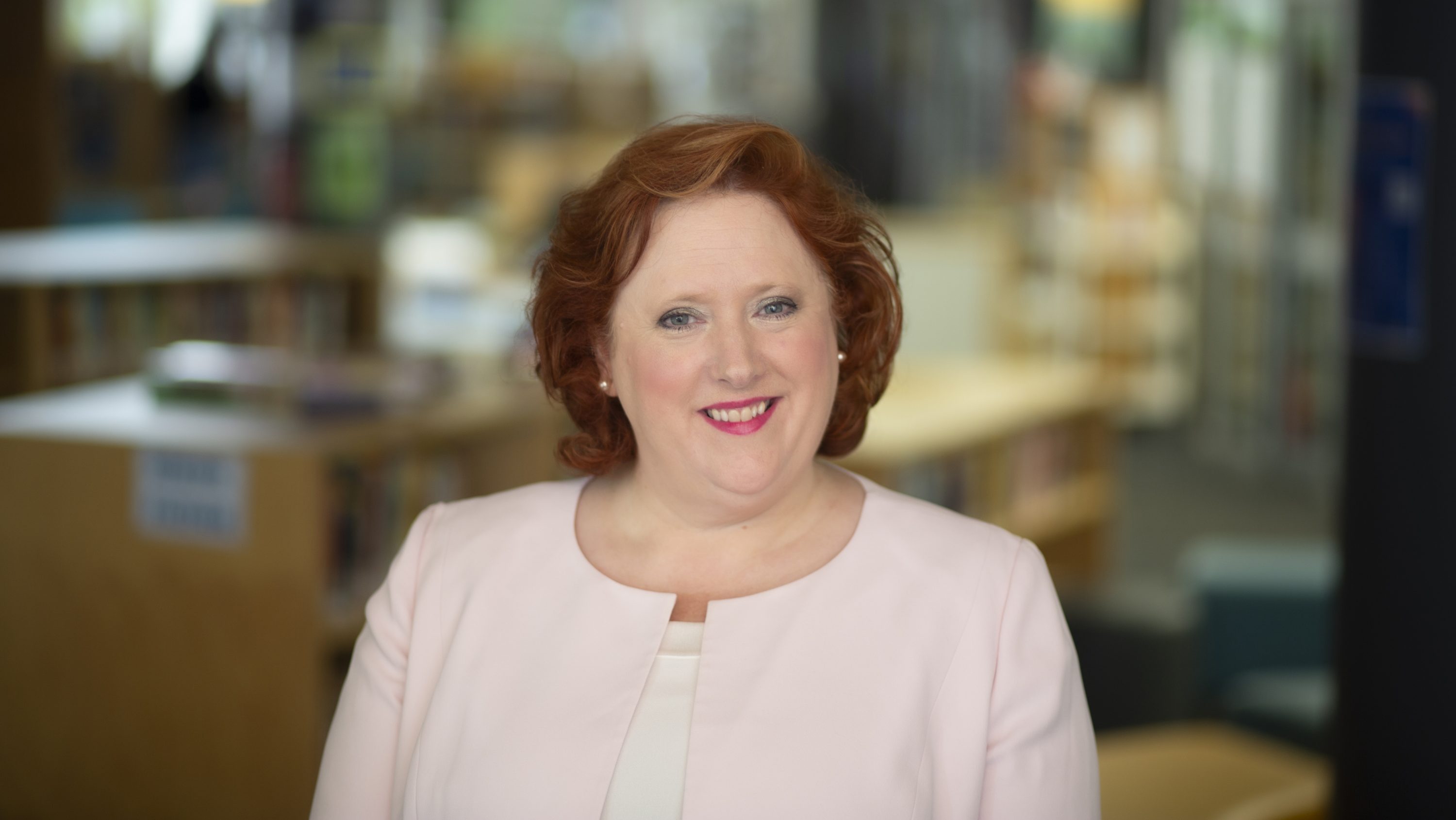
“All Victorian students must have planned ‘device-free time’ each day in strict new rules announced by the education minister on Monday. The device restrictions aim to intentionally remove students from devices in classrooms from Term 1, 2027. Teachers could instead use whiteboards or paper, or organise group debates, practical experiments or performances, a statement from Education Minister Ben Carroll said. The minister estimated high school students would spend no longer than two hours a day on devices, although details will be released after consultation with schools. Previously announced policies also limit Year 3 to 6 students to 90 minutes of screen time per day from 2027. Students in Prep to Year 2 will have minimal exposure to devices. “There shouldn’t be any more than two hours. We want eyes up, screens down. A full reset in the classroom is so important – for behaviour, for calmness, for the students’ own mental health – the focus needs to be on the most important adult in the classroom, and that’s the teacher, and that’s why we are moving down this with a relentless focus on excellence inside every classroom,” Mr Carroll said. Melbourne school principal Lorna Beegan said learning must be at the core of the policy. Picture: Supplied. “The big tech giants, their algorithms, they do not have these young people’s best interests at heart. They’re focused on eyeballs, and we’re focused on their minds and their hearts for the future.” Principal of Strathcona Girls' Grammar in Melbourne Lorna Beegan, said reducing screen time is not at odds with innovation. More on this story: A revolution is happening in ed-tech | Parents asked to delay smartphone use in kids | Vic appoints first minister for boys “I see it as a deliberate prioritisation of human capabilities that will define the future,” she said. “I applaud the move if learning is at the core. With information overload instantly accessible, giving our students time to stop, to think, to judge, to wrestle with ideas, to adapt, to explore, to imagine becomes essential to shaping skilled, confident, creative and critical thinkers who can navigate life’s complexities with resilience and purpose. Our students need to know how to use technology and when to turn it off. “The quality of a student’s thinking will soon carry greater weight than the quantity they can recall, convincing schools to respond by deliberately limiting screen time in favour of sustained attention, curiosity and active engagement for the new types of assessment and life skills that are emerging.” Neurodiverse students who need technology to learn would be exempt from the rule, as would students studying science and technology. Victoria has also banned mobile phones, smart watches and wireless earbuds in all schools.
Original story
Continue reading at Education Review AU
www.educationreview.com.au
Summary generated from the RSS feed of Education Review AU. All article rights belong to the original publisher. Click through to read the full piece on www.educationreview.com.au.
