
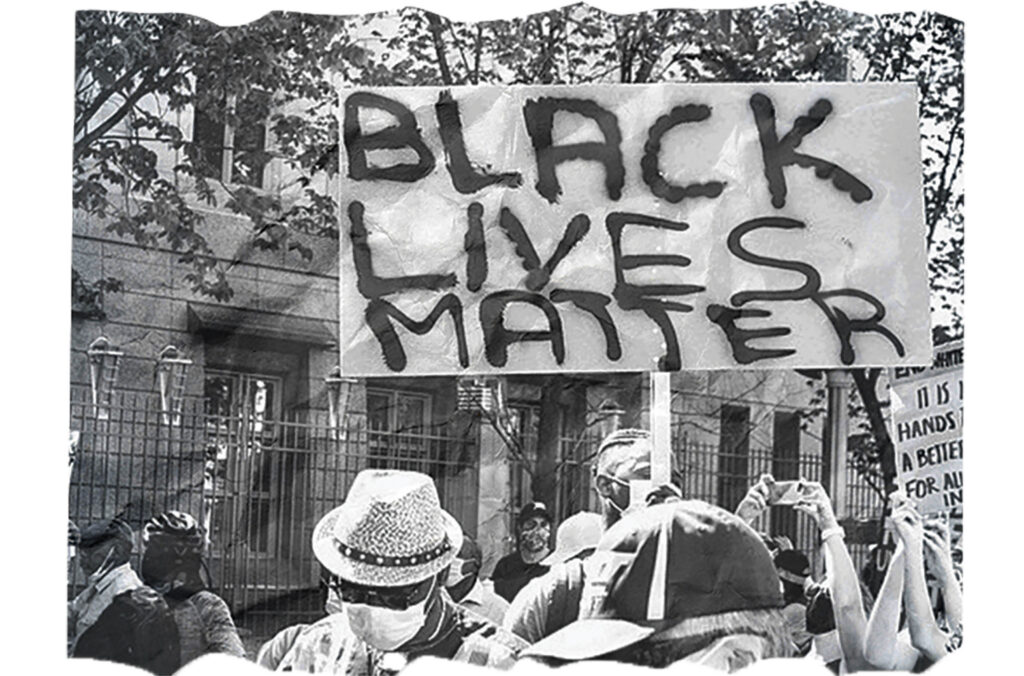
“For decades, Canadian universities have been affected by era-defining social movements. Social causes including feminism, anti-racism, environmental justice, and Indigenous and LGBTQIA+ rights have transformed academia in numerous ways: fuelling debate, transforming curricula, generating new fields of research, and challenging prevailing conceptions of knowledge. Despite their inward-looking reputation, universities are constantly interacting and evolving with society. Social movements influence what is taught and how, and these institutions play a key role in constructing, disseminating and legitimizing those ideas. The relationship between the two is enduring, complicated and deeply political. While some believe universities are currently facing a crisis of ideology, history suggests this is a long-standing pattern. The campus has been a lieu of tension, debate and disagreements about knowledge since itsinception. Looking at the influence social movements have had on universities over the years can help us understand how knowledge is constructed, transformed and debated. A history of conflicts and challenges Taking a historical perspective, the ideas behind social movements have always shaped academia, explains Brieg Capitaine, associate professor of sociological and anthropological studies at the University of Ottawa. He notes that, in North America and Europe, the modern university largely took shape during the late 1960s. “Some media outlets today interpret these protests as a crisis in higher education. In reality, this kind of questioning has always occurred.” During the 1960s, youth-led social movements protested the inaccessibility of university education and demanded the recognition of other forms of knowledge. “Some media outlets today interpret these protests as a crisis in higher education. In reality, this kind of questioning has always occurred,” says Dr. Capitaine. Thanks to movements like Black Lives Matter, universities have gradually begun to include courses on African and Afro-descendant history. (Photo courtesy of Wikimedia Commons) Francis Dupuis-Déri, a professor in the political science department at Université du Québec à Montréal (UQAM), agrees that “since the beginning, universities have been shaped by social and political tensions.” Far from being ivory towers, they evolve in step with the struggles and debates that roil society. “There have been student strikes since the early years of European universities,” he explains. “In Bologna, for example, students protested the cost of rent and the quality of teaching. These early demonstrations proved from the outset that universities would be places where different worldviews would collide.” In sum, the idea of a neutral university cut off from social conflict is more myth than historical reality; knowledge has never existed in a political vacuum. Feminism: a crucible for knowledge transformation In Canada and abroad, the feminist movement provides an illustration of the interactions between social movements and universities. Feminism began to shape academia when activists became professors, particularlyat UQAM (founded in 1969) and Concordia University (founded in 1974), said sociologist Francine Descarries, interviewed for this article before her death in March. These institutions, being recently created and closely connected to the social Zeitgeist, helped to establish feminist studies as a legitimate discipline from the mid-1970s onwards. Dr. Descarries, who was a founding member of the Réseau québécois en études féministes (Quebec network of feminist studies) and UQAM’s Institut de recherches et d’études féministes (Institute of Feminist Research and Studies), explained that the feminist and labour movements played a central role in legitimizing feminist research and creating a demand for knowledge. As this first wave of women assumed academic roles, they brought their experiences as activists to their universities, inciting changes that put those institutions in the avant-garde. “Feminism did more than just spawn new courses,” says Dr. Dupuis-Déri. “It changed the way we think about science. It introduced new perspectives, new questions.” The work wasn’t easy, and success wasn’t guaranteed. In an academic world built on androcentric norms, feminist research had long been marginalized, and had to prove its rigour to be considered legitimate. “The connection between activism and the university was very strong,” said Dr. Descarries. The relationship was symbiotic: activists became professors and created the discipline’s first courses, while the field of women’s studies found legitimacy among feminists who “needed research to back up thier demands.” This relationship “helped a new field of research blossom that otherwise would have taken much longer to germinate.” It also helped establish new research methodologies, including the co-construction of knowledge, where the people targeted by a study become active participants in the production of knowledge. Black and anti-racist studies: Long overdue In recent years, the Black Lives Matter movement has raised awareness of the structural racism that exists in many institutions, including universities, and has called for a review of course content. But anti-racist activism in academia goes back decades Although research into Black history officially began in the United States in 1926, the first conference to address the institutionalisation of Black studies inCanadian francophone universities did not take place until November 2024. Held at Université de Montréal (UdeM), this event underscored the delay in establishing Black studies in Canada even as students’ interest in the field grows. Simplice Ayangma Bonoho, a historian of Africa and the African diaspora at UdeM, notes that the introduction of these themes to Canadian universities reflects a broader historical trend. “These subjects were first taught in the 1950s and 1960s, with the emergence of anti-racist movements in the United States and independence movements in Africa. This is not a recent dynamic. But it’s because of these movements that universities began to offer courses on African history and the African diaspora, and that organizations like the Canadian Association of African Studies were founded.” But progress is slow. “At UdeM, the first course in African history wasn’t taught until the fall of 2024,” he says. “It’s a gradual process inhibited by institutional inertia and resistance resulting from power dynamics.” All the same, the seeds have been planted. Dr. Bonoho says students’ growing interest in anti-racist studies will force universities to evolve, whether they like it or not. Indigenous perspectives: From invisibility to recognition At the same time, the formal integration of Indigenous perspectives into academia was expedited by media coverage of major events, and by the release of public reports, notably the 2015 Final Report of the Truth and Reconciliation Commission of Canada. From their very beginnings, European universities have seen students take to the streets to protest against high rent prices or the quality of education. (Photo courtesy of Wikimedia Commons) “These events have shed new light on long-overlooked realities,” explains Sébastien Brodeur-Girard, a lawyer and professor with the department of Indigenous studies at the Université du Québec en Abitibi-Témiscamingue. “Today, we don’t just teach history. We show that Indigenous communities are active and very much alive in the present moment. It’s crucial to dismantle stereotypes and to show that Indigenous cultures are both relevant and dynamic.” Here, too, institutions are slow to evolve, with some moving faster than others. But they provide evidence of a deeply rooted social movement that will survive passing fads and short-term pressures. When social movements also change pedagogy Social movements shape more than just course content; they also change how professors teach and assess students. For Christophe Chénier, assistant professor in proficiency assessments at UdeM’s faculty of education sciences, even assessment practices are susceptible to change during widescale social transformations. Changes to the student body — influenced by the feminist movement, population demographics, and shifts in work-life balance — significantly redefined institutional expectations. “Forty or fifty years ago, most students didn’t work full-time, tuition was more affordable, and part-time education was rare,” he explains. “Nowadays, we have students who are raising children alone, working full-time, and writing essays in the evenings. This has forced universities to rethink their approach.” “Now our goal is to support learning, thanks to extensive dialogue between social movements, community values, and the university culture.” Technological and cultural shifts also contribute to pedagogical changes. Growing recognition of neurodivergence, for example, has led to more widespread implementation of accommodation measures, including individual testing environments for people with ADHD. “In other words, assessment practices aren’t based on just one way of teaching,” says Dr. Chénier. “They’re based on a worldview. A few decades ago, we saw assessment through a punitive lens. Now our goal is to support learning, thanks to extensive dialogue between social movements, community values, and the university culture.” Academic resistance and questions of legitimacy Not everyone has welcomed these changes: some still resist the integration of perspectives from social movements into university curricula. Institutional recognition of fields like gender studies, Indigenous studies, and postcolonial studies can be impeded by professors and researchers who believe these disciplines are more ideological than scientific. For Dr. Dupuis-Déri, this criticism is based in an enduring misconception. “In reality, all disciplines have baked-in values. Neoliberal economists have a particular view of the world that is no more neutral than women’s studies or postcolonial studies.” Feminism has long been a marginal field and has had to prove its scientific rigor and legitimacy within the traditional sciences. (Photo courtesy of UQAM) Dr. Capitaine observes that student demands are major drivers of institutional changes. “Students pressure professors to adapt their course material. Sometimes the institution takes the initiative; other times, it’sstudents who take up a new cause. A few years ago, students were mobilizing for the climate. This year, their focus is on the Israel-Palestine conflict.” Some changes come from widespread shifts in attitudes and expectations, instead of a single cause célèbre. “Sometimes it’s simply that students ask us questions, we reply, and our practices change as a result.” Universities as places of contention, not neutrality One thing is clear: The university has never been, and never will be, a completely neutral environment. Universities are affected by the conflicts of every era. That’s exactly what enables them to be such active sites of knowledge production. “History shows us that universities have always been places where knowledge is contested.” “History shows us that universities have always been places where knowledge is contested,” says Dr. Capitaine. “The important thing is to support an environment for open debate. Conflict and discussion are essential to the advancement of knowledge.” And they can be a healthy wake-up call, says Dr. Dupuis-Déri: “After their PhD, professors could teach for 30 years without questioning their own beliefs. Social movements remind us that we can’t remain stagnant.” That’s not to say that the university must evolve into an activist hub; but nor can it pretend that social tensions don’t exist. “Academics aren’t out in the streets, but they still have a responsibility to inform themselves by reading, listening and understanding the different arguments.” Social movements don’t just inspire updates to course content or programming; they redefine the very role universities play in society. When universities open the door to new voices and new areas of research, they must learn to unite academic excellence with inclusion and social responsibility. It’s a delicate, and sometimes contentious, balancing act. But social movements are an integral element of universities’ history. The enduring tension between knowledge, society and politics is not a sign of academic decline. On the contrary: it’s one of a university’s driving forces. The post How social movements shape Canadian universities appeared first on University Affairs .
Original story
Continue reading at University Affairs CA
www.universityaffairs.ca
Summary generated from the RSS feed of University Affairs CA. All article rights belong to the original publisher. Click through to read the full piece on www.universityaffairs.ca.

