
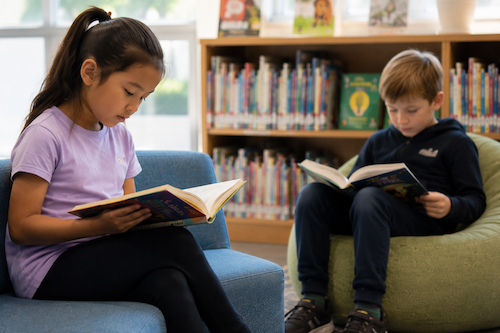
“Key points: Research shows that deep reading engages critical parts of the brain Why rigor and efficiency matter in early reading From fragmentation to fidelity: How this district built a literacy system that works For more news on literacy and the brain, visit eSN’s Innovative Teaching hub Once upon a time. For generations, those four words were an invitation. Children leaned in because a story was beginning. They would listen closely, follow the characters, and stay with the plot until the end. Today, childhood looks different. Days are fuller, information moves faster, and screens offer a source of constant entertainment. There’s an undeniable shift in our daily lives that leaves kids with fewer chances to practice the slow, sustained kind of reading that builds focus, imagination and emotional resilience. As a literacy expert, researcher, and executive director of a school for students with language-based learning differences, I see how these shifts are impacting children. When I visit classrooms and talk with teachers, I hear a common concern: More students can read the words on the page, but fewer seem able to truly stay with a story. Teachers describe students who can read aloud accurately but struggle to follow a narrative from beginning to end: They lose track of characters, forget what happened in the previous chapter, and grow restless when a story takes time to unfold, which aligns with shortened attention spans. Even in kindergarten, teachers are finding that classic nursery rhymes and fairy tales–stories that used to be familiar to almost every child–are now new to many kids. Those universal stories were–and still are–important tools that help children build vocabulary, stretch their attention spans, and begin to understand other people’s perspectives. Reading is about more than literacy When children listen to stories or read on their own for longer stretches, they’re quietly practicing skills that show up everywhere in life: staying focused, thinking through challenges, imagining how someone else might feel, and managing frustration when things get hard. These are executive function skills–the internal tools that help all of us plan, focus and regulate our emotions. Stories are among the best (and most enjoyable) ways kids develop these tools without even realizing it. Deep reading depends on these skills. When a child follows a character across a chapter, they are keeping earlier events in mind. When they predict what might happen next, they are considering possibilities. When they stay engaged through a complicated plot, they are practicing focus and persistence. Unlike worksheets or drills, narratives invite the brain to weave together language, memory, emotion, and perspective at the same time. Research shows that deep reading engages the parts of the brain that support attention, memory, and flexible thinking. As books grow longer and ideas become more complex, children rely more heavily on executive function skills to truly understand what they read. If children have fewer opportunities to listen to and read longer stories at home, those skills do not develop as naturally. Teachers then find themselves teaching not just comprehension, but also stamina, focus, and persistence. As a busy dad and someone who works in literacy, I can assure you that you do not need a complicated program or strict rules when encouraging your child to read. What helps most is consistency and connection. Here are a few tips: Keep reading aloud together, even after your child can read independently. Let your child linger in a story without rushing to “what did you learn” questions. Reread favorite books; familiar stories and repetition deepen understanding. Talk about characters and the choices they make. Let your child see you reading for pleasure. Most importantly, make it a priority to find a few minutes each day for reading when no one is in a hurry. Our kids are constantly being pulled in dozens of directions. Helping them learn to stay with a story may be one of the simplest ways to build the focus, empathy, and flexible thinking they need for life in and out of the classroom. And sometimes, it begins with just four simple words: Once upon a time.
Original story
Continue reading at eSchool News
www.eschoolnews.com
Summary generated from the RSS feed of eSchool News. All article rights belong to the original publisher. Click through to read the full piece on www.eschoolnews.com.